Slavic Full Gospel Church logo SFGC

Scripture

126 sermons on this topic

Examine Yourself: Discerning the Lord's Body

Examine Yourself: Discerning the Lord's Body

On the first Sunday of the month the church gathered for the Lord's Supper. The service opened with worship and a prayer of confession, since sin is the one thing that can keep us from approaching the table. Jesus' words in John 6 remind us that communion is tied to eternal life - the life everyone longs for, but which only Christ can give. The main message centered on 1 Corinthians 11, where Paul warns against eating and drinking without discerning the body of the Lord. The preacher pressed on the word discern - the God-given ability to weigh our actions, foresee their consequences, and make sound decisions. Proverbs 2 shows that this wisdom is not automatic: we must search for it like hidden treasure, and then the Lord Himself gives knowledge and understanding. A mind that turns from God's truth does not stay empty; it fills with attractive but false ideas, the myths that have led whole nations astray. The preacher pointed to evolution, nationalism, and communism as fruit of a mind that pushed God out. First John calls us to hold to the true God and guard ourselves from idols, and Matthew 24 warns that, as in the days of Noah, people will be absorbed in earthly life until Christ returns.

Don't Just Believe - Know God's Word

Don't Just Believe - Know God's Word

The service opens with thanksgiving for God's protection on our roads, our work, and in dangerous moments, followed by a short reflection from 2 Corinthians 5. Our earthly body is only a tent, often uncomfortable and full of trouble, while a permanent, eternal home not made with hands awaits us in heaven. Hardship, sickness, and loss are a normal part of this life, but our hope is fixed on the dwelling God has prepared, secured by the love of Jesus who came to save us. The main message turns to the importance of biblical knowledge. Drawing on Acts 19, John 4, and many other passages, the pastor warns that it is possible to gather, worship, and even call ourselves believers without truly knowing whom we worship or why. Faith is good, but faith without a foundation can believe anything; real Christian faith must rest on what God's Word actually says. Satan's great weapon is keeping us ignorant of Scripture, while God longs for us to know His Word. Through examples of forgiveness, the order of the family in 1 Corinthians 11, spiritual gifts in 1 Corinthians 12, grief over those who died in Christ in 1 Thessalonians 4, and the healing of the paralytic so that we may know the Son of Man has authority to forgive sins in Matthew 9, the preacher urges us to study Scripture for ourselves. When the enemy tempts, we answer not with feelings but by reading aloud what God has written. Don't just listen, don't just believe - know.

Worshiping God in Spirit and Truth

Worshiping God in Spirit and Truth

This midweek service opened with the reminder from Deuteronomy 8 that man does not live by bread alone but by every word that comes from the mouth of God. Just as the manna spoiled when it was hoarded yet lasted when God commanded, the Scriptures nourish and heal the soul, while a steady diet of the world's noise quietly rots us from within. The first message, drawn from John 4 and the Samaritan woman at the well, taught that God seeks true worshipers who worship Him in spirit and in truth. He draws near to every heart that honestly seeks Him, however far it has fallen. Worship in spirit shows itself in the fruit of the Spirit that others can taste in our lives, and worship in truth means holding fast to Christ and His word. A vivid testimony of an elderly believer healed of a broken spine after prayer underscored that those who thirst for God's word and trust His promises become a wellspring of living water. The second message turned to humility, carefully distinguishing mere outward modesty from a humbled heart that bows before God. Walking through the prophet Amos, the preacher showed how prosperous Israel grew proud, mistook past salvation for present safety, and rejected God's warnings until judgment fell. God resists the proud but gives grace to the humble; He calls us to seek Him now, to live set apart in our conduct and even in our dress, and to let humility shape every small detail of a life of worship.

Seeing as God Sees: The Lord's Table

Seeing as God Sees: The Lord's Table

The service opens with prayer drawn from Psalm 86:11, asking the Lord to teach His way, and a reminder that God speaks to those who deliberately set aside time to listen. A worship song and a narrative poem about the thief crucified beside Jesus turn the church toward the coming remembrance of Christ's death at communion. The preacher pauses to speak of the gift of the church - that believers belong to one another and are never truly alone - and asks the congregation to pray for his son serving at the front. Reading Isaiah 53, he shows that the crowd assumed the suffering Servant was punished for His own sin, when in fact He was wounded for ours. God sees differently than people do, and He has not hidden that truth - He has opened it in His Word. The central teaching turns to 1 Corinthians 11. The Lord's Supper is not an ordinary meal but a holy act that proclaims Christ's death until He comes. Paul warns that careless, unworthy participation carries real consequences, and calls every believer first to examine and judge himself in repentance, so that he need not be judged by God.

Why God's View Differs From Ours

Why God's View Differs From Ours

The preacher urges the church to pay close attention to God's word so it does not slip away from us (Hebrews 2:1; the parable of the sower). The heart of the message, drawn from 1 Samuel 16:7, is that God does not see the way people see: man looks at the outward appearance, but the Lord looks at the heart. Our trouble begins when we judge life by our own assumptions about how God should act. To show how seriously God weighs obedience, the sermon walks through five people who were close to God yet stumbled by treating His word lightly. Saul offered the sacrifice himself instead of waiting for Samuel and lost his kingdom. Moses struck the rock instead of speaking to it and failed to honor God's holiness. Samson revealed his secret and did not even realize the Lord had departed from him. Ananias and Sapphira lied to the Holy Spirit. The rich young man kept the commandments yet walked away grieved because his heart was bound to his wealth. In every case the person thought it was no big deal, while God saw it as deeply serious. The call is to draw nearer, to dig into Scripture rather than skim it, and to value His word exactly as He values it. When God says no, agree with His no; when He sets a high standard, keep it high. Like David, ask God to hold you back even from unintended sin and to turn you around when you stray.

Rooted in Love, Standing in Truth

Rooted in Love, Standing in Truth

The service opened with worship and prayer, and then two visiting preachers brought the Word. Drawing on Paul's prayer in Ephesians 3, the first message called believers to be rooted and grounded in the love of God. We kneel before the Creator in humility, and our problems shrink before His greatness; He strengthens not the outer self, which is fading away, but the inner person, who is renewed day by day. Faith grows only as we hear and feed on God's word, sinking our roots deep like a strong tree. Scripture reveals the immeasurable breadth, length, depth, and height of God's love - patient with unfaithful Israel through Hosea, merciful to Nineveh through Jonah, tender like a father running to meet a returning son. That love is sacrificial, unconditional, and complete, and nothing can separate us from it. The second message urged us to stand firmly in God's truth, promising that we will receive far more than we ask. Like Job, who endured loss and false accusation yet declared that his Redeemer lives, those who refuse to murmur and keep trusting are restored and blessed beyond imagining - in strength, in hope, and in the eternal kingdom God has prepared for those who love Him.

The Sacred Calling of Preaching God's Word

The Sacred Calling of Preaching God's Word

Drawing on Romans 15:16, this seminar reframes preaching not as a casual stage moment but as a sacred, priestly act before God. Finishing his letter to the Romans, Paul sets aside his titles - apostle, prophet - and simply calls himself one who proclaims the gospel, using a Greek word rooted in temple service. To carry God's word to people is a high privilege: God Himself regards the preacher as someone doing holy work, which is why it can never be done carelessly or unprepared. With that privilege comes responsibility. Paul warned (2 Corinthians 2:17) that even in his day many corrupted the word of God. The servant of the word must deliver Scripture unchanged - explaining it, applying it, speaking firmly where God speaks firmly, never softening the truth to please listeners or apologizing for what God has said. The speaker contrasts this faithful proclamation with the modern drift toward motivational speakers who only flatter. The heart of the message is a call to serve God rather than to please people. Do your ministry knowing whom you serve (Colossians 3:23-24) and looking for your reward from the Lord alone (2 Timothy 4:8), not from applause, likes, or recognition. Real devotion shows in the unseen work of prayer and preparation done when no one is watching, and it always pushes a person to do more than duty requires.

Choose Each Day Whom You Will Serve

Choose Each Day Whom You Will Serve

This midweek service gathered the church to hear God's word together, opening with the prayer of Epaphras in Colossians 4:12 - that believers would stand complete and fully do the will of God. An older brother offered a Christmas greeting and reminded everyone that Christ is still being born today, in every heart that receives Him, asking whether we remember the day Jesus came into our own lives. He urged the church to search the Scriptures for themselves rather than simply trusting online preachers, and to live ready, since the Son of Man comes at an hour we do not expect (Luke 12:40). The main message, from Joshua 24:15, centered on the daily call to choose whom we will serve. The preacher taught that a godly past is no guarantee of a faithful future - each of us must keep choosing God day by day. Real conviction, drawn from past experience and grounded in God's word, shapes those choices, and serving the Lord is not one activity among many but an entire way of life. The service closed with Peter walking on the water (Matthew 14): while his eyes were on Jesus he walked, but when he looked at the storm he began to sink, and Christ immediately reached out to save him. The church was reminded that the Lord never leaves a struggling believer to drown, and was called to keep its gaze on Him through every storm.

Forgiveness and the Father's Discipline

Forgiveness and the Father's Discipline

The service opens from Hebrews 2, urging us to pay the closest attention to the great salvation first spoken by the Lord, so that we never drift away from it. The preacher then brings to a close a study on forgiveness drawn from Matthew 18:21-35, Jesus' parable of the unforgiving servant, which He told in answer to Peter's question about how often we must forgive. Before applying the parable, the preacher teaches how to read it. A parable is an analogy, not a math equation: it has one point of contact that the author himself draws, while the surrounding details need not all be decoded. He illustrates from Jeremiah 13:23 - the Ethiopian's skin and the leopard's spots - to show that no one can change his own nature by willpower, which is why a sinner needs not repair but a new birth and a new heart. Applying this, he shows that forgiveness stands at the heart of the story: Jesus tells Peter to forgive not seven times but seventy times seven. The parable speaks of life here and now, not of eternity; when we refuse to forgive, God disciplines us on earth to lead us back. Yet this is no license to hold a grudge or to presume on grace, for it is a fearful thing to fall into the hands of the living God. The pastor closes by reminding us that God's chastening, like a loving father's, is for our good, shaping us into the image of Christ.

Abide in the Word, Walk in Freedom

Abide in the Word, Walk in Freedom

The midweek service opens with the Beatitudes and turns to John 8:31-43. Jesus speaks to people who already believe in Him and reminds them that faith is only the starting point. Real discipleship means remaining in His word, because that is where truth is found, and truth is what sets a person free. The preacher compares Scripture to a vaccine against sin that stops working the moment we stop reading it. Using the contrast between a slave and a son, he explains that a slave is bound by sin and lives by his own will, while a son does the Father's works of faith, love, and obedience and stays in the house forever. Through James 1 and a child's Bible-study homework he traces the path from slavery to sonship: honestly face your sin, trust the Son, act like a son or daughter by forgiving and loving and giving freely, and stay close to the Father in prayer and thanksgiving. A second message returns to forgiveness in Matthew 18 and urges careful, honest reading of the Bible. Just as a child colors a picture however he pleases, or commenters answer a question that was never asked, we can read our own ideas into the text. Jesus' parables say the kingdom is 'like' something, an image pointing to a spiritual truth, so our task is to find where the earthly story meets the heavenly lesson. Refusing to forgive is no small matter, because it places us back into the very debt that Christ already paid.

Receiving the Word and Praying God's Way

Receiving the Word and Praying God's Way

The midweek service opened with Isaiah 41:13 - God holds our right hand and says, "Do not fear, I will help you." The first message, "Our attitude to the Word of God," worked through the parable of the sower in Matthew 13. The seed by the path is snatched away by the evil one because the hearer listens but does not understand and treats the word carelessly. The seed on good ground takes root in a soft, prepared heart that hears and understands, and it bears fruit thirty, sixty, a hundredfold. Drawing on Proverbs 4, the preacher urged us to keep God's words inside our heart, for they are life and health to the whole body, and to guard the heart above all else. Like the Ethiopian official who needed someone to explain Scripture (Acts 8), and like the living word that pierces to the dividing of soul and spirit, the answer to the Word we hear is to offer ourselves as a living sacrifice and be transformed by the renewing of our mind (Romans 12). The second message turned to prayer. We must shape our view of prayer from all of Scripture, not from personal opinion. God is the author of prayer and is already inclined toward us, so prayer is taking hold of His readiness, not chasing an evasive God. Yet Jesus warned in Matthew 23 that hypocritical, showy prayer brings greater judgment: what matters is not merely that we pray but that we pray rightly, with the right motive. Prayer is not performance, empty repetition, a casual game, or rest - it is serious spiritual work and warfare that the enemy fiercely resists.

Discerning God's Will at the Crossroads

Discerning God's Will at the Crossroads

A visiting preacher, in the United States for over twenty years and now in town while his wife receives treatment for cancer, opens in Ephesians 5 and asks the church to pray for his family. He centers his message on Ephesians 5:15-17 - walk wisely, redeem the time, and understand what the will of the Lord is. Life, he says, is a series of crossroads where we must choose which way to turn, and the command to understand means we must not rush but discern whether a path truly comes from God. God guides through two sources: His Word, a lamp to our feet, and the Holy Spirit, who leads us into all truth. The preacher illustrates from his own life - a rushed car purchase he regretted, his wife's illness when three strangers independently pointed him to the same clinic, and an agonizing decision about moving his family. Instead of deciding alone, he laid two slips of paper before God and the congregation in prayer, and went out released and blessed. From Genesis 13 he warns against Lot, who chose the well-watered plain by the sight of his eyes and ended up raising his children among wicked men. Many people chase money and good jobs and lose their children. So bring every decision to God, weigh the consequences for your whole family, and ask the church to pray; when heaven approves, you will never weep over the choice.

Seek God Daily and Honor Him Fully

Seek God Daily and Honor Him Fully

The service opened with a call from Psalm 14: God looks down from heaven to see whether anyone is truly wise enough to seek Him. The congregation was urged not merely to attend, but to come with hearts set on finding the Lord, because the one who seeks Him is the wise one - and the one who seeks always finds. The first message warned against a 'spiritual diet' - the habit of rationing God's Word. Some Christians read only a favorite verse, skip whole books of the Bible as too hard, or arrive late thinking God speaks through only one sermon. Drawing on Daniel's diet, Deuteronomy 6, 2 Peter 1, and Colossians 3, the preacher urged believers to let Christ's word dwell in them richly, feeding on Scripture abundantly so the soul grows strong and healthy. The second message, 'I honor those who honor Me' (1 Samuel 2:30), showed that we honor God by our deeds, not our lips alone. As Mary poured out costly perfume on Jesus, and as the runner Eric Liddell refused to race on Sunday and later gave his freedom away for another, we honor the Lord by serving His church, greeting one another, and offering Him our very best.

Always Pray and Never Lose Heart

Always Pray and Never Lose Heart

The service opened from Hebrews 4:14-16, urging believers to come boldly to the throne of grace through Jesus, our high priest who understands our weakness. A brother reminded the church that Jesus himself is the living Word (John 1:1), the bread by which we truly live (Matthew 4:4), and that the enemy's chief aim is to snatch that Word from the heart (the parable of the sower). The Word is like a seed: it takes root, grows slowly, and bears fruit only as God prunes us, often through difficulty and pain. The main teaching unfolded as an open question-and-answer on prayer. "Give thanks in everything" does not mean thanking God for sickness or war while begging to be delivered from them; like "pray without ceasing," it must be read in context, not woodenly. Night prayer is not more powerful than day prayer, and no day is magically closer to heaven. God honors the sacrifice of sleep and comfort, but answers come through faith and obedience, not through the clock. Prayer is not a vending machine that dispenses results when we follow the right steps. Using the persistent widow (Luke 18:1), Paul's thorn (2 Corinthians 12:9), and the bowls of incense in Revelation, the preacher urged the church to pray and not lose heart. Sometimes God answers at once, sometimes after years, and sometimes he answers differently than we asked, because only he knows the right time.

When the Heart Aches: Honest Prayer

When the Heart Aches: Honest Prayer

This midweek service carried two messages. The first reminded the church that real faith is never just words but shows itself in works. Like the disciples who spent a single day with Jesus and then went out saying, "We have found the Messiah," our ordinary lives should let people see Christ, so that our light shines and the Father is glorified. The main message continued a series on prayer as a conversation with God and asked what place our emotions, especially the negative ones, have in that conversation. God does not forbid or condemn our feelings; pretending all is well while we are hurting only divides and damages us. The Psalms show honest believers pouring out grief, despair, and even the raw, frightening words of the cursing psalms before the Lord. Two lessons stood out. A strong revulsion at real evil proves our conscience still tells right from wrong and that we are spiritually alive. And the bitterest feelings are meant to be carried to God in prayer rather than dumped on the people around us. Buried emotions never disappear; they are far safer handed to the Lord, who heals what we surrender to Him.

Prayer Is Your Own Conversation With God

Prayer Is Your Own Conversation With God

The evening opened with a reminder from First Peter that we are born again through the living and enduring word of God - the same seed that, as in the parable of the sower, takes root differently in every heart yet never returns empty. One brother then compared life in this world to a spinning coin: every age has a bright and a dark side, hard times and good times come and go, but the believer's task is to keep playing by God's rules and stay on the side of light, for the one who does God's will abides forever. The main message defined what prayer actually is: a personal conversation with God, not a recitation of someone else's beautiful words. Scripture uses praying and speaking to God interchangeably, which is why we pour out our own heart in our own vocabulary instead of leaning on prayer books. A man who could not pray until he was freed to simply talk to God, and a child who said his father prayed as if he were speaking with someone, both showed that honesty of heart matters more than eloquence. The preacher then showed the many forms this conversation can take: silent prayer in the mind, like Abraham's servant at the well and the tax collector in the temple; quiet prayer that barely moves the lips, like Hannah, whom Eli mistook for drunk; and loud, public prayer. God receives them all. Like children who trust their father to understand before they can find the words, we are invited to come to God as we are and pour out our hearts.

Learning to Pray as the Bible Teaches

Learning to Pray as the Bible Teaches

This study calls us to build a biblical worldview of prayer rather than simply talk about it. Just as Christ prayed and taught on prayer, the apostle Paul was a man of constant, repeated prayer, interceding again and again for Timothy and for the churches in Ephesus, Rome, Philippi, Colossae and Thessalonica. Scripture mentions prayer hundreds of times, roughly in every hundredth verse, which shows how essential it is. Christianity without an active prayer life is damaged Christianity. We pray not because God lacks information, since He already knows everything, but because He commanded it and because prayer is how we keep fellowship with Him. Bringing the same request to God again and again is not a failure of faith; persistence is exactly what Paul modeled. On the question of how to pray, the Bible gives wide freedom. It shows people praying with raised hands, on their knees, bowing low, lying face down, standing, and even sitting, and it never makes any single posture a rule or a guarantee of an answer. So we should not judge one another by outward form, while still coming to God with genuine reverence and honor in the heart.

Treasuring God Above the Ordinary

Treasuring God Above the Ordinary

The service opened on Paul's word that God always leads us to triumph in Christ (2 Corinthians 2:14), and the first message warned against a quiet danger: letting God slowly become something ordinary in our lives. Through Samson, who said "I will go out as before" without knowing the Lord had departed from him (Judges 16), and Israel at Sinai, who first fled in terror from the burning mountain but within forty days grew so used to the fire of God's presence that they feasted before a golden calf (Exodus 19-32), the preacher showed how familiarity dulls our reverence. When prayer, Scripture, and worship become routine, we lose the fear of God and begin to allow sin in His very presence. Two safeguards were offered: keep pressing toward Christ with high spiritual goals, never thinking we have arrived (Philippians 3:12), and choose the company of those who fear God and burn for Him, because we become like the people we walk with (Psalm 119:63). A second message from 1 Timothy 6 pressed home that godliness with contentment is great gain. Houses, money, and possessions are temporary and can vanish in a moment, and the love of riches is a thorn that chokes the fruit God wants from us. We give out of love, not to get more back, and the heart that treasures God even with little is truly satisfied, laying up treasure in heaven instead of building barns that must be left behind (Luke 12).

God's Word Endures in Every Form

God's Word Endures in Every Form

The service opens with a closing exhortation to be fruitful and to meet one another's needs without weighing how the gift will be spent. It is not ours to judge a need but to answer it, for God sees everything and rewards it, and one day we will give Him an account (Hebrews 4:13). The preacher urges the church to remember where it has slipped and to repent while the time is still favorable, before the Lord removes the lampstand (Revelation 2:5), since no human effort can change a heart from within - only the living Word of God can save a soul (John 12:47-48; James 1:21; John 1:1; Acts 4:12). The main teaching is a study about the Bible itself. We are encouraged first to know about Scripture and then what it says. It was written in Hebrew and Aramaic and in Koine, the common Greek everyone could understand, so the Gospel would reach both the lowly and the great. Through the centuries God's people copied and translated His Word - the Septuagint, the Latin Vulgate, Wycliffe, Tyndale, Luther, and the Russian Synodal Bible of 1876 - so every generation could read it in its own tongue. A survey of writing materials follows: stone, wax, clay, pottery, papyrus, parchment, scrolls, the codex, the printing press, and now phones and tablets. The point is simple - the format has never mattered. What matters is that we actually read, study, and obey the Word, which has come down to us undistorted. The most important surface for God's Word is the human heart, and since faith comes by hearing, even reading it aloud will feed the soul.

Don't Bury the Truth You Find

Don't Bury the Truth You Find

The evening opens with Proverbs 15:23, that a timely word brings joy. We come to God's house to receive answers for daily life, and an opening reflection recaps recent teaching: forgiveness sets us free, prayer brings wisdom, God's love gives life, and Jesus is the way. All of it calls us to become more like Christ, like silver refined until the Refiner can see His own reflection in it. The main message asks a piercing question: what do we do with the truth once God shows it to us? Too often we dig for an answer, finally find it, and then want to bury it again because it contradicts how we have been living. Using Matthew 19, where Jesus answers the Pharisees on divorce by pointing them back to God's design in Genesis, the preacher shows how even the disciples recoiled from God's high standard, saying it would be better not to marry. Revealed truth is given to be received and obeyed, not pushed aside. We are then invited to see the whole Bible as God's deliberate, complete message: 66 books, over a thousand chapters, hundreds of thousands of words, not a pile of verses to pick from at will. Chapter and verse divisions are a human convenience for finding the text, not the inspired thought of the author. Like museum visitors imagining meaning in a heap of garbage, believers can assemble a comfortable truth by choosing only the verses they like. Instead we must handle Scripture honestly and let it change us.

The Word of God: Life for the Thirsty Soul

The Word of God: Life for the Thirsty Soul

Opening with Proverbs 25:25, the preacher compares good news from a far country to cold water for a thirsty soul. In Florida's heat we crave water, but the soul thirsts far more deeply, and only the good news of the gospel, the Word of God, can truly satisfy it. From Proverbs 4:20-23 he hears God say, "My son, attend to my words." The Lord asks for our attention, our ears, our eyes, and finally our heart to be captured by His Word, because Scripture is God Himself speaking to us. He warns against living in "tunnels" of endless screens - YouTube, impure channels, and political feeds that distract and poison - and calls believers back to the one thing needful that Mary chose at Jesus' feet. The Word is not only life but health and medicine. Sharing how he prayed over his son's headache, he urges us to believe and confess the Word above our feelings, just as the ten lepers were healed on the way as they obeyed. Believe in the heart and confess with the mouth, both for salvation and for healing.

Led by the Spirit, Ready for His Coming

Led by the Spirit, Ready for His Coming

This midweek service opened in prayer around 1 Timothy 2:8 - lifting up holy hands without anger or doubt. The leaders reminded the church that real change is built in the secret place: when we knock on heaven in private prayer, God brings the visible fruit out into the open in His time, and our inner person must be ready to receive His word. The main teaching unfolded the purpose of the Holy Spirit - to glorify Jesus and to lead God's children the way a shepherd leads helpless sheep. Four conditions stood out for being led by the Spirit: know His voice by meditating on Scripture day and night, as Joshua was told; stay humble and never resist the Spirit through pride; keep being filled by seeking God diligently like David and Asaph; and give thanks in every circumstance instead of murmuring against God. A second message from Luke 21 called believers to keep watching and praying. Christ will come - through old age, through illness, or on the clouds - so we must not let our hearts grow heavy with greed, drunkenness, even the drunkenness of sin, and the cares of this life. Like the sleeping disciples in Gethsemane, those who do not watch and pray fall in the hour of testing. The service closed on Isaiah 55: God's word, like rain and snow, will not return empty.

Trusting the Shepherd, Receiving His Word

Trusting the Shepherd, Receiving His Word

The service opened in John 14, where Jesus promises that whoever loves Him and keeps His word will be loved by the Father, and that the Father and Son will come and make their home in that heart. The first message then walked verse by verse through Psalm 23. Reading it through the eyes of a sheep, the preacher described the dry, scorched hills of Judea where grass is scarce, so the flock depends completely on the shepherd to find food, water, and the safe winding path down the mountain. The rod and staff are not tools of punishment but of rescue and care; when a sheep sees them it grows calm, knowing its protector has come. Even through the valley of the shadow of death God leads His people past danger to a spread table, anoints their heads with the oil of gladness (a picture of the Holy Spirit), and fills the cup until it overflows with more blessing than we can contain. The second message came as a sober warning: a person can sit through an entire service, hear the Word, and still go home empty. Quoting Hebrews, the preacher reminded the church that the word heard profits nothing unless it is mixed with faith. Everything we hold - health, time, money, gifts - is entrusted to us as stewards, and the accuser watches how we use it. Like the barren fig tree given one more year, we are called to bear fruit now: visit the sick, carry one another's burdens, serve the least, and obey while the opportunity lasts, because some moments to do good never come again.

Trusting God's Word, Living in His Kingdom

Trusting God's Word, Living in His Kingdom

God's word is living and never changes. Drawing from Zechariah's Spirit-filled prophecy at the birth of John the Baptist (Luke 1:68), the first message showed that God speaks of redemption as already accomplished, because He stands outside of time and calls the things that do not exist as though they already are. By Christ's wounds we are already healed, and like Abraham, who against all human hope believed God's promise and grew strong in faith, we are called to take God at His word and to keep going to the very end. The second message turned to the Kingdom of God. Jesus began His ministry calling, Repent, for the kingdom of heaven is near. A kingdom has laws and order, and Scripture says the kingdom of God is not food and drink but righteousness, peace, and joy in the Holy Spirit. We must be born again to enter it, and we live by its laws right here on earth - first in our homes, honoring parents, seeking peace instead of insisting on our own way, and letting the Spirit bring joy where there was conflict. A young man publicly gave his life to Christ and joined the church, and the congregation prayed for families under strain and for those who are sick. The reminder ran through it all: the blessing of the church carries real power, and the kingdom of God can begin in our hearts today.

Faith in the Storm, Discernment in the Last Days

Faith in the Storm, Discernment in the Last Days

The evening opened with David's prayer from Psalm 86 - 'Show me Your way, O Lord' - as the church asked God to guide every decision through His Word and His Spirit. The longing was simple: to keep our spiritual ears and eyes open so the right word reaches us at the very moment we need it. The first message, drawn from Mark 4, pictured Jesus asleep in the boat while a violent storm filled it with water. Christ rebuked His disciples not for the storm but for their fear and lack of faith - even seasoned fishermen panicked, forgetting He had already promised, 'Let us cross to the other side.' Fear, the preacher said, is a signal that our trust is running low, yet Jesus never abandoned His frightened followers. Like David in Psalm 56 and the one who hopes in the Lord in Jeremiah 17, we are called to trust instead of panic. The second message warned about deception in the last days. Jesus said many would come in His name and lead people astray, and Paul feared the church could be charmed by 'another Jesus, another gospel, another spirit,' just as the serpent deceived Eve. The remedy is to return to Scripture - 'to the law and the testimony' - and to study the genuine Word so closely that any counterfeit stands out at once. Reverence for God and personal reading of the Bible, not eloquent voices online, keep the bride of Christ ready for His return.

When Only God Is Left to Trust

When Only God Is Left to Trust

This Wednesday service centered on one conviction: when every human plan, connection, and backup option has run out, hundred-percent trust in God is what opens the door to His miracles. The preacher pointed to Scripture - Israel trapped between Pharaoh's army and the sea, Job who lost everything yet declared his Redeemer lives, and Jesus raising Lazarus - to show that God is never too early and never too late, but always exactly on time. He shared a personal testimony about his friend Taras, conscripted into the war in Ukraine and assigned to an assault unit facing almost certain death. With no human help left, Taras simply prayed and waited on God. At the last moment he was pulled aside for paperwork because of his computer skills and moved far from the front, while half of the men he trained with did not survive. The takeaway: call on God in the day of trouble, believe to the very end, wait for His intervention, and thank Him before the answer even arrives. Other brothers added to the message - that God's Word is an inexhaustible spring we should return to daily, that the enemy is real and disguises himself as an angel of light, and that we must keep our spiritual ears tuned to hear God speak through Scripture, through circumstances, and even through one quiet word He repeats until we finally listen.

Faithful in Little, Serving for His Glory

Faithful in Little, Serving for His Glory

This midweek service gathered several brothers around one thread: God's word is a lamp for our feet in the spiritual darkness of the last days (Psalm 119:105). While the world stumbles without understanding, those who hold to Scripture can see clearly what is happening and keep their way pure. The first message called believers to be faithful in the small things (Luke 16:10). Do not wait for a great calling - start where you already are. We are responsible for our own hearts and thoughts, for the brothers and sisters around us whose burdens we are to carry, and ultimately before God for every gift he entrusts to us. He delights to take something small and make it great, and faithfulness in little is the first step of growth in his eyes. The central message warned against the hidden hunger to be noticed and praised. Like the Pharisees who prayed to be seen and the disciples who argued over who was greatest, we crave recognition. Yet Jesus calls us to serve as unworthy servants who simply do what they ought, working in his vineyard for his glory and not our own. God sees our motives and rewards each according to his deeds; even the crowns he gives we will one day cast back before his throne. The service closed with a plea to walk in truth (3 John 1:4) and follow Christ alone, standing firm against the deceptions of the last days.

Hearing and Holding Fast to God's Word

Hearing and Holding Fast to God's Word

The service opened with Psalm 91 and thanks for a new year lived under God's protection, then the main message turned to Jeremiah 23. God rebukes prophets who soothe stubborn hearts with "peace, all is well" instead of speaking His true word. His word is meant to be like fire and a hammer that breaks the hard heart and produces real change; had those prophets truly stood in the Lord's counsel and listened, the people would have turned from their evil ways. The preacher pressed two questions: do those who carry the word deliver God's truth or merely pleasant human opinions, and can each of us discern God's voice from man's? To listen means to lean in, shut out distractions, incline the ear, and depend on the Holy Spirit, who alone transforms a life. A brother then gave thanks, recalling Psalm 107, Romans 8:28, and how Moses recounted God's mercies to Jethro (Exodus 18). He testified that around 2005 his eyesight failed rapidly and a doctor offered no hope; seeing a blind man led by a guide dog, he grasped what a gift sight is. He cried out to God and read every passage where Jesus healed the blind until the Word came alive, and for more than fifteen years his vision has been restored and healthy. Our eyes are God's gift, best used to read His Word. With a reminder that God supplies seed to the sower (2 Corinthians 9:10), the offering became an act of trust. The closing message from Revelation 3:11 urged the church to hold fast what it has, that no one take its crown. Christ is coming soon - for some at His appearing, for others through death - so we must value and guard the faith, grace, and love we have received, refusing to let go as Esau and Samson did, and clinging to Christ to the very end.

Abiding in God's Love and Hearing His Word

Abiding in God's Love and Hearing His Word

The service opened in Psalm 46 with a reminder that God is our refuge and strength when the whole world seems to be shaking. His kingdom is unshakable, and we are only pilgrims here, called to find our rest in Him. The first message, from 1 John 4 and Ephesians 3, traced three steps - knowing God's love, believing it, and abiding in it. Because God loved us while we were still sinners, perfect love casts out fear and frees us to come to the Father honestly, like a child who trusts his father instead of flinching from his hand. Sharing how he was wronged that very week, the preacher showed that staying in the Word let him see the offender through God's eyes and choose to forgive. Like a bulb that shines only while connected to its source, we can reflect love only by staying close to God, who is love. The second message, from Deuteronomy 6 and Matthew 22, pressed home what we hear. The word we receive carries life or death: Eve listened to the serpent and death entered, while Mary received God's word by faith and the Savior was born. God's spoken word still upholds creation and, as in Ezekiel's valley of dry bones, can revive the most hopeless situation. A testimony of a believer sentenced to twenty-five years for his faith, comforted by God's strengthening presence, sealed the call to keep our spiritual ears open.

Remember the Lord and Bear Lasting Fruit

Remember the Lord and Bear Lasting Fruit

The service opens with a reminder from Proverbs that the fear of the Lord is the beginning of wisdom, and that this fear means hating evil, pride, and arrogance. The first message centers on Paul's charge to Timothy: "Remember Jesus Christ, raised from the dead" (2 Timothy 2:8). People are prone to forget - Israel forgot God's miracles again and again and turned to idols, even after deliverances like Gideon's victory with only three hundred men. The preacher walks through the life of Joseph: sold into slavery at seventeen, bound and carried into Egypt, imprisoned for years, yet sustained by the teaching and prayers he received from his father. What carried him through the unknown was remembering God's faithfulness to Abraham, Noah, and his own family. As Psalm 105 describes, his trial lasted only until God's word had proved his purity before heaven, which watches over His children and rejoices when they hold fast to the end. A second message takes up sowing and reaping (Genesis 8:22) in the spirit of Thanksgiving. Through faith God plants the seed of His word in our hearts, and like fruit it grows and is meant to be enjoyed - often by others, not only by us. Drawing on Isaiah 55, the parable of the wheat and tares, and Paul's call to sow generously, the preacher urges the church to give thanks, to let the fruit of the Spirit show in daily life, and to remember that whatever a person sows, that he will also reap.

Why Will You Die? God's Call to Life

Why Will You Die? God's Call to Life

The preacher opens with Solomon's warning in Ecclesiastes 7:17 - do not give yourself to sin or die before your time. He recalls visiting his father's grave back in Russia, where his cousin pointed out how many of the graves belonged to young people lost to the wave of drugs, crime, and alcohol in the 1990s. Sin, he insists, is never harmless: it brings death, breaks up families, and burns up lives. God makes His good, pleasing, and perfect will known in two ways - through His written Word, and through the conscience He has placed in every heart. Drawing on 1 John 3, Romans 2, and David sparing Saul in the cave, he shows that God often speaks quietly yet powerfully through our conscience, leading us to repentance and steering us off the wrong road. A large part of the message warns about the tongue. Death and life are in its power (Proverbs 18:21); a word can wound, kill joy, or bless. He urges us to keep our lips from evil, to speak like choice silver, and to fill our mouths with praise. He closes with the heart of God in Ezekiel 33:11 - God takes no pleasure in the death of a sinner but longs for him to turn and live - and with Christ, sent not to condemn the world but to save it.

How to Build a Sermon That Leads to Christ

How to Build a Sermon That Leads to Christ

This first session of a preaching seminar focuses on the thematic sermon. The teacher warns against the most common mistake - pulling a verse out of its surroundings, like uprooting a plant and replanting it where it cannot grow, and then wondering why God's Word seems powerless in people's lives. Drawing on the second chapter of 1 Corinthians, he reminds us that the gospel - that God would unite all nations in Christ and come to earth Himself - is something no human mind could ever invent; it is revealed to us only by the Holy Spirit. He offers practical tools: topical concordances and Bible guides that gather rightly studied texts by idea rather than by isolated words. A sermon must move, he says, not run flat like the pulse of a dead man. Build it from the known to the unknown and from the simple to the complex, in a clear order. Lead people from problem to diagnosis to cure - speak first about the people, then about the text, then back to the people with something they can actually do tomorrow on the job site, behind the wheel, or at college. Above all, every sermon must show the way out. Like the green EXIT signs hung in dark theaters for those who feared closed rooms, the preacher must let people turn their heads and see the door. No matter what sin or trouble is raised, the ending must be bright and full of grace: sin was defeated by Christ, who died for it. He points to the steps of salvation - hear, believe, repent, confess, and be baptized - and closes with the heart of it all: a sermon is not information, it is transformation.

Guard Your Soul and Bless One Another

Guard Your Soul and Bless One Another

This midweek service opens with a call to bring our scattered thoughts back under God's Word (Ecclesiastes 7:29) and centers on caring for the soul. God formed man from dust and breathed life into him (Genesis 2:7), giving each person a soul made in His image, able to think, reason, and choose. That soul grieves when we wander into sin, and it is stirred with compassion when we see others in need, as the recent storms in Florida reminded the congregation. Jesus taught that defilement comes not from unwashed hands but from the heart (Matthew 15), so each of us is responsible for what we let into our soul - what we watch, what we hear, and what we dwell on. We are, as the preacher put it, the blacksmiths of our own character. The soul is cleansed and kept through Scripture and prayer (Proverbs 4:23; Psalm 119); whoever clings to God's Word stands firm in every storm, and whoever loses his life for the Gospel truly saves it. A second message turns to the power of blessing, drawing on the life of Jacob. Isaac prayed twenty years for his barren wife before God answered (Genesis 25), and his blessing declared that those who bless will themselves be blessed (Genesis 27). Like the ladder in Jacob's dream, a blessing first rises to God and then returns to us, so we are urged to speak good words over our families, our church, and one another, trusting the Lord who heals and never lets go.

Give Them Jesus, Not Religion

Give Them Jesus, Not Religion

The preacher begins by facing the injustice of our world. Even in free countries the people at the top, when they do not know God, look out for themselves first. But we have Jesus, who judges justly and with mercy. From there comes the theme of the night: give them Jesus. The one thing that saves and truly changes a person is Christ Himself, never religion. Jesus refused to bless the empty traditions of the religious leaders and rebuked them for setting aside God's Word to keep their customs. The same pattern repeats through history: revival after revival (Wesley, Moody, Azusa Street, the Pentecostal and charismatic movements) began alive in the Spirit, then slowly hardened into rules and died, because the church fixed its eyes on its own forms instead of on Christ. Our debates over worship styles, hymns or modern songs, drums, Sunday school - these are only forms, law without life. Mother Teresa, asked the secret of her work, simply said, I show them Christ - nothing more. Like cleaning a fish, the old selfish self has to die first before anyone can really be taught. So we give people Jesus and let Him do the rest. A second brother adds that we love because Christ loved us first, while we were still His enemies, and that His Word, sweeter than honey and a lamp to our feet, is the treasure through which God reveals Himself.

Believe God's Word and Speak Life

Believe God's Word and Speak Life

The service opened with a call to stand watch and listen for the voice of God (Habakkuk 2:1). It was underscored by a sobering poem about a young man whom the Spirit prompted to tell a dying woman about Christ, yet he kept putting it off until later - and the chance was gone forever. Sometimes obedience must happen now, or never. The main message came from Ezekiel 37, the valley of dry bones - a picture of the spiritually dead people and the dry, hopeless situations we walk among every day. God did not tell the prophet merely to pray over the bones; He told him to prophesy, to speak God's word directly into the lifeless scene. We are quick to believe a doctor's diagnosis or a boss's verdict, but slow to trust and act on the word of the Lord, our great Physician. Using Moses striking the rock instead of speaking to it (Numbers 20) and Jesus calling Lazarus out of the tomb by name (John 11), the preacher urged believers to obey God's word exactly and to declare it specifically, never adding to it or trying to improve on it. When we receive a word from the Lord, we must hold it, obey it, and proclaim it in faith - especially over our unsaved loved ones, trusting that God still raises dry bones to life.

Good Soil and the Appointed Hour

Good Soil and the Appointed Hour

The service opened with a steadying word: the trouble we dread may never come, or may arrive far gentler than we fear, and if it does strike in full force, the Lord gives strength to bear it, for He never lays on us more than we can carry. The first message then opened Matthew 13 and its parables of the Kingdom - the sower, the wheat and tares, the mustard seed, and the leaven. The preacher pressed one truth home: God's word is living seed that always bears fruit when it lands on good soil, so the real question is the condition of our own heart. A buzzing phone, business worries, and restless thoughts harden us into the trodden path from which the enemy snatches the word away. We should not settle for a thirty-fold harvest but gird ourselves and ask God for a hundredfold, remembering that we too are sowers and must seek His wisdom to correct others gently, without uprooting the wheat. A guest reminded the church from Matthew 7 that not everyone who says 'Lord, Lord' will enter, only those who do the Father's will. A visiting brother from a church in Kentucky then preached from Jeremiah 46:17 on Pharaoh who missed his appointed time, and on Jesus weeping over a Jerusalem that failed to know its hour of visitation. With testimony of healing and prophetic warnings of coming upheaval and war, he urged believers to keep oil in their lamps, watch over their children, and be ready for the Lord's soon return.

Blessed Are Those Who Die in the Lord

Blessed Are Those Who Die in the Lord

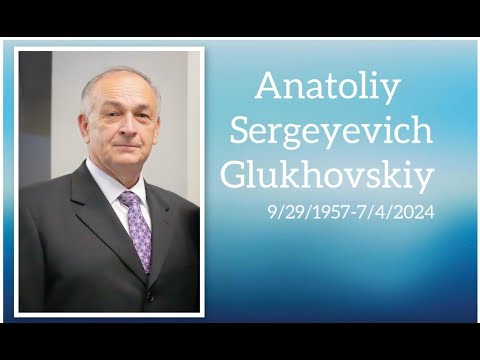
This memorial service honored brother Anatoliy Glukhovskiy, a deacon, preacher and worship leader who helped found the church and went home to the Lord suddenly on July 4, 2024, at the age of sixty-six. His family and fellow ministers remembered him as a sincere man of God, a devoted husband and father of six, who loved Scripture so deeply that he could explain it plainly enough for a child to understand, and who led the congregation in song with his guitar. Speaker after speaker anchored their comfort in 1 Thessalonians 4: believers do not grieve like those who have no hope, because the dead in Christ will rise and we will be caught up to meet the Lord and be with him forever. Drawing on Psalm 84, they reminded the grieving that true strength comes from God, who turns even the valley of weeping into a place of springs. The closing message used the parable of the growing seed in Mark 4: when the grain is ripe, the Lord sends the sickle. Anatoliy's life had borne fruit, and God gathered him at the appointed time, not by accident. The service ended with a tender appeal to receive the seed of life today, to cherish loved ones while they are near, and to be ready at every moment for the meeting that awaits us all.

Are We Honoring God With Our Best?

Are We Honoring God With Our Best?

Guest preacher Brother Thomas opened the book of Malachi, where God confronts His people with a piercing question: a son honors his father and a servant his master, so where is the honor due to God? Israel kept bringing blind and lame animals to the altar - the leftovers they no longer wanted - while saving their best for themselves. The preacher asked whether we treat God the way we treat the people we respect every day, or whether we hand Him only the scraps of our time, money, and devotion. Drawing on the kingdom of God, he reminded us that no one can serve two masters and that following Christ means putting our hand to the plow without looking back. Like David, who refused to offer a sacrifice that cost him nothing, we are called to give the Lord what is truly costly. He warned against a casual age that calls evil normal, noting that where the fear of God fades, His Word soon disappears from our lips and our lives. Finally, from Malachi 3, he addressed robbing God in tithes and offerings, explaining that our time, our resources, and our very lives already belong to Him. God keeps a book of remembrance for those who fear Him and records even the smallest act of faithfulness, and one day He will welcome His faithful servants home.

Built Up in Faith, Doers of the Word

Built Up in Faith, Doers of the Word

The Wednesday service opened by inviting weary, anxious hearts to lay down their burdens and find rest at the feet of Jesus. Two messages followed, both anchored in God's Word. The first, from the letter of Jude, urged believers to build themselves up in their most holy faith, to pray in the Holy Spirit, to keep themselves in God's love, and to wait for the mercy of Christ. We live in the in-between time, from our first salvation to our final salvation - a season of waiting and spiritual struggle in which we must contend for the faith once delivered to the saints. The preacher warned about people who quietly slip into the church - hidden stains at the love feasts, clouds without water, fruitless autumn trees - and against drifting after whatever popular online preacher catches the ear. Using the picture of searching for solid building blocks in Haiti, he called the church to become strong, worthy stones in God's house, to remember the words of the apostles of the Lord Jesus, and to endure to the very end. The second message, from the letter of James, called the church to receive the implanted Word with meekness and to be doers of it, not hearers only. Like newborns longing for pure milk, we grow toward salvation only through Scripture. The Word is a mirror that shows us what to change, yet many merely judge others while ignoring their own lives. God's kindness leads us to repentance, and as we gaze into His Word we are transformed from glory to glory.

The Father's Role in the Family

The Father's Role in the Family

On Father's Day the church gathers to thank God and to honor fathers. The message centers on the father's role in the home and opens with Deuteronomy 6, where God commands His people to keep His word in their hearts and to teach it diligently to their children - at home and on the road, when lying down and rising up. The preacher stresses that a father cannot be replaced. He points to how children who grow up without an engaged father suffer, and warns that the enemy deliberately attacks what holds a family together. Every man is called to be a priest in his own home, responsible not only for daily bread but for the spiritual life of his children. Drawing on Malachi, Mark, Ephesians and Proverbs, the sermon calls children to honor their father and mother - the first commandment with a promise of a good and long life - and calls fathers to be both physical and spiritual fathers who raise wise children walking in truth. There is no greater joy for a father than to see his children living for God.

Christ, Supreme Over All Creation

Christ, Supreme Over All Creation

The evening opened with a visiting brother from Pakistan, who described the cost of following Christ in a land where churches are burned and believers are attacked. His team distributes audio Bibles to villages where most people cannot read, screens the Jesus film, feeds the hungry, and teaches children to pray. He told of a paralyzed man who was healed as he listened to the Word of God day after day. The main message turned to Colossians 1:15-20, where Paul presents Christ as the exact image of the invisible God and the firstborn over all creation. The preacher stressed that "firstborn" does not mean Christ was created but that He holds first place: He existed before everything, all things were made through Him and for Him, and He is the heir of all. A wrong view of Christ opens the door to every other error, while only through Him can we rightly know the Father, ourselves, and the world. From this came a call to a God-centered life. Quoting Augustine, the preacher said God left a place in us for Himself that money, family, or career can never fill. Modern people put themselves at the center and become slaves of their own passions, but the believer builds life around Christ, who is its meaning and goal. The service closed in worship and prayer, recalling that the risen Christ walks among His church today, with thanksgiving for a successful surgery and quick recovery and intercession for the lost and the persecuted church.

Hold Fast to the Lord with a Sincere Heart

Hold Fast to the Lord with a Sincere Heart

The midweek service opens with thanksgiving and a reading of John 16:13, where Jesus promises the Holy Spirit, the Spirit of truth, who guides believers into all truth and glorifies Christ. Though Jesus ascended, He left His Spirit so that we can cry "Abba, Father," worship God, and be joined to Him. The preacher reminds the gathered church that we are saved by grace, delivered from the power of darkness into the kingdom of God's beloved Son (Colossians 1:13) and made alive with Christ when we were dead in our sins (Ephesians 2). Drawing on the example of Barnabas in Acts 11, who came to Antioch, saw the grace of God, and urged the believers to remain true to the Lord with a sincere heart, the message calls every believer to cleave to Christ wholeheartedly. Looking back over Israel's history, the preacher notes that the people prospered when they truly served God but suffered when their hearts drifted far from Him even while their lips still honored Him. The unshakable kingdom (Hebrews 12:28) is kept by those who fix their eyes on Jesus and endure to the end. The heart of the sermon is Psalm 91. To merely carry the psalm like a charm accomplishes nothing; its promises belong to the one who actually dwells under the shelter of the Most High, feeding on the bread of God's Word and drinking the living water Christ gives. Such a person is shielded from the snare, the terror by night, and the arrow by day, for God commands His angels over the one who loves Him and knows His name. The preacher urges us to love God by treasuring His Word, to keep our hope on Christ's return, and to hold fast to Him through every trouble until we see His salvation.

God's Word - The Hammer That Remakes Us

God's Word - The Hammer That Remakes Us

The service opened with a call to stay awake and ready for Christ's return (Mark 13). The preacher recalled a train engineer who, half asleep, kept mechanically repeating the signals while the train rolled on - a warning that we too can drift into spiritual sleep, even though our final destination is the eternal Kingdom where Christ reigns. A young brother preparing for water baptism explained its meaning: baptism in water does not save by itself; it is a public witness that we have died to sin together with Christ, and an act of obedience. The baptism of the Holy Spirit, in turn, gives us power to be witnesses and to keep fighting sin throughout our lives (Matthew 28:19; Romans 6:4; Matthew 3:11; Acts 1:8). The main message came from Jeremiah 23:29 - God's Word is like fire and like a hammer that breaks the rock. False prophets speak from their own hearts and dreams, but the Lord's true servants declare only what they have heard in His council. Like a stonemason chipping a rough stone so it fits the wall, God uses His Word to break off what is wrong and shape us into living stones of His house. To live with Christ we must first die to self. And as Elijah did on Carmel, when we lay ourselves on the altar, God's fire falls and the people confess that the Lord is God.

Three Signs You Are in God's Will

Three Signs You Are in God's Will

This Wednesday service opens at the narrow gate of Matthew 7 and turns on one practical question: how can a believer actually know he is walking in God's will? The visiting preacher answers with three biblical signs. The first sign is a life that matches the Bible. We are to hold our character up to Scripture like a mirror and refuse to be molded by the world, remembering that the very things we count as blessings can become the distractions the enemy uses against us. The second sign is peace in the heart. God's Word may not tell us whom to marry or which job to take, but the Holy Spirit gives an inner rest that confirms our decisions, while running from God, as Jonah did, brings only storms. The third and hardest sign is faith. If our walk and our ministry never stretch us past our comfort, we are probably not where God wants us; He sent Peter onto the water and led Jesus through Gethsemane to show that His will asks us to step out and trust. The evening closes with visiting Ukrainian pastors who share their wartime testimony - evacuating families, planting churches, and building shelter for the displaced. They urge the church to guard a secret place of prayer, where the Father who sees in secret answers openly, and to keep interceding for peace in Ukraine.

Soft Hearts and the Fear of the Lord

Soft Hearts and the Fear of the Lord

The first preacher urged the church to tune its heart to hear God's voice, like young Samuel who answered, "Speak, Lord, your servant is listening." He warned that when we stop receiving God's word, our house is left empty, just as Jesus lamented over Jerusalem. From Luke 8 he walked through the parable of the sower, describing four kinds of hearts: the hard path, the shallow rocky soil, the thorny ground choked by wealth, and the good soil that guards the word and bears fruit with patience. He pressed each listener to ask where Christ ranks among their priorities, reminding them that no one can serve both God and money, and that the lasting treasure is found in following Jesus. A visiting preacher then took up the parable of the ten virgins and the question of wisdom, teaching that the beginning of wisdom is the fear of the Lord. Drawing on Proverbs, James, Elijah before the captains of fifty, Cornelius the centurion, and Isaiah's portrait of the Spirit-filled Messiah, he defined the fear of the Lord as hating what God hates: pride, arrogance, the evil way, and deceitful lips. His practical counsel was simple - when anger rises, wait a few seconds in silence, as Christ stayed silent though he could have called legions of angels, and let God's word, not our impulse, govern our lips.

Behold Your King Is Coming to You

Behold Your King Is Coming to You

Guest preacher Igor Vozniuk reflects on the triumphal entry of Jesus into Jerusalem during His final week before the cross. The crowds spread their cloaks on the road and waved palm branches, crying "Hosanna! Blessed is He who comes in the name of the Lord!" They welcomed Him as King, Messiah, and Prophet, exactly as the prophets had foretold. Every detail, from the donkey waiting in the village to the garments thrown on the road, fulfilled Scripture. Yet the same voices that shouted "Hosanna" turned within days to "Crucify Him." The preacher warns that we are often just like that crowd. We gladly call Jesus King when He heals, provides, and rescues us, but we resist His rule when He speaks of the cross and of suffering. We may never say "crucify" out loud, yet by our lives we crown a King we never truly let reign. The heart of the message is that Jesus is not only the Savior of our past sins but the living Lord who wants to reign over every area of life: the heart, the family, our work, and the church. "Hosanna" means "save us," and the call is to welcome Him not only in the loud triumph but quietly onto the throne of the heart, letting the King of kings transform us into His likeness.

True Service That Points to Christ

True Service That Points to Christ

Beginning from 2 Timothy 3:16, Pastor Nikolai taught that all Scripture is God-breathed and given to teach, rebuke, correct, and train us. From Matthew 23 he showed how Jesus confronted the Pharisees, who twisted the teaching of Moses and turned their religion into a public performance, widening their phylacteries, seeking the best seats, and loving to be called Rabbi. Their aim was to be seen and praised by people rather than to honor God. True ministers do the opposite. Paul declared that we do not preach ourselves but Jesus Christ as Lord (2 Corinthians 4:5). Like Philip in Samaria, who preached Christ while Simon the sorcerer drew crowds to himself with a show, the genuine servant steps into the shade so that only the glory of Jesus is seen. The enemy still works to replace real worship with entertainment, so we must stay sober, test what we hear (Ezekiel 33), and put the Word into practice rather than merely admire it. A second message, from Hebrews 5 and 6, asked whether we feed on milk or solid food. Information that only fascinates the mind is milk; the hard truths that change the heart, such as forgiving an enemy, loving your family, and repenting like Zacchaeus, are solid food. God humbles us as a good Father, teaching first and then correcting, so that, like Zacchaeus who came down from the tree, we look up to Christ, welcome Him into every part of life, and grow toward maturity.

Are You Being Spiritually Poisoned?

Are You Being Spiritually Poisoned?

On a communion Sunday the pastor opens with a personal story: twice in his life he was badly poisoned, once in Warsaw while visiting refugees and once in India after eating at a fast-food chain. From there he asks whether a person can be poisoned spiritually, and answers plainly that they can. Spiritual poison is no less deadly than the physical kind, and it shows up when someone stops reading the Bible, stops praying, and stops gathering with the church. He points to four places where poison gets in: unhealthy fellowship even inside the church, false teaching and false preachers, the wrong company with its idle conversations, and most dangerous of all, the internet. He also names four symptoms of a poisoned soul: a critical spirit toward everyone and everything, constant irritation and impatience, insisting that things go only your own way, and a deadened heart that no longer cares about anything. The cure is to cut off the source, guarding what we see, hear, and speak, then to go deep into the Word of God and to pray. He recalls the pot of death that was healed when flour was added through Elisha, since flour is bread and bread is the Word of God, and the bronze serpent lifted up by Moses, where everyone who looked in faith was healed. In the same way the bread and cup of the Lord's Supper, received in faith, bring cleansing and healing, because only the blood of Jesus can neutralize the poison of sin.

Greater Than Solomon: The Lord Is My Shepherd

Greater Than Solomon: The Lord Is My Shepherd

The service opens with the reminder that apart from Christ we can do nothing, so the congregation first asks for God's blessing. The preacher reads from Proverbs 8, the call of wisdom: blessed is the one who listens to wisdom and watches daily at her gates, for whoever finds her finds life and favor from the Lord. To find true wisdom, he explains, is to find Christ the Savior. He recalls the Queen of Sheba, who traveled far to hear Solomon and called his servants blessed for being able to listen to him every day. Jesus said the Queen of the South would condemn this generation, for she came to hear Solomon, yet One greater than Solomon now stands before us. The very Creator who gave Solomon his wisdom speaks words of salvation and teaches us how to live so as to reach the kingdom of heaven. Turning to Psalm 23, the preacher declares that the Lord is our Good Shepherd. David, a shepherd from his youth who fought lions and bears to rescue his sheep, understood both how to shepherd and how to depend on a shepherd. Scripture divides people into sheep and goats, and to enjoy the Shepherd's protection we must carry the humble heart of a sheep. He closes with his own testimony of arriving in this country with only four suitcases and debt, working in the blueberry fields, and finding deep contentment in small blessings, a reminder that real gladness flows from trusting the Shepherd, not from status or possessions.

Dig Your Own Well of Living Water

Dig Your Own Well of Living Water

The preacher opens with a question - what is your spring? Echoing an old coach's saying, he reminds us that the bucket can only lift what is already in the well. Our bucket is our mind, our heart, our whole life, and we draw up only what we have stored there. He grieves how easily believers can discuss elections, the latest news, and entire seasons of a TV show, yet fall silent when the conversation turns to God, and how children sing cartoon tunes instead of worship - clear signs of which well we are drinking from. From Genesis 26 he turns to Isaac, who re-dug the wells of his father Abraham after the Philistines had filled them with dirt. Every generation inherits faith from godly fathers, but each person must still dig his own well. There is always a battle over the wells, for the enemy and our own flesh long to choke them with rocks, especially the well that holds living water. Drawing on Genesis 24 and the Samaritan woman of John 4, he urges us to make every decision beside the well, the place where God's presence speaks, and to dig down past shallow surface water to the spring that never dries, even when the rain of revival stops. The only well that truly satisfies is Jesus Christ and his word, where the blessed man meditates day and night.

Set Apart: Beginning the Sermon on the Mount

Set Apart: Beginning the Sermon on the Mount

This midweek service opened with a call not to settle for the basics of Christian life - attending, reading, praying - but to press on like the apostle Paul, always looking for fresh ways to serve God and do good for others. Before communion the preacher reminded the church that no one can make himself worthy of the Lord's table; rather than staying away, we should examine ourselves, confess our sins, and still partake, because the bread and the cup represent the very life we have in Christ. The main message began a new series on the Sermon on the Mount (Matthew 5-7), which the pastor read aloud in full. He admitted these words can feel overwhelming and even contradict everything the world calls happiness - and that is exactly the point. The Sermon was given to disciples to mark them out as a holy people, completely different from the world both inwardly and outwardly. To show why, he traced Israel's story: God called a people to live unlike Egypt or Canaan, yet again and again they blended in with the nations and even fell into idolatry. Just as the Law set Israel apart, the teaching of Jesus sets believers apart today. Its standards are only possible for a heart that has truly repented, which is why it begins with the poor in spirit - those who, like a beggar, know they have nothing and need everything from God.

Biblical Counseling: Pointing People to God's Word

Biblical Counseling: Pointing People to God's Word

The heart of Christian counseling is showing a person how God sees their problem, always grounded in Scripture; otherwise advice becomes just another self-help technique. Faith does not require us to hide hard facts. Using the barren wife of Manoah (Judges 13) and the aged, childless Zachariah and Elizabeth (Luke 1), the preacher shows that God Himself names the painful fact plainly, then promises to change it. Facts describe only the past and the present - before the future they are powerless. True counseling is more than telling people what God thinks. It shows them how to find the biblical way out and walks beside them while they decide. The counselor only helps; he never takes away a person's right to choose or decides for them, because that breeds dependence and spiritual immaturity. The one exception is sin, which has a single remedy - repentance - but we must let Scripture, not our opinion, define what sin actually is. Honest prayer matters too. Many believers pour out their hearts to people yet hide behind rehearsed words before God. The Lord calls us to speak openly with Him (Psalm 142), and the preacher shares his own testimony of boldly asking God for a home and seeing Him provide. He closes with practical wisdom: keep confidences, guard against temptation, never counsel the opposite sex alone, and remember that every counselor needs a counselor too.

Counseling That Points to God's Word

Counseling That Points to God's Word

This seminar session continues a study of Christian counseling. After reminding the group what counseling is not - it is neither preaching nor merely handing out advice - the teacher offers a working definition: Christian counseling is the art or skill of giving counsel that reveals God's view of a problem, shows the biblical way out, and helps a person walk it. Because it is an art, it can be developed and it can also be lost, so it demands ongoing study, prayer, and practice. Even God-given gifts call for our faithful effort, as Paul charged Timothy to devote himself to reading and teaching and to fan the gift into flame. The heart of biblical counseling is giving God's perspective, not the counselor's opinions or the world's techniques. That is why a counselor must know Scripture deeply and be a sound theologian, meaning someone who truly knows God through His Word. Proverbs 14:12 warns that a way can seem right and still end in ruin, so every answer must rest on the Bible. Jesus modeled this in Matthew 19: asked about divorce, He sent His questioners back to the beginning rather than offering His own view. The teacher also confronts shallow slogans, such as the claim that depression and Christianity cannot coexist. The Psalms show godly people in deep anguish who still cried out to God and kept their hope in Him - David telling his downcast soul to hope in God, and Jonathan strengthening David's hand in God. He corrects common misreadings of murmuring and of humility, which biblically means submission and accepting the place God assigns, after the example of Christ. The counselor's calling is to keep leading people back to God and His Word.

Christian Counseling: Caring for One Another

Christian Counseling: Caring for One Another

Starting from the man at the pool of Bethesda (John 5) and the Ethiopian eunuch reading Isaiah (Acts 8), the speaker shows that Scripture pictures our world as a place of real need. We cannot always solve our own problems by ourselves, and that is no shame. Both men needed someone from the outside to step in, and they needed that help to come in time. God himself promises to send another person who will guide, explain, pray, and support. From this he argues that Christian counseling, or the care of souls, is a fully biblical ministry. A whole chain of New Testament commands - exhort one another, be attentive to one another, comfort one another, bear one another's burdens, restore the fallen gently - shows that believers cannot live as if a neighbor's life were none of their concern. Often real help begins with simple attentiveness: the couple sitting apart, the worn-out shoes, the person quietly breaking down inside. He also warns what counseling is not. It is not preaching, where one person speaks and everyone listens and no one can talk through their own pain. And it is not tossing off quick advice. A counselor must see each person as a whole inner world, listen patiently, create an atmosphere of warmth, and never give counsel he has not prayed over. Sometimes silent, weeping compassion - as when Jesus wept at Lazarus's tomb - helps far more than careless words.

Knowing the Greatness of Our God

Knowing the Greatness of Our God

This midweek service welcomed two visiting bishops from the Slavic district, and both turned the church toward Christ. After an opening meditation on Jesus' words in John 16 - that the Father Himself loves us and we now come to Him directly through the Son - the first guest preached from the angel's promise in Luke 1: "He will be great." He asked why it truly matters that we grasp the greatness of God, and answered through Scripture: like David facing Goliath, knowing how great God is keeps small obstacles from defeating us; like Moses, it teaches a reverent, right-hearted approach to His holiness; like Isaiah before the throne, it humbles us to repentance and then sends us out to proclaim Christ. He reminded the church that Mary treasured all these things and pondered them in her heart, and he urged believers to do the same - to listen closely, to gather every revelation of who Jesus is, and to let the Spirit fill the heart with the knowledge of His majesty. The second guest preached from Luke 5 and the miraculous catch of fish. He warned of a famine for hearing God's word and called the church to press in close, pay the price, and truly listen. Jesus, he said, is wonderfully accessible and chooses to cooperate with us - He borrowed Simon's boat, and He still asks for our hands, our feet, and our voices. The reward comes later; now is the time to work. And true success is found not in skill or feelings but in obeying His word, as Peter did when he said, "at Your word I will let down the nets."

Preaching With Wisdom in Sorrow and Joy

Preaching With Wisdom in Sorrow and Joy

This preacher seminar begins with a simple picture: a good sermon is like a fine meal, prepared carefully beforehand so it can be served on time and well. The teacher urges ministers never to assume that everyone in the room knows the Bible. When you quote Scripture, name the reference clearly so people can read it and check it at home. He mentions that the church has just begun a shared Bible reading plan to rebuild that knowledge of the Word. The heart of the session is how to preach at a funeral. Such a sermon has three aims: to support the grieving family, to conduct the service with dignity, and to turn those present gently toward eternity - never trapping mourners with a heavy-handed altar call. Common mistakes include opening with "Glory to God for this day," inventing virtues the deceased never had, hunting for someone to blame, or treating the loss lightly. He then turns to water baptism, which must be handled as a sacred ordinance commanded by Christ, not merely a festive gathering. Keep the focus on the meaning of the event rather than the decorations; affirm those being baptized instead of sowing doubt. Throughout, the call is to speak with care, anchor people in God's sovereignty, lift the spirit of the church, and always point to the hope of resurrection.

Guard Your Heart and Trust God's Promise

Guard Your Heart and Trust God's Promise

The evening opened by celebrating the church as one family of many generations gathered to worship, with a reading from 1 John 5 reminding believers that God's commandments are not burdensome for a humble heart. The first message centered on the heart as the source of our spiritual life. Just as we monitor our physical heart, we must examine what fills the spiritual one, because out of its abundance the mouth speaks. Living in a broken world, we are constantly exposed to temptation and worldly influence, so we must set up filters and guard our hearts, minds, eyes and ears - through Scripture, prayer, worship, godly friendships and practical protection for our families. Hiding God's word in our hearts keeps us from sin, and the Holy Spirit fills the surrendered heart with His fruit: love, joy, peace, kindness and self-control. The cry of every believer should echo David: create in me a pure heart, O God. The second message turned to Simeon in Luke 2, a righteous man who waited a lifetime for the consolation of Israel. His dream rested on righteousness, devotion and the leading of the Holy Spirit. Temporary disappointments and dark clouds do not mean a God-given dream is dead; they are part of His plan as He shapes our character. In Christ, God widens the dream beyond one person to all the nations, and when it is finally fulfilled it brings peace, just as Simeon could depart in peace after seeing the Lord's salvation.

Preaching Christ in a Postmodern Age

Preaching Christ in a Postmodern Age

Dr. Mikhail Mokienko begins by describing the world the church now preaches into: a postmodern culture that distrusts sweeping claims to truth, drowns in information, and craves feeling and experience over reasoned argument. Where believers once treasured every word of Scripture - one mother copied the whole New Testament by hand over seven months - people today carry dozens of translations on a phone with no reverence, and a sermon is too often valued only for the emotional 'drive' it produces or the question 'what's in it for me'. Turning to Paul in Athens (Acts 17), he draws out a pattern for faithful witness today. Paul first SAW the city, studying its idols, history, and culture; then he was deeply stirred in spirit, a 'holy frustration' over what grieved God; then he ACTED, reasoning daily in the marketplace. Only after seeing, feeling, and acting did he finally preach at the Areopagus, beginning not with confrontation but with a point of contact - the altar to an unknown god. From this, Mokienko urges a shift from a 'mission of the message' to a 'mission of presence'. Because people now trust the messenger before the message, the witness must live among people, build genuine relationships, and do visible good before speaking. He commends inductive preaching built on real stories and personal testimony, the wise use of visuals and gentle irony, and proactive, series-based teaching that strengthens families and faith before a crisis rather than merely putting out fires. Above all, he warns against the indifference that numbs both preacher and hearer.

Stay in the Text: Preaching for a New Generation

Stay in the Text: Preaching for a New Generation

A practical teaching on preaching and interpreting Scripture for today's church. Because modern listeners think in fragments and tire quickly, the wise preacher tells the story before drawing the lesson, speaks simply about deep things, and keeps in mind an audience that mixes rich and poor, learned and simple. The preacher's first rule, like a doctor's, is to do no harm to the text - never bending a verse to fit our point, as some showy sermons of the past once did. Preachers are urged to keep growing: to read widely and stay full, recalling Paul's charge to Timothy to give attention to reading and to bring the books. History teaches the same lesson - the medieval church kept people from Scripture, while the Reformation spread through literacy and the printing press. Theology and technology must move together; methods may change, but the content of the gospel may not. Two passages are then opened. Daniel 1 shows captivity as discipline meant to restore God's people to influence, and Daniel who set his heart - faithfulness to God outweighs career, and strength lies in the depth of conviction, not in numbers. Luke 2 presents Anna the widow: loss is not a verdict, for she gave herself to God night and day, kept using her gift, and made His name known, which is the heart of true worship.

What Makes Preaching Truly Powerful

What Makes Preaching Truly Powerful

Dr. Mikhail Mokienko traces how Christian preaching developed through history and rests on three foundations: Old Testament prophecy, which called people back to the covenant; classical rhetoric, with its craft of finding, ordering, and delivering words for a real audience; and the New Testament gospel itself. Recalling Cicero's five stages of preparing a speech, he warns that we often pray only over the final step, the delivery, the tip of the iceberg, while ignoring the hidden labor beneath the water. He then turns to Christ, who taught as one having authority: He had not merely the power of argument but the argument of power. Jesus preached simply yet originally, was unafraid of controversy, returned again and again to the Kingdom of God, and used parables and images in which people recognized themselves. A preacher, he says, does not answer every question but lights a torch that sends a person to seek God. The heart of the message is Peter's sermon at Pentecost (Acts 2) as a model for all time: a man prepared and filled with the Spirit, who answered the crowd's real reaction, grounded everything in Scripture at once, spoke without compromise about the crucified Christ, centered all on Jesus as Lord, and closed with a clear call to repent and be baptized. Peter both testified and exhorted, and the Spirit's work in him ran ahead of his own understanding.

From Pulpit to Altar and Back Again

From Pulpit to Altar and Back Again

In this second session on the history of Christian preaching, Dr. Mikhail Mokienko traces how the spoken Word rose, fell, and rose again across twenty centuries. He begins with the apostles - Peter at Pentecost and Paul's first recorded sermon in the synagogue at Antioch of Pisidia - and shows how the early church inherited synagogue worship, where Scripture was read aloud and then explained. As the church matured, theologians developed two ways of handling the text: the cataphatic approach, which honors reason while admitting its limits (the Antiochene school, Augustine, later Aquinas), and the apophatic approach of Origen and Alexandria, which leaned on revelation and allegory - sometimes so far that the plain meaning of Scripture was lost. Augustine balanced this with his famous insight that the New Testament is hidden in the Old and the Old is revealed in the New. Yet from the fourth century onward the focus drifted from the pulpit to the altar, from the heard Word to ritual and sacrament, and for roughly twelve centuries preaching was no longer the heart of worship. The Reformation put the pulpit back in the middle of the church. Luther and others translated Scripture into the language of the people, insisting that salvation comes through the Word and that a preacher must keep learning, speak clearly, and proclaim the cross before the glory. Mokienko then walks through the great awakenings (Edwards, Whitefield, Finney, Spurgeon), the evangelical and Pentecostal movements, and finally the Soviet years, when persecution made the character of the preacher matter as much as the message.

Guarding Your Heart Above All Else

Guarding Your Heart Above All Else

The service opened with a reminder from Hebrews 10 to keep gathering and to spur one another toward love and good deeds, and then turned to the condition of our spiritual heart. We live in a fallen world where sin, temptation, and a constant flood of media press in on us, and Scripture warns in Jeremiah that the human heart is deceitful above all things. Because whatever fills the heart eventually comes out of the mouth, harsh, proud, or bitter words simply reveal what is hidden inside. The preacher asked three searching questions: how often do we examine our heart, how often do we set up guards around it, and how often do we wash it clean with the Word of God? Just as we use toothpaste for our teeth and soap for our bodies, the heart needs something better - the Scriptures, which cleanse us from the inside out. He offered practical steps: build filters by avoiding harmful company and media, release the weight of unforgiveness, stay accountable to a trusted brother or pastor, and keep the heart full of Scripture, praise, grace, and love. As the Holy Spirit grows His fruit in us, our words and our lives begin to change, and like David we can pray, 'Create in me a clean heart, O God.'

Responsible Theology and How a Sermon Is Born

Responsible Theology and How a Sermon Is Born

In this second session of the preacher's seminar, the teacher unfolds what he calls responsible theology - a way of thinking in which Scripture holds the final, unrivaled authority over every teaching. In an age when people no longer accept "because I said so," he warns that fathers and preachers cannot outsource the understanding of doctrine to the pastor or to anyone else, because each believer answers to God for what his own family is taught. He urges his hearers to tell the difference between primary doctrines, where no compromise is possible (the inspiration of Scripture, the Trinity, the incarnation and virgin birth, the bodily resurrection of Christ, and Christ as the only Savior), and secondary matters, where there should be freedom and love. Theology, he reminds them, is one connected system, so no single doctrine can be preached in isolation without distorting the rest. He cautions Pentecostals not to cheapen baptism in the Holy Spirit by reducing it to tongues, for it is power for mission, witness, and healing. Finally he turns to how a sermon is actually born, drawing on Fred Craddock. Revelation is not something dead and static but living and active. A sermon moves from silence, when the preacher waits with no word, to a whisper, when God quietly speaks and only those ready to obey can hear, and then to bold proclamation from the rooftops. The language of preaching should paint pictures, not bury people in jargon.

The Calling and Craft of the Preacher

The Calling and Craft of the Preacher

This seminar for preachers explores what genuine, Spirit-empowered preaching really is. Prophetic preaching is described as a holy challenge that leaves no room for a gray, passive Christianity; it comforts those trapped in a dead end and opens a way out, building up and strengthening the believer. Yet it always divides the room into those who receive the word and are moved to change, and those who keep the religious form while remaining untouched. The teacher walks through preparing a sermon - drawing on both the divine source in Scripture and the real, earthly needs of people - and insists that a message must be ordered logically so it actually lands in the hearer's mind. He treats the preacher's calling as having two dimensions: an inner, subjective conviction born in living fellowship with the Holy Spirit, like Jeremiah who could not keep silent, and an outer, objective confirmation seen in faithful church life, a healthy family, and the recognition of the community. Above all, he urges preachers never to stop learning. Drawing on Ezra, Lloyd-Jones, Spurgeon, Calvin, and Billy Graham, he argues that a preacher must first live what he proclaims, keep a hungry mind, and ground spiritual experience in sound doctrine - keeping Christ, not a vague spirituality, at the center.

Preaching the Word Without Watering It Down

Preaching the Word Without Watering It Down

A preacher and Bible teacher who spent many years training ministers, then relocated after the war and planted a new church, opens a seminar on preaching itself. His central text is 2 Corinthians 2:17, where Paul warns that many peddle the Word of God. The Greek verb pictures a dishonest wine seller who quietly adds water to good wine yet sells it at full price. In the same way, he warns, preachers dilute the gospel so it disturbs no one - and in doing so they distort it. He calls the church the pillar and ground of truth (1 Timothy 3:15): not the source of truth but its bearer, upholding it through obedience, defense, and the clear, accurate proclamation of Scripture. Truth is Christ himself, the One who unveils God (John 1:18). Because the health of a church rises and falls with the quality of its preaching, every genuine revival has been preceded by a renewal of preachers. The preacher stands as a bridge between human sin and God's forgiveness, between human need and God's grace. He distinguishes evangelistic, edifying, and doctrinal sermons, and weighs the strengths and dangers of topical preaching - a tool flexible enough to prove almost anything when the chosen theme drives the text instead of the text driving the message. He pleads for expository, text-based preaching, grieving with James Smart that the voice of Scripture is falling silent in many churches while talk of success and money grows louder. Finally he grounds all preaching in two convictions: the Bible is a real historical book centered on Christ and the scarlet thread of redemption, and it is fully God-breathed, so authority rests on the text and not on the preacher.

Preaching That Lets the Word Speak

Preaching That Lets the Word Speak

This second session of the preaching seminar explores the nature of the Bible. Just as Christ is fully God and fully man in one person, Scripture is both fully divine and fully human. The Holy Spirit inspired the writers without erasing their personalities, so Matthew, Mark, Luke and Paul each leave a unique imprint: Matthew presents Christ as the rightful King of Israel for a Jewish audience, while Mark portrays Him as the Servant of the Lord. Because the Bible is a human book given by people for people, the preacher may use sound exegetical tools to draw out its true meaning, never forgetting that it is the inerrant, unified word of God. Expository preaching, which lets the text set the agenda, lifts up the authority of God's word, builds biblical thinking, and forces us to face even the hard passages. The speaker distinguishes reading from hearing: we must slow down, meditate, and actually listen for what God is saying instead of skimming familiar verses. He unpacks logos, graphe and rhema - Christ the living Word, the written Scripture, and the personal word the Spirit speaks into the heart, which becomes the source of faith. The preacher's own conviction is decisive; a vague, half-prepared minister only transmits his own fog. Faith comes first and reason serves it, yet only the Holy Spirit, not argument alone, can raise a dead heart to life. Faithful preaching cultivates thinking, free people who weigh everything and take responsibility, resisting manipulation and propaganda. It joins the eternal message to the present moment, is born out of real contact with people's lives, and when carried by the Spirit it becomes living, piercing and fruitful.

What Carries Us Through Suffering

What Carries Us Through Suffering

This midweek evening service prepared the congregation for Sunday communion, the remembrance of Christ's death. The leader urged everyone to examine their own heart before the Lord's table, and not to think too highly of themselves but, seeing how greatly God values a person, to seek His will in humility and live for His glory. The first message drew on Psalm 116 and its opening line, "I love the Lord because He has heard my voice." The preacher spoke of times of crushing stress, even standing on the border of life and death, and testified that God truly hears the one who cries out to Him. He challenged each listener to remember why they love God and to tell others of His mercy. The second message asked what made Daniel strong under the heaviest pressure. The answer came in three parts: Daniel loved God above every comfort, Daniel prayed faithfully three times a day even when it could cost his life, and Daniel loved and searched the Word of God. The service closed by looking beyond present trials to the New Jerusalem, where God will wipe away every tear, and to the great reward awaiting all who love Him.

Preaching One Clear Biblical Idea

Preaching One Clear Biblical Idea

This homiletics seminar, opened with prayer for Israel and Ukraine in a season of war, teaches preachers how to build a message that truly serves people. The teacher separates the subject of a sermon (the whole pizza) from its theme (a single slice you can actually hand to listeners) and insists that a good theme must be biblical, substantial, and practical, speaking to the real questions people carry today rather than yesterday's debates. At the heart of the lesson is the thesis, or big idea: the entire message must boil down to one clear sentence, so simple you could state it if woken at three in the morning. A sermon should be a bullet, not buckshot. The preacher's task is not to invent a clever meaning but to discover the one meaning the Holy Spirit placed in the text, then carry it back to the church in plain, warm language, the way Jesus spoke to ordinary people. Working through Philippians 3, 2 Timothy 2:2, and other passages, he shows how to turn careful study into a simple thesis, sharpen it with a question, and tie the points together with a key word. He closes by urging preachers not to wait for a pulpit: use online teaching, plant new churches, and lead home groups so the word keeps going out.

Preparing a Sermon That Leads to Christ

Preparing a Sermon That Leads to Christ

In this second part of a seminar for preachers, the teacher lays out three stages every faithful sermon must pass through: careful study of the text (exegesis), theological analysis that ties the passage to the whole Bible and to Christ, and only then the descent to the listeners (homiletics and application). Skip any stage, he warns, and you distort the message; every shortcut, every diagonal move, leads to error. He shows how to handle a text honestly - reading it in its near and far context, respecting its literary genre, remembering the limits of translation, and grasping the one great story of Scripture that runs from Eden to the new Jerusalem. Because the whole Bible is a single story of redemption, every passage connects to what comes before and after and ultimately points to Christ, just as Jesus opened the Scriptures beginning with Moses and all the prophets. Finally he turns to the people. Love the listener more than your own study; never dump raw research on tired heads, yet never water down the gospel to flatter a culture. Like Paul, become all things to all people to win some - change the format freely, but never the message itself.

Preaching With Structure, Purpose, and Care

Preaching With Structure, Purpose, and Care

This is the second session of a seminar for preachers. The teacher shows why a sermon needs structure: an ordered message is far easier to remember than a scattered pile of good thoughts, and a clear skeleton gives the preacher a logical path. Writing out your outline exposes repetition, reveals where the idea wanders off, and lets you turn dense passages like Romans 1 or Psalm 1 into a few simple points an ordinary listener can carry home. He walks through the three classic parts - introduction, body, and conclusion - and urges that the idea, the voice, and the emotions all build toward a climax: from the known to the unknown, from simple to complex, and from negative to positive, so that no one leaves beaten by their sin without being pointed to Christ and grace. He warns hard against laziness: the Holy Spirit does not work through the slothful, and good preparation - Lincoln sharpening his axe, a cake baked from raw ingredients - is the hidden labor behind every sermon that truly feeds. The lesson closes on two building blocks: purpose and subject. A sermon must aim at something; it should change how people live, not merely inform them, and that requires clear conviction about what Scripture teaches. The subject is the broad sphere of truth, like love or God, which must be narrowed to one focused theme, just as a good dealer narrows a customer's request for a car down to the exact model they need. Serve small portions, the teacher says, so people can taste and ask for more.

Faithful Preaching That Feeds the Church

Faithful Preaching That Feeds the Church

This was the opening lesson of a seminar on homiletics, the craft and theology of preaching. The teacher drew a sharp line between rhetoric, which aims at beautiful speech, and true preaching, which works with the biblical text and carries God's will to the church. The pulpit, he reminded us in the words of Luther, is the throne of God's Word and not a platform for our own opinions or clever talk; the moment we step outside the text, we trade the authority of Scripture for our own. The goal of preaching, he argued, is not information but transformation. Quoting Calvin, he said that where the application of the text begins, preaching begins; without it we offer only a religious lecture. The level of our preaching shapes the level of our churches, yet we often pour our time into music, programs, and everything except the careful study of God's Word - and hungry souls end up looking for bread elsewhere. He also taught that a sermon needs structure, like a skeleton or the frame of a house, and walked through the main types of preaching - topical, textual, and expository - urging that Scripture, not the preacher's favorite themes, should set the agenda. Above all, he called preachers to proclaim Christ crucified from the Scriptures, as Paul did, so that the church is genuinely fed.

Chosen by Mercy to Reflect His Light

Chosen by Mercy to Reflect His Light

The evening opened with a call to feed the soul the way we feed the body. Drawing on Hebrews 13:9, a brother warned against a 'fast food' faith - racing through a verse or two and hurrying on. Just as the body weakens without real nourishment, the spirit grows shallow without daily, unhurried time in the living water of God's Word. He pointed to Psalm 1, the parable of the sower, and to Job and Paul, who sank deep roots and so could stand through loss and suffering, certain of the One they believed. The main study continued through 1 Peter 2. Believers are a chosen people, a royal priesthood, a holy nation taken as God's own possession: once not a people and unpitied, now His people who have received mercy. Like a guilty prisoner acquitted by his Advocate, we were condemned yet set free by Christ, for mercy triumphs over judgment. Called out of darkness into His marvelous light, we are to display that light through honorable, good lives. That light shows in practical obedience: submitting to governing authorities for the Lord's sake, honoring even harsh masters, blessing rather than fighting those who treat us unjustly, and following the steps of Christ, who when reviled did not revile in return. We were straying sheep who have returned to the Shepherd and Overseer of our souls, and the great danger is losing communion with Him.

Born Again by the Imperishable Word

Born Again by the Imperishable Word

Finishing the first chapter of 1 Peter, the pastor reminds the church that no one can buy back his own soul. We were redeemed not with silver or gold but with the precious blood of Christ, the spotless Lamb, foreordained before the foundation of the world. God raised Him from the dead so that our faith and hope rest in God alone, for Jesus Himself is the source of life that death could not hold. The heart of the message is the living and abiding Word of God. Obedience to the truth purifies the soul, and the Word, sharp as a two-edged sword, exposes our thoughts and quietly performs its surgery on us. We are born again by this imperishable seed, and like newborn babies we must crave the pure milk of the Word in order to grow. Moving into chapter two, believers are called to lay aside malice, guile, hypocrisy, envy and slander - the spiritual weeds that choke the Word - and to come to Christ, the living and precious Cornerstone. Built together as living stones into a spiritual house and a holy priesthood, we offer spiritual sacrifices: our bodies, our praise, and our generosity, all flowing from faith working through love. To those who believe He is precious, but to those who refuse Him He becomes a stone of stumbling. A guest brother also reflected on the rich young ruler, who ran eagerly to Jesus yet turned away over the one thing he lacked, and the service closed with thanksgiving that God had spared the church building from the hurricane.

The Word, the Spirit, and a Living Faith

The Word, the Spirit, and a Living Faith

The first message called the church back to the Word of God. Like David, who said God's word was a lamp to his feet and a light to his path and was named a man after God's own heart, we are to keep turning to Scripture and praying, "Lord, teach me to do your will." Moses, learned in all the wisdom of Egypt, still asked God to teach him to number his days; Joshua stumbled when he acted without asking the Lord. Jesus promised never to leave us as orphans but to send the Holy Spirit, the Comforter and Spirit of truth, who keeps drawing us to the Word and to prayer. The second message opened James chapter two. Genuine faith in the Lord of glory shows no favoritism. The preacher warned against the partiality that creeps into the church - judging people by skin color, clothing, wealth, background, or even who gets the best seat. Before God every soul is equal: husband and wife, rich and poor, every nation are one in Christ, saved by the same grace and washed by the same blood. Saving faith is living faith, and living faith proves itself in works. Quoting Spurgeon, "grace that does not change my life will not save my soul," he showed that Paul and James do not contradict: we are saved by grace alone, yet a saved person acts on what they believe. Like Abraham who obeyed, Rahab who acted, and the four friends whose faith Jesus could see, our faith should be visible - feeding the hungry, welcoming the overlooked, and letting Christ's love shine through ordinary deeds.

Praying With Faith, Standing in the Faith

Praying With Faith, Standing in the Faith

The service opens with Mark 9:1 and Romans 14:17: the kingdom of God is something we already taste here on earth. It is not food and drink but righteousness, peace, and joy in the Holy Spirit, given to us through the righteousness of Christ. When a heart is forgiven and at peace with God, joy follows; that joy can never come from mere entertainment. The guest preacher shares seven practical steps toward an effective prayer life. Decide clearly what you are asking and ask in faith, without wavering, like blind Bartimaeus who cried out to Jesus. Search the Scriptures for what God has promised about your need, confirm that your request agrees with His Word, and meditate on those promises until they become living words to you. Then bring everything to God with thanksgiving, giving thanks before you receive, because faith brings the invisible into the visible. The gathering then turns to a verse-by-verse study of the short Epistle of Jude. Believers are urged to contend earnestly for the faith once delivered to the saints, to recognize those who creep in unnoticed and turn God's grace into a license to sin, and to know such people by their fruits. Instead, the faithful are called to build themselves up, pray in the Holy Spirit, keep themselves in the love of God, and rescue the wavering with mercy and the fear of God.

Quick Restoration by the Living Word

Quick Restoration by the Living Word

Two visiting preachers shared one heart on this Wednesday evening. The first, a pastor serving in Pakistan, taught that God works through whatever is already in our hands. Before David ever faced Goliath he had been faithful in smaller battles against the lion and the bear. Moses' rod was only an ordinary stick until he cast it down in God's presence, and there it received life and became the rod that worked miracles. In the same way the five loaves and two fish were multiplied only after they were placed into Jesus' hands. We are not asked to be worthy or able, only to be available and to surrender the little that we hold. He testified that he had spent much of his life in depression and never imagined God would use him, yet when he threw himself before the Lord, God took a man like him and sent him to the nations. The second preacher, Thomas, born in Ethiopia and saved in Germany, called his message quick restoration. Thirty-three years ago, lost and far from God, he heard a stranger in a swimming pool say only Jesus Christ saves, and those words shook the very foundation of his heart. Believing in the heart and confessing with the mouth (Romans 10), he was born again, devoured the Scriptures for hours, and within two weeks was preaching the gospel everywhere. The living word of God, he said, is sharper than any two-edged sword and can turn darkness into light and pain into joy in a single moment.

The Quick and Powerful Word of God

The Quick and Powerful Word of God

The message opens with a testimony. A woman came up to the preacher and told him that the word she heard had saved her marriage. She had walked into the service already decided on divorce, praying that God would do something, and that day the Lord spoke to her through the word and she obeyed. What struck the preacher was not simply that she heard the word, but that she was quick to receive it and act on it. From there he unfolds the characteristics of the Word of God. First, it is quick: it reaches you the very moment you call, faster than the speed of light, arriving right where you are in your situation. The real question is whether we are ready to receive and obey it, because those who are quick to receive the word find that the word is quick to bring change. Second, the Word is powerful: by it the whole universe was created, God speaks and it happens, and it never grows tired of helping us no matter how often we call. Third, the Word of God never loses its vision, and it is vision that keeps us moving forward instead of leaving us stuck where we are.

Fire Falls Only on a Living Sacrifice

Fire Falls Only on a Living Sacrifice

The first message asks a searching question: why is the fire we long for so often missing from a believer's life? Returning to Elijah on Mount Carmel (1 Kings 18), the preacher contrasts the prophets of Baal, who shouted, danced, and cut themselves with no answer, with Elijah, who simply did everything according to God's word and saw the fire fall. The lesson is that fire never descends on an empty altar. It comes only where there is a sacrifice, and according to Romans 12:1 that sacrifice is our own lives offered to God daily. He warns that a living sacrifice keeps trying to crawl off the altar, so the fire must be kept burning every morning anew (Leviticus 6). Our time, finances, and plans are part of what we lay down. He distinguishes three motives for serving God: mere pressure or fear, the pull of human ambition and applause, and true inspiration, where love for Christ makes service something we cannot help but do. A second message, from 1 Corinthians 1-3, addresses the disputes that divided the Corinthians as they argued over which teacher they followed. Paul answers not with cleverer arguments but with the wisdom of God revealed by the Spirit, which the natural mind cannot grasp. The faithful response to God's revealed truth is not to argue but to receive it humbly.

Three Lessons from the Withered Fig Tree

Three Lessons from the Withered Fig Tree

This Easter-season Wednesday service opens with the greeting "Christ is risen" and a call to let the word of Christ dwell in us richly (Colossians 3:16). The preacher contrasts the fading wisdom of the world with the living, holy word of God, reminding the church that the one who listens to the Lord and guards His word in a clean heart is truly blessed (Proverbs 8:34). The main message walks through Mark 11, where Jesus curses a fruitless fig tree and cleanses the temple. From this the Lord draws three lessons: have faith in God so that even mountains move; when you pray, believe you have already received; and when you stand praying, forgive, so that the Father may forgive you. Two testimonies bring the text to life. A wayward son refused his dying father's gift of a new Bible, yet years later, emptied by addiction, he turned to Christ, found that very Bible, and now preaches and serves addicts in Ukraine. Three young missionaries sent to Hawaii with only twenty dollars prayed for shelter and were handed the keys to a stranger's home. The service ends in shared prayer for the sick, for missionaries abroad, and for a fresh outpouring of God's Spirit.

Seeking the Giver, Not the Gift

Seeking the Giver, Not the Gift

The service opened with a reflection on Paul's confidence in Romans 8, that nothing in all creation can separate us from the love of God in Christ. The pastors reminded the church that God chose us for salvation and hears the prayers of His people, much as the persistent widow received justice even from an unjust judge. The main message asked one searching question: why are we really here, and what are we seeking? Through the parable of the farmer whose fortunes kept reversing, the story of Job, and the three young men in the fiery furnace, the preacher showed that storms are not a matter of if but of when. Those who chase only blessings turn away when the blessings vanish, but those who seek God Himself can still bless His name when everything is taken. The closing call was to feed daily on God's word like manna in the wilderness. Drawing on Elijah's renewal and Jesus' words that His food was to do the Father's will, the church was urged to reject the spiritual junk food of gossip and quarrels and to fix its focus on Christ alone, the Savior who is greater than any rescue He gives.

The King Is Born - Our Eternal Prince of Peace

The King Is Born - Our Eternal Prince of Peace

On Christmas morning the church celebrates that Jesus was truly born, just as the angels announced over the fields of Bethlehem: glory to God in the highest and peace on earth. The pastors greet the congregation and pause to pray for Ukraine, asking the Prince of Peace to stop the bloodshed and to bring His own peace to a land at war. Walking through Matthew and the prophecy of Micah, the message shows that Christ's coming is not merely promised but already fulfilled. Wise men searched for the newborn King while Herod and all Jerusalem were troubled, yet the prophets had named Bethlehem some 700 years before. This King is no ordinary ruler: His origins reach back to eternity. He is the Great I AM who was before Abraham and before the stars, whose government will never end, the same yesterday, today, and forever. First Timothy calls the mystery of godliness great - God appeared in the flesh. We can only keep Christmas rightly when the Father reveals this mystery to our hearts, as He revealed Christ to Peter. The closing appeal is plain: do not let Jesus stay a tiny baby in your life. His birth in your heart is only the beginning; He must grow great and reign.

Mighty God and Everlasting Father

Mighty God and Everlasting Father

This pre-Christmas Wednesday service opened with a call to revival. The preacher reminded the church that awakening never comes without repentance, and that repentance is born from the sound preaching of God's Word. As believers measure themselves against Scripture, they turn from vain pursuits and seek the Lord with all their hearts. Two messages then unfolded the names of the Messiah from Isaiah 9:6. The first exalted the name 'Mighty God,' surveying the Hebrew names of God - Creator, Most High, the One who sees, the eternal 'I AM' - and reminding everyone that the Son of God became the Son of Man so that we could become sons of God. The second dwelt on 'Everlasting Father,' explaining why God came as a defenseless child: having passed through every stage of human life, He can fully identify with us, and He gave Himself as the greatest gift, so that whoever believes should not perish but have eternal life. As a Father, God both protects and provides. The speakers shared testimonies of arriving in America with nothing and of God's faithful care, urging the church to bring Him even their smallest needs. The service closed with thanksgiving, prayer for Ukraine and for the sick, and the reminder that grace and peace multiply as we come to know Christ more deeply.

Wonderful Counselor: The Names of Jesus

Wonderful Counselor: The Names of Jesus

This Christmas-season service centers on the greatest gift God ever gave - His Son Jesus, born to save us. It opens in the spirit of Simeon, the righteous man who came to the temple at the Spirit's prompting and longed to meet the Lord, and the church prays for that same Spirit-led encounter. Two preachers then unfold the names God gave the Christ child. From Isaiah and Matthew come Emmanuel (God with us), the Savior, and above all Wonderful - the One whose coming changes everything, who does all things well and makes everyone who receives Him a new creation. The mystery of Christmas is that God was manifested in the flesh, longing to live not in a tabernacle but in the human heart. The second message rests on another of those names: Counselor. We constantly live by someone's advice, but its worth depends entirely on its source. Through Ahithophel, Rehoboam, and Psalm 73, the preacher shows that human counsel can either ruin or save, while God's counsel - His Word - stands forever. Christ advises us out of love, and to all who obey He promises a place at His throne.

Give Ear: Wisdom from the Harvest Field

Give Ear: Wisdom from the Harvest Field

The preacher opens with praise and thanksgiving, recalling the recent Harvest Festival when the congregation remembered how God has blessed them year after year. Looking ahead to the national day of Thanksgiving, he trusts that the Lord will keep his hand of blessing resting upon his people. Turning to the prophet Isaiah, chapter 28 from verse 23, he highlights God's appeal: give ear, hear my voice, and pay close attention to what I am about to say. God deliberately calls his people to sharpen their attention before he begins to teach them. He then unfolds the picture of the farmer. The plowman does not plow endlessly without purpose; once the ground is leveled, he sows each seed - nigella, cumin, wheat, and barley - in its proper place. From this ordinary, orderly work the Lord begins to draw an important lesson about the wisdom he himself gives.

Faith from the Word, Service Unseen

Faith from the Word, Service Unseen

This midweek prayer service opens near Thanksgiving with a call to give thanks in everything (1 Thessalonians 5:18) and to remember the daily mercies of God that we so easily overlook. The first message centers on the Roman centurion of Luke 7 and asks where his remarkable faith came from. The answer is that faith comes by hearing the word of God (Romans 10:17): the centurion spent his time learning Scripture from the elders rather than chasing entertainment, so when crisis struck he leaned his whole hope on Christ. He is set against Naaman and King Ahaziah, men who never let the word take root and who turned the wrong way. The lesson is plain: the more we fill our hearts with God's word in the house of prayer, the stronger our faith grows. The same passage points to the faithful servant who was so valued that Christ healed him, a picture of the good and faithful servant who one day hears, well done. The second message, titled underestimated or invisible, confronts our age of celebrity and our hunger to be noticed. Like the Pharisees who prayed, gave, and fasted to be seen, we crave applause that fades. Yet the highest service is hidden, like the air everyone breathes without noticing. The heroes of Hebrews 11 received no earthly reward, but the world was not worthy of them. Seek the glory of God, not human praise, and let every trial, like cannon fire on an old stone fort, only press your faith together and make it stronger.

A Living Church Awake for His Coming

A Living Church Awake for His Coming

The evening opened with a call to seek the Lord in anxious, troubled times, echoing David's longing to dwell in God's house. The first message turned to the early church in Acts 2, drawing out four marks of a living congregation: devotion to the apostles' teaching, genuine fellowship, persistent prayer, and sacrificial love. The preacher described how revival is stirring across Asia, Africa, and Latin America, yet warned that a new generation of believers often carries a serious deficit in knowing Scripture. He testified that for years he was simply a product of his culture, upbringing, and favorite preachers, until he made a firm decision to dig into God's Word for himself. The same Spirit who inspired Scripture began to transform him from within. To a church that hungers for the Word, builds real fellowship, prays in dependence on God, and shares freely with those in need, the Lord adds the saved day by day. The second message continued a study of the last days, walking through the trumpets of Revelation 8-9 and the seven bowls of God's wrath in Revelation 16, on to Armageddon and Christ's victorious return. Rather than hiding in bunkers or fleeing to distant islands, believers are called to obey Jesus in Luke 21: watch yourselves so your hearts are not weighed down, stay sober, and pray at all times to be ready when He comes.

The Value of God's Living Word

The Value of God's Living Word

The service opens with worship and the invitation of Jesus in John 7:37: let anyone who is thirsty come to Him and drink. The preacher reminds us that we all crave to satisfy our thirst, but we must drink from the Source written with a capital letter - and that Source is Christ Himself. He then warns that the enemy works hardest to remove from our lives the things that matter most spiritually, and nothing matters more than the Word of God. Working through Psalm 19:7-11, the message unfolds what Scripture actually does in us. It converts and refreshes the soul, for we are born again through the living and imperishable Word (1 Peter 1:23). It makes the simple wise by renewing and transforming the mind (Romans 12:2). It rejoices the heart, giving joy and peace even in the hardest seasons, and it enlightens the eyes like a mirror that always shows reality rather than our own perceptions (James 1:23-24). Because God's Word is pure and endures forever (Matthew 24:35), it offers stability in a world that never stops shifting, and it is utterly true - illustrated by the skeptic who set out to disprove it and became a believer instead. It is more precious than gold and sweeter than honey, it warns us because God loves us, and it points to a great reward. The preacher closes by urging the church to cherish their Bibles, remembering believers in China and under Soviet rule who longed for a single copy.

The Prayer of a Humble and Contrite Heart

The Prayer of a Humble and Contrite Heart

This midweek prayer service opens with the cleansing power of God's Word. Just as Christ washes His church through the word (John 15:3; Ephesians 5:25-27), Scripture quietly removes what burdens us when we come with open hearts. The preacher invites everyone, even the children, to let the Word do its purifying work. The heart of the message is how we actually pray. Too often we come to God issuing commands - do this, give that - instead of standing watch like Habakkuk to hear what He will say. Isaiah 66 reminds us that God looks on the one who is humble, broken in spirit, and trembles at His Word. The tax collector who beat his chest, the persistent widow, and Hannah praying in her grief all show that a sincere, lowly heart is heard, while the self-righteous Pharisee went home unjustified. A real encounter with Christ transforms our prayers; of Paul it was simply said, he is now praying. The preacher shares his own testimony of giving sacrificially toward the prayer house and turning down a good job that would have kept him from worship, and how God provided far beyond what he asked. God never remains anyone's debtor, He does not desire the death of a sinner, and He asks us to receive His Word with faith and to examine our own hearts.

Born Again to Enter God's Kingdom

Born Again to Enter God's Kingdom

This Sunday service was built around Jesus' words to Nicodemus in John 3: no one can see or enter the kingdom of God unless they are born again. The preacher stressed that this new birth is not a religious ritual but a genuine inner change worked by the Holy Spirit through the living Word of God, which reaches the heart through preaching, a personal testimony, or even a sung hymn. He traced the path of salvation step by step: the Word awakens sincere faith, faith leads to honest repentance and confession of sin, and the Spirit then makes a person a new creation and a child of God. After this new birth, the believer enters into covenant with God through water baptism and receives the promised gift of the Holy Spirit, just as Peter preached on the day of Pentecost. The pastor offered five marks of someone truly born again: a hunger for God's Word, a growing love and delight in it, the Spirit's inner witness that we belong to God, settled assurance of salvation, and real love for fellow believers. Earlier in the service the congregation also gathered to bless the children of a young family, asking God to guard them and draw them to Christ.

Created to Bear the Image of God

Created to Bear the Image of God

This midweek teaching service opened with a plea to seek God's will and to dig deeply into Scripture. The preacher warned that without sound doctrine any teaching can sound convincing, pointing back to the Council of Nicaea and the confession that the Son of God was begotten, not created, as the answer to the ancient Arian error whose echoes are still heard today. Knowing what we believe, he said, is the foundation that nothing can shake. The heart of the message asked what a human being really is - spirit, soul, and body - and above all what it means to carry the image of God. That image is not a physical resemblance, nor a license to become our own little gods, but the moral and spiritual character described in Ephesians and Colossians: putting off the old self and putting on the new in righteousness, holiness, and love. Finally the teaching traced God's purpose in making us - to know, love, and serve Him, to live in fellowship, to steward His creation for good, and supremely to be shaped into the bride of Christ, the Church He cleanses and will present holy and without blemish. An opening picture of a railway worker waving an unseen warning lamp pressed home the call to live alert, righteous lives that exceed mere outward religion.

A Spiritual Famine for God's Word

A Spiritual Famine for God's Word

On Father's Day the service opens by honoring fathers through Psalm 127, where children are a heritage from the Lord and a father stands for his family like a warrior with arrows in his hand. The preacher warns that the enemy deliberately targets fathers to weaken them, and reminds the church that unless the Lord builds the house, those who build it labor in vain. The central message comes from Amos 8, where God warns of a famine that is not of bread or water but of hearing His word. Tracing Israel's slide from Solomon's disobedience to a prosperous nation too busy chasing money to honor the Sabbath, the preacher distinguishes a healthy hunger that longs for God (Matthew 5:6) from a tragic spiritual famine in which people no longer want His word and can no longer find it. Like Israel wandering from sea to sea yet never turning toward the temple, many search everywhere except where God truly is. Christ is the bread of life, so we must feed on Scripture and not on substitutes. The service closes with testimonies from ministry among Ukrainian refugees: a mother reunited with a son she had not heard from in two years, answered prayers for healing, and a reminder that faith without doubt can move mountains and that, as in the feeding of the five thousand, the miracle comes when we begin to give. The God who rebuilt the walls of Jerusalem still rebuilds a broken life.

Jesus Christ: Fully God and Fully Man

Jesus Christ: Fully God and Fully Man

Gathered on a midweek evening, the church sets aside the noise of work and money to turn together to the Word of God, prayer, and the study of Scripture. One brother shares how, after retirement, a new television slowly pulled him back into the world until a sudden, frightening brush with eternity shook him awake; he threw the set out and gave his time and his money to serving God and supporting missionaries. A hymn drawn from the life of Job reminds everyone that even when home, children, and health are stripped away, the believer still says, 'Blessed be the name of the Lord.' The heart of the evening is a Bible study on who Jesus is. He is at once fully God and fully man - conceived by the Holy Spirit and born to fulfill the promises made to Abraham and Moses, to keep the law, to reveal the Father, to destroy the works of the devil, and to save us as the Lamb of God. Fulfilling Israel's four offices, He stands as our Judge, Prophet, Priest, and King. His deity is proven by His divine attributes (eternal, present everywhere, all-knowing, unchanging, holy), His divine names (Immanuel, Mighty God, Lord, Alpha and Omega), His divine works (creating the world, raising the dead, giving eternal life), and His own claims, 'I and the Father are one' and 'Before Abraham was, I am.' Yet this same God humbled Himself, taking the form of a servant, and His saving work is not finished but continues until He returns to deliver the kingdom to the Father.

Christ Our Intercessor, Who Knows Our Hearts

Christ Our Intercessor, Who Knows Our Hearts

The service opens with worship and a prayer that God's kingdom would be present in power on this place. The pastor welcomes everyone gathered, the guests and those watching online, and lifts up the many battles, physical and spiritual, that God's people are passing through. The children of the Sunday school are brought forward and prayed over, that they would come to know Christ as their personal Savior. The first message proclaims that Jesus Christ continually intercedes for His people. Drawing from Romans 8 and John 3:16, the preacher reminds us that no one can bring a charge against those whom God has justified, because Christ who died and rose now pleads for us at the Father's right hand. Throughout Scripture God raised up those who stood in the gap for His people, and now the risen Lord Himself is our Advocate. The second message turns to Revelation and the letters to the seven churches, especially the lukewarm church of Laodicea. The Lord knows the deeds of every congregation and the hidden state of every heart; He calls the self-satisfied to see their true poverty and to buy from Him gold refined by fire, white garments, and salve for their eyes. The Word of God examines us, nothing unclean enters His kingdom, and Christ still stands at the door and knocks, calling each person to genuine repentance. A reflective poem also urges gratitude in every circumstance and humble submission to God's will.

Seeking Wisdom, Rooted in God's Word

Seeking Wisdom, Rooted in God's Word

At this Young Ladies Conference, guest speaker Olga opens Proverbs 9:10 - the fear of the Lord is the beginning of wisdom - and urges young women not to wait for age to make them wise. Wisdom must be pursued intentionally now, while they are forming friendships, choosing a future spouse, and learning life skills, because these early decisions shape the rest of their lives. She compares a believer to a tree planted by the water (Jeremiah 17:7-8): we stay strong only when our roots are fed by God's Word, watered by His presence, warmed by His light, and occasionally pruned of bad habits. A real relationship with God, like a strong marriage, is built not on emotional highlights but on faithfully showing up every day, even when we do not feel like reading or praying. Olga then shares her own testimony: a sudden medical crisis during pregnancy that cost her unborn daughter, most of her intestines, and nearly her life. The Scriptures she memorized as a child became living words that drove back fear and despair. God carried her through, later gave her two sons, and made the woman who was told she would never eat again into a cook who feeds others - proof that He can author redemption out of our darkest chapters.

The Word of God, Our Sure Foundation

The Word of God, Our Sure Foundation

This Wednesday evening opened a series on the foundations of the faith - the Bible, Jesus Christ, and the Holy Spirit. Reading from the Psalms, the brothers reminded the church that God's mercy reaches to the heavens and that His Word is absolute truth, not the world's idea that everyone has a private version of truth. Sound doctrine, what we actually believe, is never dry theory: it shapes our character, our daily conduct, and our eternity, and it must be built on the one foundation, Jesus Christ. The teaching warned that a small error works like leaven. Little human additions or man-made interpretations slowly corrupt the whole lump, just as legalism once troubled the early church. The natural mind cannot grasp spiritual things on its own; we need the Holy Spirit to open the Scriptures to us. The second part walked through what the Bible actually is - one Book given by God through about forty very different writers over roughly fifteen hundred years, yet reading as a single unified story. From its names (book, scroll, Scripture, the oracles of God) to its sixty-six books and the much later, man-made chapter divisions, the lesson showed that the Bible is a genuine miracle. Knowledge by itself, even an atheist's, profits nothing; but to those who love God, He gives understanding and reveals Himself through His Word.

Stay Awake and Armed in the Last Days

Stay Awake and Armed in the Last Days

On this Wednesday service, held only weeks into the war in Ukraine, the church opened in John 4, where the people of Samaria came to believe for themselves that Jesus is truly the Savior of the world, and then poured out long, tearful prayer for a homeland under bombardment. A brother shared a vivid testimony: he had flown to Ukraine to bury his father when the invasion began, and described how God carried his family out safely through closed roads, exploding bridges, and the kindness of strangers handing out bread, keeping his heart in peace even as tanks rolled past. The first message drew on 1 Thessalonians 5, let us not sleep as others do but keep awake, urging believers to put on the breastplate of faith and love and the helmet of hope. Every child of God is a soldier who must know his enemy through Scripture, the one offensive weapon in God's armor. From Genesis to Calvary the preacher traced how the devil stole the dominion God gave to man, and how Christ, by His death and resurrection, stripped the enemy of power and won that dominion back forever. A second teaching continued a series on the Holy Spirit, warning that these same last days bring savage wolves, false prophets, and flattering teachers who divide the flock. Believers were called to test every spirit by the Word, to learn from mature mentors, and to recognize true ministry by its fruit, love, joy, and peace, rather than by clever, flattering speech.

Family: Our Difficult Happiness

Family: Our Difficult Happiness

The evening opens with the host pastor preparing the congregation to truly receive God's word. Drawing on the healed man of the Decapolis (Mark 5 and 7) and Paul's preaching in Antioch (Acts 13), he reminds them that miracles and sermons are not meant to leave us merely amazed. God sends His word to bear fruit and to be obeyed, so we must watch how we listen, because the same word can be despised or can work salvation in us. The guest couple, Pavel and Vera, then teach on the family, which they call our difficult happiness. Vera shows that family is God's own invention from Eden (Genesis 2), and that love - not fleeting emotion but the steady, maturing affection between husband and wife - is its foundation. She testifies of parents who stayed married more than sixty years and carried that love to the very end. Pavel exposes two false expectations that wreck marriages: idealism, the dream of a perfect spouse, and the demand that the other person make us happy. The Bible records no perfect family, yet its people became heroes by overcoming their conflicts. He locates every marriage conflict in three areas - communication, finances, and intimacy - and closes from 1 Peter 3 with the picture of strength and grace balanced in mutual honor. The service also includes earnest prayer for families and for an end to the war in Ukraine.

The Book of Acts: You Are Chapter 29

The Book of Acts: You Are Chapter 29

Opening a missionary seminar at the church, Eric Casto taught that the book of Acts is not merely history but the living blueprint of the church. The first believers had never seen a church before; through prayer and the leading of the Holy Spirit, Jesus Himself was building it. The church is far bigger than a Sunday service - it is the light handed from one generation to the next, carried at great cost by those who went before us. He traced how God shifted the gospel outward from Jerusalem to the nations, planting Peter and Paul into Rome so the good news could reach the ends of the earth. The baptism of the Holy Spirit, he stressed, is Jesus' command and not an option, and God pours it out on every kind of person - apostles, outsiders, an ordinary believer like Ananias, even Gentiles like Cornelius - breaking down cultural walls into one new people in Christ. Persecution always follows the gospel, so we answer with love and boldness rather than backing down. In the second session a missions worker pressed the question Jesus put to His disciples before the hungry crowd: What do you have? You cannot give what you do not possess; like Peter at the temple gate, we give what we carry - the power of the Holy Spirit. Mission is real spiritual warfare, and we win only when we have first witnessed Christ ourselves and received His power through prayer and the Word. We stand in Acts chapter 29, and each of us decides what kind of chapter our life will be.

The Resurrection Body: Sown in Weakness, Raised in Glory

The Resurrection Body: Sown in Weakness, Raised in Glory

Walking verse by verse through 1 Corinthians 15, the preacher unfolds Paul's picture of the seed. We sow a bare grain, and God gives it a new body as He pleases. From insects and caterpillars to fish, birds, and the differing glory of sun, moon, and stars, all of creation testifies that God can transform one form into something far greater. So it will be at the resurrection. Our present body is natural, perishable, and weak - like a car that needs constant repair - and it ages and dies. But the inner, spiritual person, born again from the imperishable seed of God's word, is renewed day by day. At the last trumpet, in the twinkling of an eye, the dead in Christ will rise imperishable and the living will be changed, receiving a glorified body like that of the risen Christ, who passed through locked doors and was no longer bound by air, temperature, or blood. Flesh and blood cannot inherit the kingdom, so death will be swallowed up in victory. We will be caught up to meet the Lord in the clouds and remain with Him forever. The closing call is to stand firm and immovable, always abounding in the work of the Lord, because our labor in Him is never in vain.

Raising the Next Generation in Faith and Obedience

Raising the Next Generation in Faith and Obedience

Two preachers, moved by one God-given theme, spoke about the family as the place where God shapes both children and parents. Building on Ephesians 6:1-4, the first message urged young people to honor and obey their parents, recalling a friend whose life was richly blessed because he listened to his father and served him faithfully. Obedience, he reminded the church, is better than sacrifice, and God stands behind those who obey even when it is hard. The church is a family too. Like a body with many members (1 Corinthians 12), believers are co-workers with God, set together to grow up out of spiritual infancy into the full knowledge of Christ, no longer fed on milk alone (1 Corinthians 3). The natural man cannot grasp the things of the Spirit (1 Corinthians 2:14), so we either humbly receive God's Word and repent, or reject His authority as the world does. The second message, from Acts 16, lifted up Timothy, raised by a believing mother who taught him Scripture from childhood yet at home in Greek culture. In the same way our children grow up in Slavic faith and American life, and can carry the gospel where we cannot - if we guard them. Parents were urged to take their children's upbringing and even their schooling seriously, to teach the biblical account of creation rather than leave them to a world that says they came from monkeys, and to raise future Timothys whose faith stands firm.

What It Means to Be Faithful to God

What It Means to Be Faithful to God

The service opens in worship and prayer, with a reading from Revelation 1 - John, exiled on the island of Patmos, hears the voice of the One who is the Alpha and Omega, the First and the Last. The preacher reminds those gathered, and everyone joining online, that even in a season of pandemic and isolation God still speaks to His people and the doors of His church remain open. The main message centers on a single word: faithfulness. To be faithful means to be loyal, steadfast, and trustworthy - someone God can rely on with any task. Drawing on the parable of the talents (Matthew 25) and the faithful and wise servant (Matthew 24), the preacher warns against the servant who says 'my master is delayed' and grows careless. We prove our faithfulness not by saying 'I attend church, I read the Bible, I give,' but by actually obeying God's word, especially in the small things. He reminds the church that each of us is a steward and a living stone being built into a spiritual house (1 Corinthians 4, 1 Peter 2). Times and cultures change, but the word of God never changes. God is still searching for people who will stay faithful to Him and to His word, and on such people He pours out His Spirit and His anointing.

No Gray Zones: Living in God's Light

No Gray Zones: Living in God's Light

The first message warns that Satan's strategy for the church in the last days is to introduce and widen "gray zones" - the blurry space between God's bright light and total darkness. Standing in the dark, people can see the light and even imagine they are in it, but seeing the light and living in it are two very different things. Scripture is clear: God is light and in Him there is no darkness at all, so a gray zone is really just darkness with a faint glow. Holiness and the fear of God are what keep a believer in the light. When churches stop preaching God's holiness and stop trembling at His Word, tolerance for sin grows and the gray zone expands. From the gray zone it is one easy step into darkness, while stepping into the light takes real repentance and effort. The wider the gray zone, the less of God's presence remains - just as Balaam could not curse Israel but lured the people into compromise so the Spirit would withdraw. The evening's study in Acts 9 traced Saul's conversion on the road to Damascus, Ananias' obedience, and Peter healing Aeneas and raising Tabitha. God accepted Paul at once, yet the church was slow to receive him until Barnabas, the son of encouragement, vouched for him. The lesson: be settled by God's revelation rather than by human approval, expect testing in every generation, and obey God without delay.

Members of One Body: Bless, Don't Judge

Members of One Body: Bless, Don't Judge

The evening opened with Jeremiah 23:29 - God's word is like fire and like a hammer that breaks the rock. Human hearts can grow as hard as stone, but the word of God softens and shatters them so that the soil of the heart can bear the fruit of obedience. The first message warned against the spiritual law we break most often: judging, condemning, and slandering others. Drawing on Luke 6:37-38 and the story of Adoni-Bezek in Judges 1, the preacher showed that the measure we use returns to us. Gossip that begins with 'only don't tell anyone' and harsh words wound the unity of the church, and the tongue simply reveals what already fills the heart. Instead of tearing each other down, we are called to bless those who hurt us and to set a guard over our mouths. The second message continued a series on the church, now picturing it as the body of Christ from 1 Corinthians 12. Believers are members of one another, and when one part suffers - even a tiny splinter - the whole body feels it. Church membership is not a formality but a shared responsibility. When we see a brother fall into sin, our first response should not be to spread the news or run to the pastor, but to pray (1 John 5:16) and, when needed, go to him privately in love (Matthew 18:15).

Ready for the Last Days: Revelation 11 to 13

Ready for the Last Days: Revelation 11 to 13

Continuing a verse-by-verse study during the church's quarantine season, the pastor opens Revelation chapters 11, 12, and 13. He reminds the congregation that everyone who reads and keeps this prophecy is blessed, "for the time is near," and that the Holy Spirit opens these words to prepared hearts. Chapter 11 describes the two witnesses who prophesy 1260 days in the power of Elijah and Moses, are killed by the beast in Jerusalem, and after three and a half days rise and ascend before a watching world. The seventh trumpet announces that the kingdom of the world has become the Lord's. Chapter 12 unveils the woman as Israel, through whom Christ was born, the dragon who seeks to devour the male child, and the war in heaven where Michael casts Satan down. Chapter 13 reveals the beast from the sea, the false prophet, the speaking image, and the mark without which no one can buy or sell. Drawing on Daniel 7, Zechariah 4, and Solomon's 666 talents of gold, the pastor explains 666 as the fullness of human power exercised through control of the economy. Our safety is not a physical hiding place but two "wings" - prayer and faith in the blood of the Lamb - by which the faithful overcome and stay ready for Christ's return.

The Trumpets of Revelation and the Seal of God

The Trumpets of Revelation and the Seal of God

This midweek service, held during the quarantine to a near-empty hall and online viewers, continued a careful walk through the Book of Revelation, covering chapters 8 through 10. It opened with a brief word on the sacrifice of praise from Hebrews 13:15, reminding believers that we honor God not only with the fruit of our lips but with generous deeds that meet the needs of others. The heart of the message traced the seven trumpets. After the seventh seal brought half an hour of silence in heaven, an angel mingled the prayers of the saints with incense and cast fire on the earth, showing that nothing on earth moves apart from the prayers of God's people. The first four trumpets struck a third of the trees, the sea, the rivers (the star called Wormwood), and the lights of heaven, judgments escalating from a quarter under the seals to a third under the trumpets. The fifth released tormenting locusts for five months, sparing only those marked with the seal of God, which led to a long teaching on what that seal is: a mark of ownership, authenticity, and protection given by the Holy Spirit. The sixth trumpet loosed an army of two hundred million that killed a third of mankind, yet the survivors still refused to repent. In chapter 10 a mighty angel announced that time would run out, and that at the last trumpet the mystery of God, the resurrection and the catching up of the church, would be fulfilled. John was told to eat the scroll, sweet as honey yet bitter within, a picture of how we must take the Word deep inside, live by it, and stay ready for the Lord's sudden return.

Holding Sound Doctrine When Trials Come

Holding Sound Doctrine When Trials Come

Preaching during the quarantine, Pastor Pletnev opens to 2 Timothy 1:13-14 and urges the church to hold fast to the pattern of sound doctrine received from Paul, the apostles, and Christ Himself. In an age of the internet, when a flood of conflicting teachings spreads especially during lockdown, believers must weigh every voice against what Scripture actually says and guard the good deposit by the Holy Spirit, with faith and love. He sets two responses to suffering side by side. Some abandoned Paul once he was imprisoned in Rome, but Onesiphorus searched him out, was not ashamed of his chains, and refreshed him many times - serving in deed and not only in word. This is the model for us: to serve one another in love, since the whole law is fulfilled in loving our neighbor as ourselves. Even when Alexander did him harm and everyone deserted him at his first defense, Paul testified that the Lord stood by him and gave him strength. So believers are called to imitate good and not evil, following Christ through suffering and enduring afflictions. The pastor closes by calling the church to prayer that the Lord would lift the present affliction and that they would return changed, watchful for His nearness.

The Power of the Kingdom on the Mount of Transfiguration

The Power of the Kingdom on the Mount of Transfiguration

A guest minister opened the service by welcoming the many visitors and reminding the congregation that Sunday is both the day Christ rose from the dead and a rehearsal for the day He returns. He then turned to the account of the Transfiguration recorded by Matthew, Mark, and Luke, reading Mark 9:1-8, where Jesus promised that some standing there would not taste death before they saw the kingdom of God come in power. The preacher drew out three things Peter, James, and John witnessed on the mountain. First, they saw Christ in dazzling, unfaked glory, showing that the kingdom's power flows when Jesus, not ourselves, is exalted at the center of life. Second, Moses and Elijah appeared and spoke with Him about His coming death and resurrection in Jerusalem, underscoring that the cross is the very heart of the gospel's power. Third, the disciples entered the cloud and heard the Father declare, 'This is My beloved Son; hear Him,' lifting Christ's word above every philosophy and command. His closing appeal was simple: this power is not reserved for distant pilgrimages or extreme fasting but is found in everyday faith. As we glorify Christ, remember His death and resurrection, and humbly obey His word, God's grace strengthens us to stand against sin and temptation.

Take the Step: Personal Faith, Bold Witness

Take the Step: Personal Faith, Bold Witness

This Sunday evening gathering began as a night of praise and worship and grew into an open-microphone testimony service and a call to mission. The worship leaders reminded the church that the people outside its walls are loved by God and chosen, even if they do not know it yet, and that believers are sent to show them that love. One after another, members stood to share. Amy told how she lost her faith after baptism when the enemy filled her mind with lies, and how God personally drew her back through a word that spoke straight to her heart. David urged that no one is ever ready or perfect enough, because God qualifies the called, so we simply take the step of faith and Jesus meets us. Others confessed seasons when they could no longer hear God, and the freedom that came through confession and full surrender. A warning ran through the evening against a fashionable, watered down Christianity: search the Scriptures daily like the Bereans and verify everything you are taught. It all returned to one truth repeated from the morning service, that nothing can separate us from the love of God in Christ Jesus. The closing call was to make faith personal rather than borrowed, to remain in Christ daily, and to go and preach the gospel plainly, as one brother did simply by asking coworkers whether they knew that God loved them.

Let Christ Make His Home in You

Let Christ Make His Home in You

The pastor continues the church's theme on spiritual awakening and insists that revival cannot be scheduled like an event - it is born wherever Christ truly lives inside a person. Using Moses (Exodus 3-4), he shows how God called a man who felt weak and slow of speech. To the cry 'Who am I?' the Lord answered 'I will be with you', gave him signs and set Aaron as his mouth, until that hesitant man became a leader who knew God face to face. The heart of the message is John 14:23: if we love Christ and keep His word, the Father, Son and Spirit come and make their home in us. Many believers struggle, he says, because Christ has no settled place in their hearts - they receive Him like a guest in a hotel while the world fills every room. We must give the devil no foothold and let the word of Christ dwell in us richly. When we abide in Scripture we become like a tree planted by streams of water, and lasting freedom, revival and evangelism follow. He urges the church to fall in love with Christ through His word, reading it morning and evening, the way he once courted his future wife through letters. The service closes with prayer over visiting young men whose believing parents long to see Christ settle in their hearts.

Prayer and Fasting to Know God's Will

Prayer and Fasting to Know God's Will

The service opens by dedicating a newborn to the Lord and blessing the family. From Scripture the pastor reminds parents that God entrusts children to them to be raised in His fear and brought to Christ (Matthew 19, Ephesians 6, Deuteronomy 6), and he recalls how his own father once taught him honesty as a boy. Before prayer, the pastor urges the church to declare the whole counsel of God. Just as the angel told the apostles to speak all the words of this life, and as Paul held nothing back, believers must not be ashamed of the gospel or hide its harder truths, for God's people perish for lack of knowledge. The main message calls the church into a twenty-one day fast at the start of the new year, modeled on Daniel, who set his heart to seek God in prayer and fasting and received heaven's answer. Fasting is humbling yourself before God, not a diet; it is real spiritual warfare against unseen powers and a way to break what holds us. The three weeks are given to personal cleansing, to families and youth, and to revival, healing, and evangelism.

Filled to Live in Victory

Filled to Live in Victory

Held in the days after Christmas as a new year began, this service opened with a clip of the World War I Christmas truce, when soldiers moved by the spirit of Christ's birth climbed out of their trenches to embrace their enemies, even at the risk of their lives. The first preacher used this to define what it means to live in victory: it begins in the spirit, because human flesh has no desire to overcome evil with good. Reading all of Romans 12, he urged believers to present their bodies as a living sacrifice, to bless their persecutors, and to conquer evil with good. He warned that God's wisdom runs opposite to the wisdom of this world. Living this way costs sacrifice and often suffering, yet it is God's perfect will and it leads to His glory. When we ask for patience, love, or blessing, God answers by sending the very trials and even enemies through which those things grow. We are not merely waiting for heaven; we are called to display God's glory here and now, drawing on the Holy Spirit who comes to glorify Christ in our mortal bodies. The second message asked a simple question: what are you living on, and what fills your heart? Just as Israel learned in the wilderness that man does not live by bread alone but by every word from God's mouth, the believer must feed on the pure Word. That Word is like fire and a hammer: it first breaks and exposes us before Christ builds something new. Faith is born from hearing the uncorrupted Word, so we should crave it like newborns crave milk and refuse the world's substitutes. The evening closed by tying it to the new year: be renewed in the spirit of your mind, walk in God's perfect will, and let His word that heals meet every need.

Life and Death in Our Words

Life and Death in Our Words

The evening opens with thanksgiving for the privilege of coming into God's house, and a look at the parable of the lost coin (Luke 15). In the ancient East the coins on a wife's headpiece marked her honor as a bride and wife, so losing one meant losing her standing. She turns the whole house upside down to find it, then calls her friends to rejoice - and in the same way heaven rejoices over one sinner who repents. God has given us the honored status of His children, and we are called to live worthy of it. The heart of the evening is the power of the tongue (James 3). Death and life are in the power of the tongue (Proverbs 18:21). The ten spies spread an evil report of unbelief and perished in the wilderness, while those who trusted God's promise lived to enter the land. An officer in besieged Samaria doubted Elisha's word of deliverance and died without tasting it. Our words are the rudder, the small spark, the GPS that steers the whole direction of our lives, so we must season our speech with the salt of grace and speak faith instead of fear. The service closes with the storm at sea (Mark 6). Jesus sent His disciples across the lake in simple obedience, yet a contrary wind rose against them. A storm is not always a sign that you are outside God's will. Jesus sees you in your distress, walks out toward you, and stills the wind - so do not stay silent in the storm. Cry out to Him, for every storm is an invitation to draw nearer to God.

The Treasure of God's Power Within You

The Treasure of God's Power Within You

Guest preacher Pastor Ben Isaak from Uganda testifies that Christianity is not a theory but a real, supernatural encounter with God. He shares six simple confessions that anchored his faith: God is who He says He is, and I am who God says I am; God has what He says He has, and I have what He says I have; God can do what He says, and I can do what God says I can do. The secret of favour with God, he insists, is to never contradict what God declares about us. Drawing on 2 Corinthians 3 and 4, he contrasts two men on two mountains. Moses' face shone with a borrowed glory that came from outside and slowly faded, so he hid it behind a veil. Jesus, on the mount of transfiguration, shone with a glory that blazed from within. The Christian, he says, is compared not to Moses but to Jesus: 'as He is, so are we in this world.' Since we gave our lives to Christ, He lives in us - Christ in you, the hope of glory - and we carry this treasure, the excellency of God's power, in earthly vessels. Because that life lives in us, we are ministers and transmitters of it, not beggars for blessing. He recalls the woman who touched the hem of Jesus' garment and drew healing out of Him, and a bedridden woman in Africa who was healed the moment 'her deliverance walked in.' The service closes with prayer for the sick and a prophecy that God will pour out His Spirit on young people for a coming revival.

True Worship Flows from the Heart

True Worship Flows from the Heart

Worship is not a twenty minute song segment or an outward performance, but the condition of the heart and a living relationship with God that flows from the inside out. Drawing on Psalm 86, the preacher reminds us that one day all nations will come to worship the Lord. Yet as 1 Corinthians 13 makes clear, worship without love is empty and counts for nothing. Genuine worship is born of love, led by the Holy Spirit, and can never be forced on anyone. Like Gideon's three hundred, true victory comes not by our strength but by God's Spirit. King David constantly sought God's presence and even set up continual praise in the tabernacle, while Romans 12 calls us to offer our whole life as a living sacrifice, a daily way of living rather than a Sunday ritual. God especially looks, as Isaiah 66 says, to the one who is humble, broken in spirit, and trembles at His word, like the repentant thief and the tax collector who simply cried, God be merciful to me a sinner. The service also turned to the next generation. A young brother testified how godly friends sharpened him as iron sharpens iron, and parents were urged to pray and read Scripture where their children can see, to share their spiritual life at home, and to bless their children. A closing appeal warned that the enemy has declared war on our youth, and pressed everyone to arm themselves with God's living word and the power of the Spirit.

Foundations of Faith: The Word and the Trinity

Foundations of Faith: The Word and the Trinity

This opening lesson of a Foundations of Faith course establishes the Bible as God's inspired and final authority for every area of life. Drawing on 2 Timothy 3:16-17 and 2 Peter 1:20-21, the preacher insists that Scripture is not the opinion of men but God breathing his own thoughts to us, and that whatever we treat as our ultimate authority becomes, in practice, our god. He compares the Word to milk and daily bread from 1 Peter 2:2 and Matthew 4:4, warning that a believer who never feeds on Scripture slowly starves in spirit, no matter how loudly he sings and rejoices. Faith itself, he reminds us from Romans 10:17, comes by hearing God's Word, and Romans 12:1-2 calls us to be transformed by the renewing of our minds. The lesson closes with the doctrine of the Trinity, one God revealed in three persons, Father, Son and Holy Spirit. Using Isaiah 43, Genesis 1:26, Isaiah 9:6 and Acts 5, he affirms the full deity of Jesus and the Holy Spirit, admitting the mystery is beyond full human explanation yet received in faith because Scripture teaches it.

The Fall of Babylon and the Return of the King

The Fall of Babylon and the Return of the King

This study walks through Revelation 17-19, the final chapters before the millennium. The preacher unfolds the image of the great harlot, Babylon, riding the scarlet beast: a worldwide system of corruption, idolatry, and spiritual adultery that seduces kings and nations and is drunk with the blood of the saints. He distinguishes the literal ancient Babylon in Chaldea, destroyed by the Medes and Persians exactly as Isaiah and Jeremiah foretold, from the "mystery Babylon" of the last days, a religious, political, and economic capital at the heart of the antichrist's kingdom. Chapter 18 announces the city's sudden fall in a single hour. Kings and merchants who grew rich on her luxury weep, while heaven is summoned to rejoice because God has judged her and avenged the blood of His servants. To His own people the warning rings out: "Come out of her," so they will not share in her sins or her ruin. Chapter 19 turns from judgment to worship. "Hallelujah!" resounds in heaven, the marriage supper of the Lamb is announced, and Christ appears as the Rider on the white horse, Faithful and True, King of kings and Lord of lords. The preacher reminds the church that Jesus first came as a humble Lamb to die, but returns as Judge, and he urges believers not to fear the coming tribulation but to stay watchful, give thanks, and bring every need to God in prayer.

Science Declares the Glory of God

Science Declares the Glory of God

The preacher argues that science is one of God's gifts - a way of knowing the world He made. Long before Francis Bacon described the scientific method, God displayed it in the Book of Job: an observation, a challenged hypothesis, a test, and a proven conclusion. Scripture was ahead of human discovery. He shows how the Bible already taught quarantine and hygiene - Leviticus 13, Numbers 19, washing in running water - centuries before doctors understood infection. The tragic story of Ignaz Semmelweis, who cut maternity deaths dramatically simply by having doctors wash their hands yet was mocked, fired, and driven to an early death, warns that even scientists are not always objective and that truth can be rejected by those who should welcome it. The heart of the message is this: the more we study creation, the more we behold the glory of its Creator (Psalm 19:1). Jesus is not only Savior but Creator (John 1:3), who upholds all things by the word of His power. Believers are urged to honor God through honest study, to treasure Scripture, and to inspire the next generation to pursue science while confessing that God made us.

Bearing Fruit and Stirring Up the Gift

Bearing Fruit and Stirring Up the Gift

The message opens in Matthew 21, where a hungry Jesus comes to a fig tree and finds nothing but leaves. The preacher explains that the risen Christ now looks at our lives the same way, through the Holy Spirit, searching for real spiritual fruit. We were created in Christ Jesus for good works (Ephesians 2:10) and given a calling to fulfill, and a branch can only bear fruit while it stays joined to the vine. Several lives illustrate this. Joseph kept showing the fruit of the Spirit even in prison, where no one was watching. Mary received the word of God and answered, let it be to me according to your word. From Colossians 1, the gospel bears fruit and grows wherever it is welcomed, and the same word that changed the preacher as a young man keeps changing every believer. The second half turns to the gift God gives, which can grow cold like a dying fire. Paul tells us to stir it up (2 Timothy 1:6; 1 Timothy 4:14-16), because we are called by a holy calling. Bad company, the cares of this life, the deceit of riches, and human philosophy that abandons the simple gospel can all quench it. We rekindle the gift only by being filled with the Holy Spirit, through persistent prayer with thanksgiving, humility, the Word, and perseverance that keeps asking, seeking, and knocking.

Becoming Good Soil for God's Word

Becoming Good Soil for God's Word

The preacher reminds the church that conversion is only the beginning of the journey with God. Drawing on the apostle's words to children, young men, and fathers, he urges believers not to remain spiritual infants but to grow up into a mature knowledge of the Lord. That growth comes as we receive and trust God's Word, which He has exalted above every name. Using the parable of the sower from Mark, he describes how the same Word falls on four kinds of hearts: the path, the rocky ground, the thorns, and the good soil. Distractions, worries, and the enemy try to snatch the seed away, but a heart that is open and attentive lets the Word take root, heal, and bear fruit thirty, sixty, and a hundredfold. Even hard, neglected ground can be worked and made fruitful. He encourages the congregation to cling to Scripture in trials, recalling that God answers those who call on Him and that heaven and earth will pass away before His Word fails. Whatever the difficulty, he says, lift your eyes and trust the promise: by Your word, Lord.

Be Doers of the Word, Not Just Hearers

Be Doers of the Word, Not Just Hearers

The message opens with God's charge to Joshua (Joshua 1:8-9): keep His word in your mouth, meditate on it day and night, and the Holy Spirit will work with you so that you walk wisely and prosper. Scripture is meant to be our daily bread, the word from God's own mouth that pleases the Father. The preacher then urges the church not to forsake gathering together (Hebrews 10:25), reminding us that watching from a distance can never replace living fellowship. When we walk in the light we have communion with one another, and the blood of Jesus keeps cleansing us from all sin (1 John 1:7). Nothing - height nor depth - can separate us from the love of God (Romans 8), and like Isaiah we are cleansed not to be set on a shelf but to be sent: Here am I. Finally, from Ephesians 2:10, every believer is God's workmanship, created for good works He prepared in advance, with a real assignment for the year ahead. The blessing comes in doing what we already know (James 1) - being doers, not forgetful hearers - while the Holy Spirit, our Helper, empowers us as we abide in His anointing and love one another in deed, not in word only.

How God's Word Transforms a Life

How God's Word Transforms a Life

Preaching from John 17, the high priestly prayer of Jesus, Pastor Pletnev reflects on what happens between a person and the Word of God. Everything begins with receiving it: the heart must become good soil that takes in the seed and believes that this word truly comes from God. Drawing on the book of Acts (Pentecost, Samaria, the household of Cornelius, the Bereans), he shows how the first Christians welcomed the Word gladly, with hunger, meekness, and joy even in the midst of suffering. Once received, the Word goes to work. It unites believers with God and with one another, fills them with the joy of Christ, and sets them apart from a world that begins to hate them for it. Jesus does not ask the Father to take His own out of the world but to guard them from evil. Above all, the Word sanctifies - it washes the heart like water, and this cleansing is a process that must come before any sending into ministry. The pastor closes with five movements: receiving the Word, faith built upon it, sanctification, the preaching of the gospel, and finally the deepest goal of all - to know the surpassing love of Christ so fully that He dwells in us as the Father dwelled in Him.

A Living Faith That Bears Good Works

A Living Faith That Bears Good Works

This service wove together two connected messages around one truth: real faith is alive and always shows itself. The first message walked through the life of Abraham (Genesis 15, Romans 4). God called him out of his homeland, led him outside to count the stars, and promised descendants beyond number. Abraham believed God, and his trust was counted to him as righteousness. His faith was tested for decades, and even when his body and Sarah's were as good as dead, he did not waver but gave glory to God - and that same righteousness is credited to everyone who believes in the One who raised Jesus from the dead. The second message asked a searching question: have you grown weary of doing good? We are God's workmanship, created in Christ Jesus for the good works He prepared in advance (Ephesians 2:10, Titus 3:8). Salvation comes by grace and not by our own righteousness, yet a saved heart cannot sit idle. Good works are the fruit of true faith and of a life lived in the Holy Spirit. Believers were urged to do good quietly, as unto the Lord and not to be seen by people, trusting that the Father who sees in secret will reward openly. Give generously, for whatever a person sows he reaps, and remember that everything we hold already belongs to God. Above all, hold fast to Christ and never deny Him, letting your light shine so others glorify the Father.

Hope That Does Not Disappoint

Hope That Does Not Disappoint

The service opens in worship and thanksgiving: God's mercies are new every morning, and everyone who still has breath is invited to hear what the Spirit is saying to the church. Song by song the congregation is led into the presence of God, entering the Holy of Holies through the blood of Christ. Much of the gathering centers on sending two young missionaries to Mexico and stirring the whole church to serve God without holding back. A young brother shares lessons from his own walk: after baptism he drew near to God through Scripture, steady prayer, and service, and he learned a holy fear that is less about missing heaven and more about whether he has truly served God on earth. Drawing on David before Goliath, the message urges believers to fight with the weapon God has placed in their own hand rather than borrow another's armor, and reminds them that faith is forged in the hidden battles no one sees. A recited poem about two young men who gave their lives among lepers shows that the gospel travels on sacrificial love. The closing message turns to hope. Faith gives birth to hope, and that hope does not disappoint, because the Holy Spirit pours the love of God into our hearts. God allows seasons of waiting and trial on purpose; like the two disciples on the road to Emmaus, our hearts begin to burn when the risen Christ opens the Scriptures to us. The God of hope fills His people with joy and peace so that they overflow with hope.

The Lord Is With Those Who Cling to Him

The Lord Is With Those Who Cling to Him

The service opens with worship and a warm welcome in the love of Christ, then the preacher turns to Genesis 39 and the story of Joseph. He reads that the Lord was with Joseph so that he prospered, and that God extended mercy to him even while he was a slave in a stranger's house in Egypt. Out of this rises one personal question: is the Lord with me, and do I share in that same favor? God is not partial, the preacher explains, yet in another sense He does have His own - those who draw near to Him. Joseph held fast to God, and the apostle John loved to stay close to Jesus, even leaning his head against Him to listen to His word. Because they clung to the Lord, He was with them and they flourished. The call is to become people who hold tightly to the word of God. The message also opens a study of Revelation and the chronology of the last days. Whether Christ returns before, during, or after the tribulation changes nothing for the watchful believer; what matters is being ready whenever He comes. We are living in the last times, and our one task is to stay near to God.

Stand Firm and Grow in the Word

Stand Firm and Grow in the Word

The service opens in prayer and a time of giving, with a short teaching from Luke 16:9. Money is temporary and one day it will all pass away, so the wise believer invests it now in the Kingdom of God. Where our treasure is, there our heart will be also, and what we give from a sincere and willing heart shows that we truly love God. The heart of the message comes from Colossians 1, Hebrews 3, and 2 Peter 3. Through his death Christ reconciled people who were once enemies of God in order to present them holy and blameless before him. The calling now is to continue steadfast in that faith, not to drift from the hope of the gospel, to guard the heart against the deceitfulness of sin, and to encourage one another every single day so that no one falls away. The pastor closes by urging the church to dig deep into Scripture and to build life on the rock so it stands through every storm. He announces a new Sunday evening Bible study program meant to ground the church in the foundations of faith, deepen love for the Word, and prepare believers to share the gospel with others.

Guard Your Heart, Walk in the Light

Guard Your Heart, Walk in the Light

The service opens by reminding the gathered believers that God wants to strengthen their hope in Him, just as He once strengthened David. Preaching from John 3, the first message recalls how Moses lifted up the bronze serpent in the wilderness so that everyone who was bitten could look and live - a picture of Christ lifted up so that whoever believes in Him will not perish but have eternal life. God did not send His Son to condemn the world but to save it; the real judgment is that light has come, yet people love the darkness because their deeds are evil. The way to God runs through peace with Him, holiness, and humility, for Christ Himself humbled Himself even to death on the cross. The central message turns to the heart and the mind. From Genesis 6:5, where every thought of man's heart was only evil continually, the preacher explains that evil is simply life lived apart from God. What we let into our hearts through what we watch, read, and listen to shapes us: as you gaze into the abyss, the abyss also gazes back into you. Guarding the heart (Proverbs 4:23) means filling our thoughts with God's word, letting His law be written on our hearts (Hebrews 8:10) so we are transformed by the renewing of our minds and kept from the godless corruption that rules the world. A closing word from Mark 8 tells how Jesus led a blind man out of his unbelieving village before healing him, showing how vital it is to keep an atmosphere of faith around us. Believers are called to strengthen one another's faith rather than tear it down, to guard the faith that is more precious than gold, and to trust the Lord as their Shepherd. The service ends with thanksgiving, including 35 years of marriage, prayer requests, and the Lord's Prayer.