Slavic Full Gospel Church logo SFGC

Hope

108 sermons on this topic

Don't Just Believe - Know God's Word

Don't Just Believe - Know God's Word

The service opens with thanksgiving for God's protection on our roads, our work, and in dangerous moments, followed by a short reflection from 2 Corinthians 5. Our earthly body is only a tent, often uncomfortable and full of trouble, while a permanent, eternal home not made with hands awaits us in heaven. Hardship, sickness, and loss are a normal part of this life, but our hope is fixed on the dwelling God has prepared, secured by the love of Jesus who came to save us. The main message turns to the importance of biblical knowledge. Drawing on Acts 19, John 4, and many other passages, the pastor warns that it is possible to gather, worship, and even call ourselves believers without truly knowing whom we worship or why. Faith is good, but faith without a foundation can believe anything; real Christian faith must rest on what God's Word actually says. Satan's great weapon is keeping us ignorant of Scripture, while God longs for us to know His Word. Through examples of forgiveness, the order of the family in 1 Corinthians 11, spiritual gifts in 1 Corinthians 12, grief over those who died in Christ in 1 Thessalonians 4, and the healing of the paralytic so that we may know the Son of Man has authority to forgive sins in Matthew 9, the preacher urges us to study Scripture for ourselves. When the enemy tempts, we answer not with feelings but by reading aloud what God has written. Don't just listen, don't just believe - know.

God Is God: Faith That Trusts in the Dark

God Is God: Faith That Trusts in the Dark

This Sunday gathering brought three voices together around one thread - trusting God by faith. The first message opened with Jesus' words that we live not by bread alone but by every word from God, then asked plainly: what is faith? Drawing on Peter stepping onto the water, the shield of faith in Ephesians 6, and the disciples who could not free a tormented boy, the preacher described faith as full surrender - handing a situation completely to God and refusing to take it back through fear and worry. A visiting brother from Orlando turned to the cost of following Christ. Using Jesus' call to deny ourselves and take up our cross, Micah's charge to walk humbly with God, and Joshua's resolve that I and my house will serve the Lord, he reminded the church that Jesus warns us out of love because hard moments truly come, and that real discipleship means losing our life to find it in Him. The closing message was the most personal. A preacher shared the loss of his newborn grandson, who lived barely an hour and a half, while his son served on the front line of war. Out of that grief he proclaimed, from Genesis, Isaiah 40, Job 38 and Revelation 15, that God is God - unsearchable, always right, never obligated to explain Himself. Faith does not wait to understand before it obeys; it says, You are God, and that is enough, even through tears and unanswered questions.

Waiting on God Without Grumbling

Waiting on God Without Grumbling

The preacher, a pastor from the Urals who came to Christ out of a criminal past after years of his grandmother's faithful prayers, opens by reminding the church that faith must be fed just as a plant needs water and the body needs bread (1 Corinthians 14:26). That nourishment is God's Word, worship, and prayer. His theme is God's delay, the seasons when heaven seems silent and we are tempted to ask, "What is the point of praying if nothing ever changes?" Living in an age of instant everything, we begin to grumble the moment an answer is late. Yet Scripture shows that God is never indifferent: He searches every heart and weighs all our works (Psalm 33), even when our path feels hidden from Him (Isaiah 40:27). His silence is more often a test of faith than a sign of abandonment. Sarah's impatience produced Ishmael, Israel's impatience produced a golden calf, and Saul acted without waiting and lost everything. In every age salvation has come by God's favor, by grace and not by keeping the law, just as Noah found that favor because he walked with God. The pastor remembers how his small son once sat on his lap gripping the wheel while the father actually drove, and he longs to let God turn, brake, and accelerate while he simply rests close to Him. Like the watchman of Isaiah 21 who answers "morning is coming" while the night still holds, we are called to keep praying and to trust that God's favor will reveal His glory in His own time. God knows better than we do what to give, and He sometimes takes one thing only to grant something better.

I Trust in God Because Christ Is Risen

I Trust in God Because Christ Is Risen

On this Easter Sunday the congregation celebrates the resurrection of Christ. Reading 1 Corinthians 15, the preacher proclaims that Christ is the firstfruits raised from the dead, and everyone who has received Him by faith has been raised together with Him. From Proverbs 3:5 he draws his theme: trust in the Lord with all your heart. Because Christ is risen, we can face every difficulty by declaring, 'I trust in God.' Our thoughts and words shape us, so when we confess our hope our heart turns toward His help. Through the hardest moments - Jesus in Gethsemane, David weeping at Ziklag, the apostles in despair - God's answer arrived on the third day. Like ships passing slowly but surely through the Panama Canal, our problems are resolved in God's time; like the eagle that endures a painful renewal, those who hope in the Lord renew their strength (Isaiah 40). The preacher leaves three anchors for the soul: I am a child of God, the blood of Jesus covers me, and the One who lives in me is greater than the one in the world. Give every need into God's hands, for Christ is risen, He is alive, and He is coming again.

Remembering His Death, Awaiting the Heavenly Roll Call

Remembering His Death, Awaiting the Heavenly Roll Call

The service opens with a call to gather wholly present, in body and in spirit, to gird the mind and give God worthy praise for His protection and blessing through the past week. The leader reminds the congregation that meeting together to see one another's faces and worship is a true recharge and strengthening for the soul. A hymn about the heavenly roll call lifts the hope of resurrection: when the Lord's trumpet sounds, the names of all the redeemed will be called, and by His mercy everyone washed in the blood of the cross will be there. The preacher adds that Jesus Himself will speak each of our names, and will even give us a new name. This is set apart as a special communion service, devoted to remembering the death and suffering of Jesus Christ. Coming to the Lord's table is no small thing: it points ahead to the eternal morning when His own will answer His call.

Rooted in Love, Standing in Truth

Rooted in Love, Standing in Truth

The service opened with worship and prayer, and then two visiting preachers brought the Word. Drawing on Paul's prayer in Ephesians 3, the first message called believers to be rooted and grounded in the love of God. We kneel before the Creator in humility, and our problems shrink before His greatness; He strengthens not the outer self, which is fading away, but the inner person, who is renewed day by day. Faith grows only as we hear and feed on God's word, sinking our roots deep like a strong tree. Scripture reveals the immeasurable breadth, length, depth, and height of God's love - patient with unfaithful Israel through Hosea, merciful to Nineveh through Jonah, tender like a father running to meet a returning son. That love is sacrificial, unconditional, and complete, and nothing can separate us from it. The second message urged us to stand firmly in God's truth, promising that we will receive far more than we ask. Like Job, who endured loss and false accusation yet declared that his Redeemer lives, those who refuse to murmur and keep trusting are restored and blessed beyond imagining - in strength, in hope, and in the eternal kingdom God has prepared for those who love Him.

Going All the Way: The Faith of Ruth

Going All the Way: The Faith of Ruth

The evening opened with a call to prepare our hearts like good soil, so the word God sows can take root and bear fruit. From there the message turned to the Book of Ruth, set in the days of the judges when famine drove a family from Bethlehem to Moab. Naomi loses her husband and both sons and comes home empty, yet her daughter-in-law Ruth refuses to leave her, choosing Naomi's people and Naomi's God without knowing what the future holds. In Bethlehem God begins to rebuild what was broken. Boaz, a godly kinsman-redeemer, honors the foreign widow and chooses to fulfill the law and restore her family, while a nearer kinsman, afraid of losing his own inheritance, refuses and is left nameless in Scripture. The preacher tied this to Paul's words in Philippians 4: to be content in plenty and in want, doing everything through Christ who gives strength. A second word pressed the same theme - go all the way to the end. Drawing on Galatians 6:9, Elisha's double portion, the arrows King Joash stopped shooting too soon, and the persistent Canaanite woman, the message warned against growing weary, living on old memories, or stopping halfway. God has plans for our future and hope (Jeremiah 29), but much depends on whether we keep seeking Him with our whole heart and finish the race.

Overcoming the World by the Blood of Jesus

Overcoming the World by the Blood of Jesus

This Sunday gathering was a missionary service. The leaders read from Acts 14 and Romans 15, recalling how the apostles returned to report what God had done and gave Him alone the glory. The church celebrated the missions it supports: a Bible school that has trained workers for 170 Ukrainian churches across Europe, missionaries in Indonesia, a radio ministry, and a once depressed student whose life was transformed when she began reading a single verse of Scripture each day. Sister Vera, visiting from Dnipro, testified from 1 John 5 that whoever is born of God overcomes the world through faith. She described the war in Ukraine - the blackouts, cold and fear - and how people perish not from hardship but from lost hope. Jesus, the same yesterday, today and forever, is our unshakable hope, and the Spirit, the water and the blood witness together that we can rise and overcome by confessing Him aloud. The main message unfolded the power of the blood of Christ, tracing how it flows from His head, hands, side, feet and back to give us peace, authority, forgiveness, a gospel to carry and healing. Through Scripture and vivid stories, the preacher urged believers to rest in Christ's finished work and to carry their testimony into every place they go.

The Christmas Gift You Can Open

The Christmas Gift You Can Open

On Christmas morning the church gathered to celebrate the birth of Jesus, opening with the angels' words to the shepherds in Luke 2: "Do not be afraid, for I bring you good news of great joy... for unto you is born this day a Savior, who is Christ the Lord." The preacher reminded everyone that Christ was born for you personally and for all people, to save them from sin and to give them mercy and hope. The central message compared Christmas to a wrapped gift. However precious, a present changes nothing while it stays closed; joy comes only when it is opened and received. God the Father has given us a gift that is not a thing, a tradition, or a religion, but His own Son, Jesus Christ (John 3:16). Yet a gift can be refused - "He came to His own, and His own received Him not" (John 1:11) - and the greatest tragedy of Christmas is that the Savior came and some still turn Him away. Through the story of a rich man who sent a messenger door to door with a document that cancelled debts, gave a new beginning, and granted an inheritance, the preacher showed that the gift must be received personally. One man refused out of pride, another because he was too busy, but a poor man who did not even understand simply said, "If it is a gift, I accept it," and received new life. For some, Christmas remains only a story; for those who open it, it becomes salvation, life, and the riches of heaven.

Jesus, Our Prince of Peace

Jesus, Our Prince of Peace

This Christmas message begins with a simple truth: without the birth of Jesus there is no cross and no resurrection. The blood of Christ points us straight to Calvary and to what He accomplished for each of us. Drawing on Isaiah 9:6, the preacher meditates on one of the Messiah's names - Prince of Peace - and asks what kind of peace this child actually brings. He traces that peace through three relationships. First, peace with God: sin separated Adam from his holy Creator, but through the death of the Son we are reconciled to the Father (Romans 5). Second, peace with one another: sin breeds division at home, in marriage, and with neighbors, yet when we say with Paul "no longer I, but Christ," we begin to forgive and embrace, because He first forgave us. Third, peace in the heart: instead of drowning in worry and fear, we run to Jesus, who numbers the hairs of our head and cares for us more than for the birds. The sermon closes by reminding believers who they are - a chosen people, once not a people but now the people of God, carrying a sure hope of eternal life and the new Jerusalem where God will wipe away every tear. Following Christ does mean a daily fight against sin and the flesh, a cross we should not try to make lighter, but it is a privilege rather than a burden.

Thermometer or Thermostat: Faith That Changes the Atmosphere

Thermometer or Thermostat: Faith That Changes the Atmosphere

The preacher contrasts two simple instruments: a thermometer that only reads the temperature, and a thermostat that reads it and then sets to work changing it. People are the same. Some only notice and report how hard a situation is, while others, by the power of God, step in to change it. Three Scripture stories make the difference clear. When Goliath defied Israel, the soldiers measured the threat and fled in fear, but David, filled with the Spirit, asked who this man was to defy the living God and went out to change the outcome. Paul and Silas, chained in a dark cell, did not despair but sang and shifted the whole atmosphere around them. Of the twelve spies, ten spread a bad report - we cannot - while Caleb and Joshua declared that the giants would be bread for them, because the Lord was with them. A thermometer heart spreads fear, poisons others, complains against its leaders and even against God, and longs to turn back to Egypt - and so it robs itself of the promised blessing. The pastor offers three steps: see the problem honestly, ask how it can be solved, and ask what you yourself can do. Guard your heart, and become light and hope in a world that has neither.

Keep Walking in Christ and Looking Up

Keep Walking in Christ and Looking Up

This Sunday service brought together two complementary messages. A visiting minister from California opened the Word from Colossians 2:6 - "As you received Christ Jesus the Lord, so walk in Him." He reminded the church that we first came to Christ by faith, in that unforgettable moment when God opened our eyes and gave us peace with Him. Yet receiving Christ is only the beginning: like Demas, some who once burned for Jesus later drift away, so the call is to stay rooted in Him, in whom the whole fullness of God dwells. Drawing on Romans 8, he compared walking in the Spirit to boarding an airplane: the law of gravity still exists, but a greater power lifts us above it, and so the law of life in Christ raises us over sin and death. Through the picture of a father who gave his only son, and an auction where buying the son's portrait won everything else, he pressed home Romans 8:32 - the God who did not spare His own Son will surely give us all things in Him. A second message, from Psalm 121, spoke to those in painful, unanswered seasons. Sharing his own struggles over a daughter's health and an uncertain future, the preacher confessed he had no neat answers, only one word from God: keep looking up. When we fix our eyes on the troubles around us, despair grows, but our help comes from the Lord who made heaven and earth. The service also honored the church's pastors and servants and closed in prayer for the sick and grieving.

Be Steadfast and Immovable in the Lord

Be Steadfast and Immovable in the Lord

The service opened with the dedication of three children, and the first message was addressed to parents. Drawing on the Hebrew midwives who feared God (Exodus 1), David bringing the ark into a home that God then blessed (2 Samuel 6), and Eli who failed to watch over his sons (1 Samuel 2), the preacher urged parents to live without compromise, to serve God freely with their time and resources, and to be truly present in their children's lives, since love joined with time becomes lasting influence. The closing message took 1 Corinthians 15:58 as its theme - be steadfast and immovable. When David returned to Ziklag to find it burned and his family taken, and even his own men turned against him, he strengthened himself in the Lord his God (1 Samuel 30), inquired of God, and recovered everything. The preacher pressed the congregation to find their strength in God rather than in their circumstances. Through Deuteronomy, Isaiah, James, and Paul's words to Timothy, he called believers to lift up weak hands, to sing psalms in times of despair, and to hope in the Lord who renews strength like the eagle's wings (Isaiah 40:31). Christ is the tested cornerstone, and those who trust in Him will never be put to shame. The gathering ended with prayer for the sick, the grieving, a wounded soldier, and a struggling family.

When the Heart Aches: Honest Prayer

When the Heart Aches: Honest Prayer

This midweek service carried two messages. The first reminded the church that real faith is never just words but shows itself in works. Like the disciples who spent a single day with Jesus and then went out saying, "We have found the Messiah," our ordinary lives should let people see Christ, so that our light shines and the Father is glorified. The main message continued a series on prayer as a conversation with God and asked what place our emotions, especially the negative ones, have in that conversation. God does not forbid or condemn our feelings; pretending all is well while we are hurting only divides and damages us. The Psalms show honest believers pouring out grief, despair, and even the raw, frightening words of the cursing psalms before the Lord. Two lessons stood out. A strong revulsion at real evil proves our conscience still tells right from wrong and that we are spiritually alive. And the bitterest feelings are meant to be carried to God in prayer rather than dumped on the people around us. Buried emotions never disappear; they are far safer handed to the Lord, who heals what we surrender to Him.

Boasting in the Hope of God's Glory

Boasting in the Hope of God's Glory

Starting from a simple observation, the preacher notes that people only boast about what they truly value. We brag about a thousand dollars, never about a single coin, because the size of our joy reveals the size of our treasure. Yet Scripture points us to something far greater to celebrate. From Romans 5:1-2 the message traces three gifts: peace with God for our forgiven past, standing in grace as our present privilege, and the hope of God's glory as our future inheritance. Drawing on 1 John 3:2, Romans 8 and Philippians 3, the preacher insists this future glory is not something we earn but something God promises to share with His children. One day we will see Him as He is, and creation itself will be set free. The heart of the sermon is honest and searching: why do so few believers rejoice in this glory? Because we cannot delight in God's future if we are not pursuing God now. Only the one who seeks Him today, who treasures His Word and His presence above earthly things, will overflow with joy at the glory still to come.

For Whom Do We Live?

For Whom Do We Live?

The first message opens with Solomon's question from Ecclesiastes 3: what does a person gain from all their toil? With all his wisdom Solomon saw that nothing under the sun is permanent - everything is temporary. Yet God has made everything beautiful in its time and set eternity in the human heart. Work is a good thing, but it is not the whole of life; we are not meant to burn out chasing achievements, approval, or wealth that can never truly satisfy. The answer is to do everything for the Lord. Jesus invites the weary, "Come to Me, all who labor, and I will give you rest" (Matthew 11:28), and Colossians 3:23 calls us to work heartily as for the Lord and not for people. When God is at the center of our hearts and minds, even ordinary work at school or the office takes on eternal weight. A sister then testified how, praying in the Holy Spirit from Florida, she saw God move in her son's heart in Ohio to read the Word - the Bible being her daily "bread and drink." The second message, from Matthew 25, warns against today's self-centered culture and calls believers to follow Jesus by serving others. Like Job, who cared for the poor, and like a couple who founded a charity for orphans, we are to do the good deeds God prepared for us - one small act at a time - so that people glorify our Father in heaven.

Living Stones and the Precious Cornerstone

Living Stones and the Precious Cornerstone

Drawing on 1 Peter 2:3-8, this message centers on Christ as the cornerstone - the one stone every other stone is measured by, who carries the weight and sets the line for the whole building. No one can take His place or replace Him. As those who have tasted that the Lord is good, believers are themselves living stones, fitted together into a spiritual house and called to offer sacrifices that please God. The preacher drew three simple but searching calls out of Peter's words. First, be living stones, not dead ones: the quiet danger in any church is spiritual sleep, where a believer keeps his salvation but stops building and stops serving. Even small invitations - to give, to come, to serve - are how the life keeps flowing. Second, treasure Christ as the precious One whom some rejected only because He looked too ordinary, and ask whether our own lives are becoming a treasure to the next generation, which happens through serving others rather than demanding recognition. Third, the stone the builders rejected became the chief cornerstone. Rejection is one of the deepest wounds people carry, yet in Christ the rejected can become foundational. Peter himself denied the Lord and was restored to become a stone others build on; the message also pointed to believers limited by disability and to Rahab, who moved from a bad reputation into the family line of Christ. God deliberately takes what the world casts off and makes it central to His church.

Trusting the Shepherd, Receiving His Word

Trusting the Shepherd, Receiving His Word

The service opened in John 14, where Jesus promises that whoever loves Him and keeps His word will be loved by the Father, and that the Father and Son will come and make their home in that heart. The first message then walked verse by verse through Psalm 23. Reading it through the eyes of a sheep, the preacher described the dry, scorched hills of Judea where grass is scarce, so the flock depends completely on the shepherd to find food, water, and the safe winding path down the mountain. The rod and staff are not tools of punishment but of rescue and care; when a sheep sees them it grows calm, knowing its protector has come. Even through the valley of the shadow of death God leads His people past danger to a spread table, anoints their heads with the oil of gladness (a picture of the Holy Spirit), and fills the cup until it overflows with more blessing than we can contain. The second message came as a sober warning: a person can sit through an entire service, hear the Word, and still go home empty. Quoting Hebrews, the preacher reminded the church that the word heard profits nothing unless it is mixed with faith. Everything we hold - health, time, money, gifts - is entrusted to us as stewards, and the accuser watches how we use it. Like the barren fig tree given one more year, we are called to bear fruit now: visit the sick, carry one another's burdens, serve the least, and obey while the opportunity lasts, because some moments to do good never come again.

Give Thanks and Never Stop Praying

Give Thanks and Never Stop Praying

This midweek Easter service centered on the living, risen Christ who still appears to His people - healing, guarding, and answering prayer. Opening from Acts 1, the leaders reminded the church that Jesus showed Himself alive to His disciples by many proofs, and that He still reveals Himself today through His Word and His care. A guest preacher from war-torn Ukraine read Colossians 3 and Deuteronomy 8, urging believers to set their minds on things above and to guard their hearts in seasons of plenty. He warned that good times and hard times both pass, and that comfort can quietly make us forget God and grumble. His two simple charges: never stop giving thanks, and never complain. A brother testified how God healed him and his wife after he simply raised his hand in faith, and the main message drew from 2 Kings 4, where Elisha prayed persistently until the Shunammite woman's son was raised. The recurring call was to keep coming to God, hold tightly to His grace, and refuse to give up - because where we write a period, the risen Lord can still write a comma.

Christ Is Risen, So We Might Live

Christ Is Risen, So We Might Live

The Easter service opens with the joyful greeting, Christ is risen, He is risen indeed. Reading John 20:19-20, the pastor recalls how the risen Jesus stood among His frightened disciples behind locked doors, spoke peace (shalom), and showed them His wounded hands and side. The same living Lord wants to fill our hearts with that Easter joy and light today. The main message asks a question few of us ever consider: what if Christ had not risen? Scripture answers that our faith would be empty, we would be deceived, and we would still be carrying every sin we ever committed - tens of thousands of them across a lifetime. But the wages of sin is death, and no one can buy their own freedom, so God sent His Son to die for our sins and rise for our justification. To share in His resurrection we must first die - to self, to sin, to the world - so we can walk in newness of life (Romans 6). A life unchanged from its old worldly pattern shows we have not yet truly risen. The closing word turns to hope: like the neatly folded grave cloth that quietly promised Jesus would return, and like a freed prisoner crying out, Mom, I am alive, the risen Christ is coming back for His people. Maranatha - be ready.

The Furnace of God's Refining

The Furnace of God's Refining

On Palm Sunday, one week before Easter, the pastor reflects on Jesus entering Jerusalem and weeping, because He came to His own and His own did not receive Him (John 1). The greatest privilege a person can have is to open the door of the heart, welcome Him in, and be called a child of God. The central message, drawn from a childhood memory of a village blacksmith, compares our lives to iron in the forge. The smith heats the metal red-hot, hammers it, and plunges it into cold water to make it strong and useful. In the same way God allows us into the furnace of testing - pressed at home, at work, even in church - to burn away our pride and refine our character for eternity (Proverbs 17:3). Through Joseph, betrayed by his own brothers yet later forgiving them and giving them the best land, through the three young men in the fiery furnace (Daniel 3), and through a struggling former student who feels God has abandoned her, the pastor insists that God is not a feeling but a Person we trust. Hold on to Isaiah 41, where God promises to hold our hand, and you will come out of the fire stronger and receive the crown of life promised to those who endure (James 1:12).

When Only God Is Left to Trust

When Only God Is Left to Trust

This Wednesday service centered on one conviction: when every human plan, connection, and backup option has run out, hundred-percent trust in God is what opens the door to His miracles. The preacher pointed to Scripture - Israel trapped between Pharaoh's army and the sea, Job who lost everything yet declared his Redeemer lives, and Jesus raising Lazarus - to show that God is never too early and never too late, but always exactly on time. He shared a personal testimony about his friend Taras, conscripted into the war in Ukraine and assigned to an assault unit facing almost certain death. With no human help left, Taras simply prayed and waited on God. At the last moment he was pulled aside for paperwork because of his computer skills and moved far from the front, while half of the men he trained with did not survive. The takeaway: call on God in the day of trouble, believe to the very end, wait for His intervention, and thank Him before the answer even arrives. Other brothers added to the message - that God's Word is an inexhaustible spring we should return to daily, that the enemy is real and disguises himself as an angel of light, and that we must keep our spiritual ears tuned to hear God speak through Scripture, through circumstances, and even through one quiet word He repeats until we finally listen.

Five Lessons from Peter: Trust God, Not Yourself

Five Lessons from Peter: Trust God, Not Yourself

The service opens with Philippians 4 read as a kind of recipe for joy - rejoice always, be anxious for nothing, and bring everything to God with prayer and thanksgiving. A visiting pastor from Zaporizhzhia, Ukraine, shares that even with the front line only a few miles away, their church keeps serving, and he turns to the life of the Apostle Peter for five lessons. Peter's self-confidence - I will never fall away, even if everyone else does - led him straight to denial and bitter tears. Faith that rests only on our own strength breaks the moment circumstances change, which is why Proverbs calls us to trust the Lord and not lean on our own understanding. Running from our failures, the preacher warns, never actually solves them. Yet no dead end is final with God. Jesus came looking for Peter after the denial, restored him with the question do you love me, and reminded us that His grace is sufficient and His power is perfected in our weakness. Every person and every ministry is valued by God, and the way forward is simply to trust Jesus, who is the way, the truth, and the life.

What Gift Will You Bring to Jesus?

What Gift Will You Bring to Jesus?

This New Year's Eve gathering before 2025 was set apart as a day of thanksgiving and testimony. The church looked back over the year to thank God for His mercy and protection, recalled what He had taught them, and prepared to step into the new year with deeper devotion and more room for His Spirit to work. The central teaching came from Matthew 2 and Matthew 21:43. The wise men brought gold, frankincense, and myrrh - the very things God once required for His tabernacle (Exodus 30). Since believers are now the temple of the Holy Spirit (1 Corinthians 3:16), the gift Jesus is looking for is our fruit: gold pictures the fruit of the Spirit grown quietly in the heart, frankincense pictures prayer rising like the evening sacrifice, and myrrh pictures dying to self so that Christ comes alive in us. Throughout the evening members shared testimonies of God's care over the past year - a dream that turned a young man away from Chernobyl and spared his life, jobs and a home provided just in time, and generosity that God returned in full. The service closed with seven reasons to give thanks and a confident hope in the eternal Kingdom and the coming of Christ.

Christ, the Gift Above All Gifts

Christ, the Gift Above All Gifts

This Christmas service celebrated the birth of Jesus Christ. The pastor reminded the church that we often miss the full joy of Christmas because we do not pause to ponder what really happened: God left the glory of heaven and came to earth to save us. Quoting Romans 3:23, that all have sinned and fall short of God's glory, he stressed that no one enters God's kingdom by good works, beautiful songs, or even sermons; only Jesus opens the way. The preacher compared the greatest gift of our lives to the famous Rockefeller Center tree, which after the season is sawn into boards and used to build a home for someone in need. In the same way, the birth of Christ is a gift no one earned. Reading Mark 1:15 and Acts 2:21, he proclaimed that the time is fulfilled, the kingdom is near, and everyone who calls on the name of the Lord will be saved. Sharing his own wonder at God's mercy, he said the clearest proof that Christ was born is the lives of people God has saved, healed, and set free. He invited everyone present and watching online to receive God's gift that day, led a prayer of repentance, and urged new believers to find a church and live by the Word of God.

Raising Children Who Truly Love God

Raising Children Who Truly Love God

This Christmas-season service centers on a sobering question every believing parent must face: will our children love and serve God for themselves, from the heart? Drawing on the story of Eli the high priest and his sons in 1 Samuel, the preacher warns that a person can be deeply involved in ministry and still raise children who do not know the Lord. He draws out three lessons. First, teaching our children to love God is our own responsibility, not the church's or Sunday school's, just as Abraham was chosen to instruct his household and as Proverbs calls grandchildren the crown of the aged. Second, nothing corrodes a child's faith like double standards: Eli quietly took more than his portion and his sons went even further into sin, while Job and Joshua kept their homes blameless ('as for me and my house, we will serve the Lord'). Third, we must be genuinely present in our children's lives; Eli learned of his sons' evil from outsiders, while Job rose early each morning to pray for each child by name. The service closes with a Christmas message. The birth of Christ tore open the wall between God and humanity. Born not in a palace but in the lower room of a humble home and laid in a manger, the King of kings made Himself accessible to everyone, rich or poor, shepherd or wise man, so that anyone could come, worship Him, and receive new life.

Draw Near to God and Keep Going

Draw Near to God and Keep Going

The service opened with the reminder from Matthew that Jesus is Immanuel, God with us, and the first message asked a searching question: how do believers drift away from God, and how do we come close to Him again? Drawing on Psalm 34, James 4 and Psalm 73, the preacher reminded the church that nearness to God is the sweetest thing in life, and that a life lived far from Him loses all meaning. He described three ways God's own people slip away - open rejection of His word and gatherings, the hypocrisy of honoring God with the lips while the heart stays far off, and a careless, lazy attitude toward our great salvation that leaves us exposed, like the stragglers in the wilderness who were cut down by Amalek. The way back is a broken and humble heart, thanksgiving, calling on the name of the Lord, and abiding in Christ, who alone is our Mediator and gives us confident access to the Father. A second message urged the church to keep going. From Elisha telling King Joash to strike the ground again, to Saul who could not wait the full seven days, the call was to persevere - keep believing, keep loving even enemies, keep giving, and keep your lamp burning, because the Lord is faithful and will surely come. Through a personal testimony of heart surgery and the love of Christ who restored Peter, the church was encouraged not to look back but to press on toward Him.

Rejoice That Your Names Are Written in Heaven

Rejoice That Your Names Are Written in Heaven

The sermon opens with wonder at the miracles of Jesus recorded in the Gospels - healing the sick, casting out demons, raising the dead, commanding the elements of nature, and feeding thousands with a few loaves and fish. The Gospels describe dozens of such signs, yet John reminds us that the whole world could not contain the books needed to record everything Jesus did. These miracles were given to strengthen faith and to glorify God. Turning to Luke 10, the preacher recalls how the seventy disciples returned overjoyed that even demons submitted to them in Jesus' name. The Lord confirmed their authority over the enemy but raised the bar higher: do not rejoice that the spirits obey you, but that your names are written in heaven. Filled with the Holy Spirit, Jesus Himself rejoiced that the Father had revealed His kingdom to simple, childlike hearts, calling blessed the eyes that see what prophets and kings longed to see. The same promises belong to us. Christ still sends His people to proclaim the Gospel and still works miracles, especially on the front lines of the battle for souls. The greatest miracle of all is when one person comes to the Lord and their name is written in heaven, where the angels rejoice over every sinner who repents. We are called to receive this by faith, to rejoice, and to actively share salvation. The closing reminder is plain: faith, trust, and patience come before the miracle, and only when we truly rely on God do we see Him act.

God's Good Plans and a Generous Heart

God's Good Plans and a Generous Heart

A visiting brother from Ukraine opened by preaching on God's plan and will for our lives (Jeremiah 29:11). Even in the middle of war and hardship, the Lord's plans are for good - to give hope and a future. Just as Joseph was sold into slavery yet became the means by which God saved a whole family, what looks like loss is something God turns to good. So we are called to value what God has already given, to trust Him, and to wait on Him. Life is found only in the Son (John 3:16; 1 John 5:12), and Jesus stands at the door of the heart and knocks; like Peter beginning to sink, we cry, 'Lord, save me.' The pastor then preached on generous giving, asking, 'Can we rob ourselves - and how much will it cost?' Drawing on Malachi 3:8 and 2 Corinthians 9:7, he was careful to say he was preaching neither tithing nor prosperity, but giving to God sincerely and cheerfully rather than under compulsion. Through testimonies from his own life - first paychecks given to God, a gifted washer and dryer, an invoice marked 'paid in full' - he showed that the blessing of giving returns to the giver. Money is not cursed; the sin is loving and serving it in place of God. The service closed in thanksgiving and prayer - for Ukraine and all who suffer, for protection, and in gratitude that 'if not for You, Lord,' our lives would be entirely different. We give God not only our finances but our time and service (Jesus in Gethsemane: 'Could you not stay with Me one hour?'). Cast your bread upon the waters; what we send ahead to God remains.

Gain Through Loss: Taking Up Christ's Yoke

Gain Through Loss: Taking Up Christ's Yoke

Opening with Matthew 11:28-30, the preacher observes that people everywhere are exhausted and anxious, chasing an elusive "American dream" that never satisfies. Jesus calls all the weary and burdened to come to Him for rest - not so He does our work for us, but so He lifts the crushing weight of our own worries and gives us His light yoke in exchange. The theme is "gain through loss." Christ Himself lived to do the Father's will rather than His own, and He invites us to do the same: to stop being slaves of our own desires (1 Corinthians 6:19-20; Galatians 2:20) and let Christ live in us. We are not our own, having been bought at the price of His blood, so the hardest battle is the one against our own self-will, and it is won only by the help of the Holy Spirit. Bearing the cross God assigns makes us salt and light in a perishing world (Matthew 5; Matthew 10); living only for ourselves leaves us no different from unbelievers. Faithful cross-bearing leads to a glorious crown (Revelation 3:11), for there is no crown without a cross and no gain without loss. The preacher closes by urging each listener to examine their heart, repent while there is still time, and willingly take up Christ's yoke.

Blessed Are Those Who Die in the Lord

Blessed Are Those Who Die in the Lord

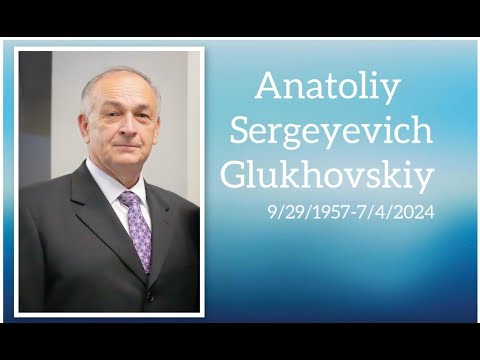
This memorial service honored brother Anatoliy Glukhovskiy, a deacon, preacher and worship leader who helped found the church and went home to the Lord suddenly on July 4, 2024, at the age of sixty-six. His family and fellow ministers remembered him as a sincere man of God, a devoted husband and father of six, who loved Scripture so deeply that he could explain it plainly enough for a child to understand, and who led the congregation in song with his guitar. Speaker after speaker anchored their comfort in 1 Thessalonians 4: believers do not grieve like those who have no hope, because the dead in Christ will rise and we will be caught up to meet the Lord and be with him forever. Drawing on Psalm 84, they reminded the grieving that true strength comes from God, who turns even the valley of weeping into a place of springs. The closing message used the parable of the growing seed in Mark 4: when the grain is ripe, the Lord sends the sickle. Anatoliy's life had borne fruit, and God gathered him at the appointed time, not by accident. The service ended with a tender appeal to receive the seed of life today, to cherish loved ones while they are near, and to be ready at every moment for the meeting that awaits us all.

Sincere Prayer and Trust in Hard Times

Sincere Prayer and Trust in Hard Times

This Wednesday service held two messages, yet both beat with one heart - learning to trust God when life turns difficult. The first, drawn from Psalm 27, the psalm of trust, looks at how David prayed while enemies pressed in around him. He opens not with a list of requests but with a confession of God's strength, refusing to be afraid, longing above all to dwell in the house of the Lord and to be led by God's own hand. In these last and unsettled days, the preacher urged, our prayer must become constant and sincere rather than rote, because heartfelt prayer brings peace and steadies our hope. The second message turns to the prophet Elijah at the brook Cherith, fed by ravens - birds the law called unclean. Elijah did not argue with God's strange way of providing; he simply obeyed. When the brook dried up, that very hardship moved him on to the widow and later to Mount Carmel, where the people repented. In the same way God often arranges uncomfortable circumstances to reposition us where He needs us, for all things work together for good to those who love Him. The God who spoke 'let there be light' over formless darkness still creates from nothing by His word. Even when faith and resources feel gone, calling on Jesus carries His light into the darkest corners of our lives - for healing, for salvation, for change. The evening closed with the apostle Paul's testimony: fight the good fight, finish the race, keep the faith, and live longing for the Lord's appearing.

Hold Fast to the Lord with a Sincere Heart

Hold Fast to the Lord with a Sincere Heart

The midweek service opens with thanksgiving and a reading of John 16:13, where Jesus promises the Holy Spirit, the Spirit of truth, who guides believers into all truth and glorifies Christ. Though Jesus ascended, He left His Spirit so that we can cry "Abba, Father," worship God, and be joined to Him. The preacher reminds the gathered church that we are saved by grace, delivered from the power of darkness into the kingdom of God's beloved Son (Colossians 1:13) and made alive with Christ when we were dead in our sins (Ephesians 2). Drawing on the example of Barnabas in Acts 11, who came to Antioch, saw the grace of God, and urged the believers to remain true to the Lord with a sincere heart, the message calls every believer to cleave to Christ wholeheartedly. Looking back over Israel's history, the preacher notes that the people prospered when they truly served God but suffered when their hearts drifted far from Him even while their lips still honored Him. The unshakable kingdom (Hebrews 12:28) is kept by those who fix their eyes on Jesus and endure to the end. The heart of the sermon is Psalm 91. To merely carry the psalm like a charm accomplishes nothing; its promises belong to the one who actually dwells under the shelter of the Most High, feeding on the bread of God's Word and drinking the living water Christ gives. Such a person is shielded from the snare, the terror by night, and the arrow by day, for God commands His angels over the one who loves Him and knows His name. The preacher urges us to love God by treasuring His Word, to keep our hope on Christ's return, and to hold fast to Him through every trouble until we see His salvation.

Could Not God Do the Same for Me?

Could Not God Do the Same for Me?

The evening opens with Psalm 103:13 - as a father pities his children, so the Lord pities those who fear Him - and turns to a question that quietly haunts many believers: if God blessed, healed, or rescued someone else, could He not do the same for me? Walking through Joseph interpreting the two prisoners' dreams in Genesis 40 and the crowd at Lazarus' tomb in John 11, the preacher shows how naturally we generalize God, assuming that because He acted one way for one person He owes the same to everyone. Hebrews 11 shatters that assumption. The same chapter celebrates those who by faith conquered kingdoms and received their dead raised, and then lists those who were tortured, stoned, sawn in two, and killed by the sword. Same God, same faith, the same will, yet wildly different outcomes. Romans 9 and the image of the Potter and the clay answer the cry for fairness: God shows mercy to whom He wills, and the clay has no right to argue with the Potter. The call is to stop measuring our lives by other people's blessings and to accept God's individual purpose for us. God can, but He is not obligated. Like Peter, who asked about John, we hear, "What is that to you? Follow Me." The safest and happiest place is the center of God's will, even when it is painful or hard to understand, saying, "I agree with You."

Children of Light, Awake at the Cross

Children of Light, Awake at the Cross

On Good Friday the church gathers to remember the death of Christ and to share the Lord's Supper, doing this in remembrance of him. Before coming to the table, the preacher opens 1 Thessalonians 5 and reminds the believers that they are children of light and of the day, born again of imperishable seed, and no longer belong to the night or to darkness. Because we belong to the light, we must not sleep like everyone else. We are called to wake up, stay sober and clear-eyed, and refuse to live under the influence of this world, our old sinful nature, ego, or false teaching. With our focus fixed on eternity rather than on careers and passing things, we put on the breastplate of faith and love and the helmet of the hope of salvation, since our real battle is spiritual and not against flesh and blood. God did not appoint us for wrath but to obtain salvation through Jesus, who died so that we might live with him. The service moves into communion - confessing sin, receiving forgiveness, and trusting that by his wounds we are healed - and closes with prayer for the sick, including a brother facing cancer, as the church looks ahead to the joy of Easter and the resurrection.

Casting Our Worries on the God Who Cares

Casting Our Worries on the God Who Cares

Opening from 1 Peter 5:6-7, the preacher asks how each of us actually handles worry. He notes that anxiety shows up in many ways - overeating, losing appetite, biting nails, irritability - but the real question is how to respond rightly. He illustrates with two pastors: one who worried himself into bleeding ulcers and even lost the assurance of his salvation, until at two in the morning God freed him from fear in prayer; and D.L. Moody, whose church burned in the great Chicago fire, yet who lifted up his Bible and entrusted everything to God, who later provided a greater church. The right response to any trouble, he says, is to come to God honestly: "Lord, I am in a situation; help me." God's love does not depend on how much we read, pray, or give - He loves us as a Father. What we confess with our mouth carries power, so we should speak trust rather than fear and refuse to open the door to the enemy's report. Like Galatians 6:2 urges, we are also to carry one another's burdens and pray for the brother or sister who is struggling. A second speaker reads Acts 10 about Cornelius, whose prayers were remembered before God, and shares a testimony of his mother's healing from cancer after the prayers of her children. He recalls blind Bartimaeus, who refused to be silenced and cried out until Jesus stopped and gave him sight. The call is plain: do not let your thoughts and fears run ahead of you - open your mouth and bring your need to the living Jesus, who is present and still asks, "What do you want from Me?"

Raising Children for the Kingdom of Heaven

Raising Children for the Kingdom of Heaven

The service opened with thanksgiving and worship. Reading from Mark 1, the preacher recalled the leper who came to Jesus saying, "If You are willing, You can heal me," and the Lord answered, "I am willing." The healed man could not keep silent and told everyone what Jesus had done. The call was clear: if Christ has cleansed you from the leprosy of sin, do not be quiet - glorify His name. The main message celebrated the birth of a baby in one of the families and turned to parenting. From 1 Timothy 5:8 the pastor reminded parents that providing for a household is far more than earning money; raising the children God entrusts to us is one of our greatest responsibilities, and one for which we will give account. He shared three counsels: truly listen to your children, warned by the collapse of David's household; give them your time before the years slip away, as Ben Carson's mother did; and teach them to fear God rather than to fear you. With gentle humor he described three stages of parenting - the hand, the belt, and finally the knees in prayer - and said his deepest joy is not ministry or mission trips but seeing all his children and grandchildren in God's Kingdom. A guest preacher from Kyiv, who serves a Christian radio ministry in Ukraine, then lifted the church's eyes from earth to heaven. He insisted that Jesus came preaching one thing - that the Kingdom of Heaven has come near - and that He came not to repair this cursed world but to take us out of it into eternal life. The Kingdom is like treasure hidden in a field: whoever truly finds it gladly lets go of everything else. So do not be afraid for food, clothing, or home, for the Father is pleased to give you the Kingdom; and whatever trouble, sickness, or injustice comes, answer as Jesus did before Pilate: "My kingdom is not of this world."

Bringing Our Questions to God in Pain

Bringing Our Questions to God in Pain

Preaching from Luke 23:8-9, where Herod questioned Jesus and received no answer, guest preacher Alex Kolyesnikov reflects on the place of questions in the life of faith. Questions are a natural part of being human, and the hardest of them is simply 'why?' - why this pain, why God seems silent. He shows that God is never offended by our questions: God Himself asked Adam where he was, Jesus cried out from the cross 'Why have You forsaken Me?', Paul pressed the Galatians with question after question, and Job brought God more than a hundred. From this he offers three counsels for taking our questions to God. First, acknowledge His greatness even while we are hurting. Second, keep talking to Him and refuse to walk away, even when He stays silent. Third, never stop praising Him, because praise and unanswered questions can live side by side. He shares the painful story of his young daughter's near-fatal head injury and her lasting disabilities, and the hundreds of questions he still carries to God to this day. His conclusion is tender and honest: do not bury your pain, and do not abandon God. If you must weep, weep in His presence, for there relief is found. We may never get our answers here, but one day, face to face with Him, every question will fall away because we will finally see what we so longed to understand.

Counseling That Points to God's Word

Counseling That Points to God's Word

This seminar session continues a study of Christian counseling. After reminding the group what counseling is not - it is neither preaching nor merely handing out advice - the teacher offers a working definition: Christian counseling is the art or skill of giving counsel that reveals God's view of a problem, shows the biblical way out, and helps a person walk it. Because it is an art, it can be developed and it can also be lost, so it demands ongoing study, prayer, and practice. Even God-given gifts call for our faithful effort, as Paul charged Timothy to devote himself to reading and teaching and to fan the gift into flame. The heart of biblical counseling is giving God's perspective, not the counselor's opinions or the world's techniques. That is why a counselor must know Scripture deeply and be a sound theologian, meaning someone who truly knows God through His Word. Proverbs 14:12 warns that a way can seem right and still end in ruin, so every answer must rest on the Bible. Jesus modeled this in Matthew 19: asked about divorce, He sent His questioners back to the beginning rather than offering His own view. The teacher also confronts shallow slogans, such as the claim that depression and Christianity cannot coexist. The Psalms show godly people in deep anguish who still cried out to God and kept their hope in Him - David telling his downcast soul to hope in God, and Jonathan strengthening David's hand in God. He corrects common misreadings of murmuring and of humility, which biblically means submission and accepting the place God assigns, after the example of Christ. The counselor's calling is to keep leading people back to God and His Word.

Sometimes You Just Need to Wait

Sometimes You Just Need to Wait

The service opens with a reminder of how good it is to be in God's presence. Recalling Israel following the pillar of cloud and fire out of Egypt and trusting the Lord at the edge of the sea, the preacher moves to the blind man Jesus healed at Bethsaida and the lame man Peter raised at the temple gate. We learn to come to Christ with an open heart, so He can open our spiritual eyes and others can see Jesus living in us. The main message turns to a simple but demanding theme: sometimes you just need to wait. In a world of instant everything - fast travel, instant internet, instant gratification - we have lost patience, and that impatience can quietly erode our trust in God. When the Lord is silent and the answer is delayed, He is not absent; He is asking us to wait. Abraham waited twenty-five years for the promised son and never stopped believing, while King Saul refused to wait at Gilgal and lost his kingdom. God is the same yesterday, today, and forever, and He is never late. In the quiet seasons of waiting He is working on our hearts. Like the one leper who returned to give thanks, we are called to trust, to wait patiently, and to keep thanking the Lord every day.

Why God Became One of Us

Why God Became One of Us

This Christmas and New Year evening service centers on the wonder of the Incarnation. Opening with Galatians 4:4-5, the pastor reminds the church that when the fullness of time had come, God sent his Son, born of a woman, to redeem us and make us his adopted children. To explain why God himself had to come to earth, he retells a familiar parable: a man who cannot believe in the incarnation tries during a snowstorm to save freezing birds, opening his barn, making a path, scattering crumbs, yet the birds never understand him. Only when he longs to become a bird for a single moment does he grasp why God became man, to reach us in a form we could understand and to show us the way to salvation. Throughout the evening the congregation worships through carols and testimonies. One brother shares that Christmas, for him, means being born again, when Christ enters the heart and grows within while we become less. Another reminds everyone that Jesus was born in a humble manger by God's design, so that rich and poor, shepherd and wise man, every kind of person, could come and worship him. The service closes with prayer for those present, for Ukraine and for Israel, the Lord's Prayer, and a final carol sung while the room lifts phone lights like stars, a picture that those who have received Christ are now light in a dark world.

Preaching With Wisdom in Sorrow and Joy

Preaching With Wisdom in Sorrow and Joy

This preacher seminar begins with a simple picture: a good sermon is like a fine meal, prepared carefully beforehand so it can be served on time and well. The teacher urges ministers never to assume that everyone in the room knows the Bible. When you quote Scripture, name the reference clearly so people can read it and check it at home. He mentions that the church has just begun a shared Bible reading plan to rebuild that knowledge of the Word. The heart of the session is how to preach at a funeral. Such a sermon has three aims: to support the grieving family, to conduct the service with dignity, and to turn those present gently toward eternity - never trapping mourners with a heavy-handed altar call. Common mistakes include opening with "Glory to God for this day," inventing virtues the deceased never had, hunting for someone to blame, or treating the loss lightly. He then turns to water baptism, which must be handled as a sacred ordinance commanded by Christ, not merely a festive gathering. Keep the focus on the meaning of the event rather than the decorations; affirm those being baptized instead of sowing doubt. Throughout, the call is to speak with care, anchor people in God's sovereignty, lift the spirit of the church, and always point to the hope of resurrection.

Walking the Path of the Righteous into the New Year

Walking the Path of the Righteous into the New Year

On the first gathering of the New Year, the service opened with thanksgiving and a reading of Psalm 112: in Christ, God has clothed believers in the robe of righteousness, so that even in darkness light rises for the upright. The preacher reminded the church that the righteous need not fear evil rumors, for their hearts are fixed in trust toward the Lord, and their memory endures forever. From John 1 he pointed to Christ as the living Word made flesh, full of grace and truth, and to saints like Simeon, who waited in the Spirit to see the Lord's salvation, and Ruth, who left everything so that Israel's God would become her own. Echoing Moses' prayer to number our days, he urged the congregation to spend every hour, day, and year wisely, knowing that our whole life is recorded in God's book and will be brought before Him. Through plain, everyday stories - a careless worker exposed by a server log, a girl perfecting her handwriting - he pressed home that only the blood of Christ can cleanse us, that the Lord's work must be done carefully, and that we are to keep ourselves unspotted from the world. A visiting brother, Alexander, then preached from Matthew 25, where Christ identifies Himself with the hungry, the stranger, and the imprisoned: whatever we do for the least, we do for Him. He gave a moving testimony of the Perlynka children's home in Ukraine during the war - evacuating dozens of children, sheltering hundreds of refugees, and caring for orphans and even elderly people abandoned in their eighties - and called the church to keep showing mercy as unto the Lord.

Keep Watch: The Lord Is Coming

Keep Watch: The Lord Is Coming

On the final Sunday of the year, the pastor calls the congregation to reflect on time itself - the seasons God gives us and the day when every clock will stop. Drawing on Matthew 24 and Peter's image of the thief in the night, he urges believers not to sleep spiritually but to stay awake and guard their hearts, where faith, love, the fear of God, and hope are kept safe from an enemy who prowls like a lion. The message turns to sowing and reaping: we harvest only what we have planted, so the time God entrusts to us must be spent on fruit that lasts. Like the farmer in James 5, we wait with patient longsuffering for the most valuable crop of all - the coming of the Lord and our being gathered to Him. Leaning on 2 Peter 1, the pastor describes that crop as truly knowing Christ the Good Shepherd. He invites everyone to make every effort to add to their faith goodness, knowledge, self-control, perseverance, godliness, affection, and love, so that as the new year begins they may enter freely into the eternal Kingdom.

Do Not Let Your Heart Be Troubled

Do Not Let Your Heart Be Troubled

The church gathered for a midweek service that opened with the shepherd psalm: even in the valley between Sundays the Lord remains our Shepherd, and we still dwell in His house. The main message came from John 14:1, where Jesus, about to leave His disciples, gives them a command: do not let your heart be troubled, believe in God and believe also in Me. The preacher showed that most of what troubles us enters through the eyes and ears, often as nothing more than words or images. Goliath's threats drained Israel's courage, the spies' bad report melted the people's hearts, and sin crouches at the door waiting to be let in. So we must guard the heart, wear the helmet of salvation, and like Job make a covenant with our eyes. When something knocks, ask who is there and where it comes from, and open only to the voice of the Shepherd we know and follow. A second message turned to suffering. Through the story of missionary Roman, whose car burned, whose child was injured, and whose home caught fire, the cry arose: Lord, where are You when it hurts? From 2 Corinthians 1 came three answers - God comforts us so we can comfort others, He teaches us to trust Him rather than ourselves, and everyone He answers has reason to give Him thanks.

The Choices and Words That Build Your Life

The Choices and Words That Build Your Life

The preacher opens with the picture of a single rose. His wife cut off the last small stem from a rose bush and planted it, and from that discarded cutting one beautiful flower grew. So it is with the righteous: wherever life places you, however overlooked you feel, you will still bear God's fruit. From there he urges every believer to make the right choice in life, because our blessing rests on the words we speak. Drawing on the report of the twelve spies (Deuteronomy 1; Numbers 13), he shows how ten men destroyed Israel's faith with fearful words while Joshua and Caleb spoke faith: God is with us. A careless word can tear down in a moment what took years to build, whether at home or in the church. Caleb kept speaking faith, and even at eighty he still asked for his mountain and went up to take it. Through Ruth's loyalty - I will not leave you - which led to the line of David and of Christ, and through Paul's willing choice to suffer for the gospel, the preacher calls listeners to choose faithfulness. Speak words full of life, build others up instead of tearing them down, stay faithful through every trial, and a great reward awaits.

Always Ready When the Father Calls

Always Ready When the Father Calls

In the Advent season the church gathers to celebrate the birth and life of Jesus Christ, sharing in one another's tears and joy because everything tied to Him is understood and received together. Before his song, brother Sergey opens up about a theme he thinks of more and more as he grows older: what awaits us when life ends, and whether we will be known and called by name on the other side. He recalls a funeral where a brother asked him, "Are you ready?" His answer was simple: "I'm always ready." He compares it to the day his family emigrated to America, the youngest only three months old and the oldest fourteen. The children played outside until the moment came to call them in, and they came at once. In the same way, when our heavenly Father calls us, we will be ready, for He alone knows the right time, and there they will know us and call us by name. The service closes with a blessing over the children heading to Sunday school. God blesses us, but He also gives us authority to bless others, so the church lifts up its children and loved ones in prayer. Though the world is frightening and the evil one wants to steal, they all belong to the Lord.

The Great Works of Our God

The Great Works of Our God

The service opens with a reminder from the Apostle Paul, who wrote that he could do all things through Christ who strengthened him. Looking at Paul's beatings and dangers, and at Daniel who kept praying toward Jerusalem even under threat of the lions' den, the message shows that this confidence is not about personal gain but about a life fully surrendered to God and lived according to His will. A visiting bishop from Ukraine then shares how his churches keep serving in the middle of war - praying, fasting, preaching, cooking food, sheltering refugees, and sending firewood and supplies to ruined villages. He gives heartfelt thanks to American believers and the Slavic diaspora and asks for continued prayer and support. From Psalm 65 and Matthew 16, the main sermon calls us to turn our eyes away from what people do and onto the works of God. Creation, the exodus from Egypt, salvation through Jesus Christ, and the building of His church all reveal a God whose works are perfect, purposeful, and always for our good. Because He finishes every work He begins, we can trust Him completely and live in hope instead of fear.

Guard Your Heart and Trust God's Promise

Guard Your Heart and Trust God's Promise

The evening opened by celebrating the church as one family of many generations gathered to worship, with a reading from 1 John 5 reminding believers that God's commandments are not burdensome for a humble heart. The first message centered on the heart as the source of our spiritual life. Just as we monitor our physical heart, we must examine what fills the spiritual one, because out of its abundance the mouth speaks. Living in a broken world, we are constantly exposed to temptation and worldly influence, so we must set up filters and guard our hearts, minds, eyes and ears - through Scripture, prayer, worship, godly friendships and practical protection for our families. Hiding God's word in our hearts keeps us from sin, and the Holy Spirit fills the surrendered heart with His fruit: love, joy, peace, kindness and self-control. The cry of every believer should echo David: create in me a pure heart, O God. The second message turned to Simeon in Luke 2, a righteous man who waited a lifetime for the consolation of Israel. His dream rested on righteousness, devotion and the leading of the Holy Spirit. Temporary disappointments and dark clouds do not mean a God-given dream is dead; they are part of His plan as He shapes our character. In Christ, God widens the dream beyond one person to all the nations, and when it is finally fulfilled it brings peace, just as Simeon could depart in peace after seeing the Lord's salvation.

Stay in the Text: Preaching for a New Generation

Stay in the Text: Preaching for a New Generation

A practical teaching on preaching and interpreting Scripture for today's church. Because modern listeners think in fragments and tire quickly, the wise preacher tells the story before drawing the lesson, speaks simply about deep things, and keeps in mind an audience that mixes rich and poor, learned and simple. The preacher's first rule, like a doctor's, is to do no harm to the text - never bending a verse to fit our point, as some showy sermons of the past once did. Preachers are urged to keep growing: to read widely and stay full, recalling Paul's charge to Timothy to give attention to reading and to bring the books. History teaches the same lesson - the medieval church kept people from Scripture, while the Reformation spread through literacy and the printing press. Theology and technology must move together; methods may change, but the content of the gospel may not. Two passages are then opened. Daniel 1 shows captivity as discipline meant to restore God's people to influence, and Daniel who set his heart - faithfulness to God outweighs career, and strength lies in the depth of conviction, not in numbers. Luke 2 presents Anna the widow: loss is not a verdict, for she gave herself to God night and day, kept using her gift, and made His name known, which is the heart of true worship.

Holy Living and Our Heavenly Homeland

Holy Living and Our Heavenly Homeland

The service carried two connected messages. The first centered on holiness, drawn from Matthew 7, where Jesus warns that a tree is known by its fruit and that not everyone who says "Lord, Lord" will enter the kingdom. The preacher stressed that genuine faith is proven not by words but by a changed life. Holiness is God's own nature planted in us by the Holy Spirit, who separates us from sin and shapes us into the image of Christ. Faith without works is dead (James 2), and God's will for us is our sanctification (1 Thessalonians 4). A sharp warning followed: many will do mighty works in the name of the Lord - prophesying, casting out demons, performing wonders - yet hear "I never knew you." There is a real difference between acting in His name and acting by His will. Only those who truly belong to God, who know Him and obey Him, actually do His will. Being filled with the Spirit is shown first of all by a holy life, not merely by speaking in tongues. The second message called believers to live as strangers and pilgrims on earth (Hebrews 11). Like Abraham, Moses, and Job, who looked beyond their circumstances to a homeland God Himself prepares, we are not to anchor our hearts in this passing world. Our life is a vapor (James 4), so we plan saying "if the Lord wills" and keep our faith not just on our lips but in our hearts. Whatever may be taken from us, our Redeemer lives, and heaven is our true home.

Give Thanks to God in All Things

Give Thanks to God in All Things

This midweek service centered on thanksgiving as the heart of true worship. One brother opened from Psalm 126 - those who sow in tears shall reap with joy - reminding the church that the road to heaven often begins with weeping, prayer, and intercession, just as Christ Himself wept and now pleads for us before the Father. The main message, brought by a visiting brother, urged believers to give thanks in every circumstance, not only when life goes well. Drawing on 1 Thessalonians 5 and Ephesians 5, he showed that gratitude is itself a form of worship, honoring God for who He is and for what He has done. He pointed to Job, who blessed God's name after losing everything, to the one healed leper out of ten who returned to thank Jesus, and to the springs of blessing that open in the valley of weeping. He warned that the last days will be marked by ingratitude, and that even people who know God can fail to glorify Him. Through his own testimony of a painful injury that God swiftly healed, he called the congregation forward to offer a sacrifice of thanksgiving. The service closed with an invitation to the coming harvest celebration and a reminder that the most precious gift we return to God is our time.

Hard Pressed but Not Crushed

Hard Pressed but Not Crushed

The service centered on the Lord's Supper. The congregation was urged to examine their hearts before partaking, remembering that the bread and cup are the body and blood of Jesus. The pastor recalled believers who once shared communion with plain black bread and water in Soviet prison camps, receiving it with deep trembling. The first message, from 2 Corinthians 4, declared that we are hard pressed on every side but not crushed. Like a ball that countless heavy players pile onto yet cannot burst because the pressure within is greater than the pressure without, the believer endures because the grace of Christ inside us is stronger than every force outside. Amid the thousands of thoughts that assault us daily, we were called to take them captive, confess our sins, and trust that healing flows from the wounds of Christ. The story of the hymn 'What a Friend We Have in Jesus', written by Joseph Scriven amid repeated grief, showed that even loss surrendered to God can bless others. A guest bishop then preached from the Mount of Transfiguration in Matthew 17, teaching that following Jesus to the high place carries a price, and that we must learn our true calling and the timing of God. Some things He reveals are to be kept hidden in the heart until the appointed moment. The service closed with Joseph before Pharaoh in Genesis 41, a reminder that God delights to give good gifts for our benefit.

Trusting God Through Life's Hard Times

Trusting God Through Life's Hard Times

This midweek service drew several preachers around one theme: how a believer should face hardship. A young brother opened with his testimony - reluctantly leaving his ministry in Poland, he watched God open every door and learned to cast his whole burden on the Lord (1 Peter 5:7). God does not always grant what we ask, because in His wisdom He knows what truly helps the soul, and trials are often His way of teaching and redirecting us. A second brother pointed to Christ's invitation to take His yoke (Matthew 11:28) - a yoke built for two, so the Lord carries it alongside us. Nothing enters our lives that God has not allowed (Lamentations 3:37), and like Daniel's friends in the furnace we can trust that He finishes what He starts and never stops halfway. The main message turned to the perilous times of 2 Timothy 3. These hard times come not only from wars and disasters but from people - from pride, grumbling, and a quarrelsome spirit that can make even a comfortable home unbearable. The call was plain: do not be the source of that difficulty. Learn humility from Christ, be peaceable and thankful, let trials refine rather than embitter you, and like the overcomer of Revelation 3:21 you will one day sit with Him on His throne.

He Is With Us in Our Sorrow

He Is With Us in Our Sorrow

The midweek service opened with a reminder that grace and peace grow only as we come to know Jesus Christ. A young brother shared how a serious accident at work - a saw blade that cut his hand - became a place where he saw God's glory: the building turned out to be a medical clinic, skilled doctors quickly stitched the wound, and his hand was spared so he could still play and praise. His point echoed Hebrews: the Lord disciplines those He loves, and affliction yields a peaceable fruit of righteousness when received with thanks instead of resentment. The guest preacher, a former pastor who came to Christ out of a criminal past and was healed of a crippling illness, turned the church's eyes to comfort in suffering. With wars flaring, an epidemic behind us, and fear being stirred up even in congregations, he refused the message that everything is over. Scripture promises that God is with us in trouble, that He will never leave or forsake us, and that the fiery trial is sent to purify, not to destroy. We confuse faith with self-confidence, he warned, like a small boy sure he can travel alone until he panics and finds his father's note: do not be afraid, I am in the next car. The safest place on earth is in the shadow of God's wings. Even when we cannot understand why God allows something, we can trust His goodness, cast every care on Him, and encourage one another instead of judging or despairing.

Count the Cost, Serve Willingly

Count the Cost, Serve Willingly

The service opens with the rich young ruler of Matthew 19. Every decision we make we lay on a scale, asking what we will gain in return. The young man weighed the cost and walked away sad, because it seemed too high. Yet following Jesus always costs something, and even Peter asked what the disciples would receive. In reply the Lord promised a hundredfold and thrones beside Him. The preacher points to those who held nothing back: Mary chose the better part, the woman poured out costly perfume, the widow gave her two small coins, and David refused to offer a sacrifice that cost him nothing. Jesus said to count the cost first, like a builder of a tower or a king going to war. Whatever we surrender for Christ is not lost but stored up in heaven. In the second part the service turns to 1 Peter 5. We are to serve God willingly, not under compulsion or for dishonest gain, and shepherds are to be examples rather than lords over the flock. Honor and pray for those who serve, for you share their reward; God gives grace to the humble but opposes the proud. Cast every anxiety on the Lord, resist the enemy who prowls like a roaring lion, and stand firm in faith, for the suffering is brief and the crown of glory is certain.

Our Advocate and the Hope That Endures

Our Advocate and the Hope That Endures

The evening opened with a study of 1 John and Ephesians on sin in the life of a believer. The preacher drew a clear line between sin we deliberately plan and choose, and the failures and offenses we never intended to commit. We must never give our hearts room to plan sin; yet when we stumble we are not abandoned, because Jesus Christ the Righteous stands as our Advocate before the Father, and His blood cleanses the faults we did not mean to commit. Peter denied the Lord in weakness and was restored, while Judas chose his betrayal, a reminder that God weighs the heart and not only the deed. A second message from 1 Peter 3 turned to hope in the midst of suffering. Peter, writing from prison, returns again and again to suffering, urging believers to set the Lord apart in their hearts, live as a good example, and always be ready to give an account of the hope within them, with gentleness and reverence. You cannot witness to a hope you have never experienced yourself. Christ suffered once for sins, the righteous for the unrighteous, and salvation comes through Him alone; baptism is the picture, but it is His shed blood that washes us clean. A closing testimony likened the Christian walk to Israel's journey out of Egypt. After coming to Christ the trials began: the bitter waters of Marah turned sweet through repentance and forgiveness, hunger in the wilderness was met by daily manna and trust, and thirst at the rock was answered by the filling of the Holy Spirit. The trials were not God's absence but His training, leading His people toward the promised land. Keep knocking in prayer, trust His word, and let Him cleanse the past.

Prayer Rooted in Faith and Salvation

Prayer Rooted in Faith and Salvation

A visiting missionary, who came to Christ through preaching, served in Sakhalin, and now ministers among Ukrainian refugees in Poland, teaches on prayer. Opening in Genesis, she shows that God made us in His image and blessed us to be fruitful and to reign, but the fall - the desire to be our own god - became the root of every problem. The real cause of our troubles is not circumstance but sin, and only Jesus restores us to that original blessing. Real prayer, she explains, is not a list of demands but a conversation with God grounded in faith. Faith is the foundation, born from hearing God's word, and it must begin from the certainty of our salvation: remembering that we are God's children and that Jesus has already taken our curses, sickness, and problems. We are not to fix our eyes on the problem, like Israel trapped at the sea, but on the Lord who rules the world. Through honest testimonies - an abusive home, an eleven-hour border crossing, a believer of forty years who had lost her joy - she shows that God is with us even when the answer is delayed, that joy and not fear draws people to Christ, and that persistent prayer keeps us from losing what God has already given.

Turn, Stand, Go: Trusting God's Leading

Turn, Stand, Go: Trusting God's Leading

The service opened with the reading of Isaiah 12, and the main text was Exodus 14. Israel was trapped between the Egyptian army and the sea, and God gave Moses three commands that follow one another: turn back, stand still, and go forward. Each one looks irrational, yet behind them lies a plan no human general would ever devise. Moses' greatness was that he was not ashamed to say "I do not know the way" and fell on his face before God; those who bow before Him make the fewest mistakes. The preacher reminded the church that God hardens no one. Pharaoh's heart turned to stone through his own pride, and God needed only to stop helping. By grace God removes our heart of stone and gives a heart of flesh, and that is why we are able to forgive and to hear His voice. People grow used to slavery and keep looking back toward Egypt, but the truth in Christ sets us free (John 8:32, Luke 4:18). God led Israel for forty years, their clothes did not wear out and no one was sick, yet unbelief kept most of them out of the Promised Land. Moses longed to see God's glory and refused to take a single step without His presence. The call is simple: let God walk ahead, and trust Him even at a hopeless dead end.

You Must Be Born Again

You Must Be Born Again

This midweek service opened with the comfort of Psalm 23 and moved straight into a heartfelt call to be born again. The preacher pressed a searching question: many people attend church for years yet have never truly been born from above, and without that new birth no one can enter God's kingdom. He invited everyone who was unsure to lift a hand and step forward, reminding them that they were not coming to a man but to Jesus. Sharing his own story - raised in a Christian home yet not born again until he surrendered to God - he urged his hearers to give Jesus the whole of their lives, even the half they had been holding back. He prayed for renewed hope over discouraged families and for believers who had lost their strength, stopped praying, or set aside God's Word, asking the Holy Spirit to revive them. The evening became an extended time of prayer and ministry. Like the pool of Bethesda, where once only the strongest could reach the water, he said, Jesus is now available to everyone. He prayed for the healing of sick hearts and bodies and for oil in every lamp, so the church would be ready to follow Christ into His kingdom. The service closed with the Lord's Prayer and an apostolic blessing.

Pray Without Giving Up on Anyone

Pray Without Giving Up on Anyone

The service opens with a reminder that God repays each person according to their ways, so we must walk the road He chooses by returning again and again to His Word. From Numbers 17 the preacher recalls how Aaron's dry rod budded overnight, a sign that what looks lifeless can blossom when God chooses and blesses it. Through Jacob's prayer and the brevity of life in the Psalms and Ecclesiastes, the call is to live ready for Christ's return, doing now what must be done. A guest shares a powerful testimony: fourteen years bound by drugs, given up by doctors with a cancer diagnosis, she was found by Christ through her mother's years of prayer. Healed, restored, married, and now serving for nearly three decades in rehabilitation work, she and her husband have seen thousands rescued from basements and tunnels where the dying are forgotten by everyone but God. The main message centers on prayer. God desires everyone to be saved, even those others have written off as hopeless, for Christ died for such people. Like the persistent widow before the unjust judge, we must keep praying and not lose heart. Yet prayer can become detestable when we close our ears to God's Word and ask only selfishly; true prayer is watchful, thankful, and humble, and God attends to the contrite who tremble at His Word.

What the Resurrection of Christ Gives Us

What the Resurrection of Christ Gives Us

The preacher calls the resurrection of Jesus the greatest celebration of the Christian faith and longs for its joy to never fade from our hearts. He retraces the despair of Friday and Saturday - the sealed tomb, the Roman guard, the frightened disciples scattered in grief - calling it the darkest day in human history, when the Lord lay dead in the grave. Then God acts. An earthquake rolls away the stone, the guards fall as though dead, and the women hear the angel ask, "Why do you seek the living among the dead?" The risen Christ meets doubting Thomas and restores Peter with the question, "Do you love me?" The sermon unpacks what this means personally: the resurrection is the manifestation of God's power over sin and death, proof that Jesus descended to the lowest place and rose victorious, taking the keys of death and hell from the devil. Above all it is our justification - not merely being forgiven, but being declared righteous because Christ died and rose in our place. The believer holds this "receipt" of salvation when the accuser comes. The risen Lord also gives us a living testimony to preach, a new life to walk in, and the firm hope of the first resurrection at His return, when His church will not be brought to judgment. The message ends with a direct appeal: are you ready, and have you received the risen Christ as your own Savior?

The Spirit Who Raised Jesus Lives In Us

The Spirit Who Raised Jesus Lives In Us

This Easter Sunday service, which fell on Orthodox Pascha, was built around Romans 8:11: if the Spirit of the One who raised Jesus from the dead lives in you, He will also give life to your mortal body. The guest preacher walked through the resurrection accounts in Matthew, Mark, Luke and Acts, showing that the empty tomb is no legend but the testimony of many eyewitnesses, and that the same God who rolled away the stone now lives in His people. A second brother sang a hymn and then pressed a searching question: is it enough to merely confess the resurrection once a year? What truly fills us shows up in the unguarded moment - the careless driver, a sudden accident, the small temptation to lie for a discount. If the Spirit of God lives in us, then to wound a brother is to wound the One who dwells in him. The closing message returned to the risen Christ's own words, Do not be afraid and Peace be with you, and to His promise that we receive power to be His witnesses when the Holy Spirit comes. The gathering ended in prayer for the sick, the grieving, and believers under persecution, with a call to let the risen Jesus live not only in Jerusalem but in every heart.

Your Galilee: Meeting the Risen Lord

Your Galilee: Meeting the Risen Lord

On this Wednesday evening just after Easter, the church keeps celebrating the risen Christ. The preacher recalls how the angel at the empty tomb sent the women to tell the disciples that Jesus would meet them in Galilee - an appointment set by God Himself. From John 21 he describes the disciples returning to their old fishing trade, toiling all night and catching nothing, until the risen Lord stands on the shore, fills their nets with 153 fish, and has breakfast already prepared. He reads the net as a picture of the Holy Spirit, who gathers souls and never lets them tear loose, and ties the 153 fish to Peter's later mission in the house of Cornelius. Through a personal testimony of leading an elderly woman to call on the name of the Lord, and through the Emmaus road in Luke 24, he shows that the risen Jesus often comes unrecognized, in the most ordinary moments. The central call is simple: in hard seasons when Christ seems absent, return to the Word rather than to disappointment, guard the inner fire, and stay open to the people God sets in your path, for the Lord may be meeting you through them. Seek Him not only in the temple but in your own Galilee - your everyday life, your work, your service.

The Joy That Flows From Faith

The Joy That Flows From Faith

The service opens on Palm Sunday, remembering how Jesus entered Jerusalem as the crowds spread their garments and palm branches and shouted, "Blessed is the King who comes in the name of the Lord" and "Hosanna - save us." Yet even in the middle of the celebration Jesus wept over the city, because it did not recognize the time of its visitation. The preacher turns this into an invitation: let Christ enter the "Jerusalem" of your own heart. The heart of the message is joy - a heavenly joy that does not depend on circumstances but flows out of faith in Jesus. Drawing on Nehemiah ("the joy of the Lord is your strength"), Philippians, and Romans, the preacher shows that joy and faith walk hand in hand, and that faith itself is born from the Word of God. When believers gather and bring their faith together, the joy is multiplied, like many torches joining into one great fire. Examples follow: Paul and Silas singing at midnight in prison, the disciples in Antioch filled with joy and the Holy Spirit even under persecution, and David praying, "Restore to me the joy of your salvation." The closing call is to seek the Lord daily, to let Jesus be the center of life rather than someone kept at a distance, and to carry His joy home. Testimonies of a praying long-haul driver, a healing, a missionary heading to a refugee camp, and a pastor spared from death seal the message.

Becoming Like Children to See God

Becoming Like Children to See God

This midweek service opened with a prayer that God would tune our spiritual ears to His voice, and then several brothers preached around one word from Matthew 18: unless we turn and become like little children, we cannot enter the Kingdom of heaven. The first message drew out what makes children fit for the Kingdom - they forgive quickly and refuse to nurse a grudge, they trust their parents completely, and they do not think highly of themselves. The challenge was simple: stop carrying old offenses for years, and learn to trust the Father the way a child trusts mom and dad. A second brother carefully separated hope from faith. Faith rests on a specific word from God; where no such word has come yet, what we have is hope - we know God is able, but we do not yet know whether or how He will act. He pointed to Shadrach, Meshach and Abednego with their bold "but if not," to Hannah praying in the temple, to Jehoshaphat facing an army he could not defeat, and to Peter sleeping peacefully in prison because he had a word from the Lord. Hope keeps us praying, and hope does not put us to shame. The closing message named the one childlike trait above all others: being teachable, willing to be raised and corrected. Just as good soil must be plowed and fertilized before it can bear fruit, God disciplines those He loves so that we share in His holiness, for without holiness no one will see Him. The service ended with the Lord's Prayer and intercession for the sick, for a departing family, and for Ukraine.

The Resurrection Power Already Living in Us

The Resurrection Power Already Living in Us

This midweek service opened with a call to begin the new year the way Mary did, keeping and pondering God's word in her heart (Luke 2:19). The preachers reminded the church that thus far the Lord has helped us (1 Samuel 7:12): looking back over the past year, God provided for every need, heard every prayer, and watched over His people. Even though the year ahead is unknown and may bring hardship, believers still have the freedom to gather, to read Scripture, and to store up the precious oil of a living walk with Christ while watching the signs that His return is near. A second message turned to Isaiah 61 and to the story of Jairus's dying daughter and the woman who had bled for twelve years (Luke 8). On a single day Jesus met both a fresh grief and a long, exhausting affliction, and He brought freedom and healing to each. God acts not because we have earned it but for the sake of His own name and glory (Isaiah 48:9-11), and our whole hope rests in Christ, who came not only to be born but to die and rise so that we could be set free. The closing word centered on Paul's prayer in Ephesians 1, that the eyes of our hearts would be opened to see the immeasurable power at work in us, the very power that raised Jesus from the dead (Romans 8). If we truly grasped that this resurrection power lives inside us, we would stop doubting, stop walking in sorrow, and stop living as slaves to sin. Present suffering is temporary, nothing can separate us from God's love, and the Spirit Himself intercedes for us and makes us more than conquerors.

Never Be Ashamed of Jesus

Never Be Ashamed of Jesus

On the first Sunday of 2023 the church gathered to thank God for carrying them through a hard year and to dedicate the new one to Him, opening with Psalm 23 and the assurance that the Lord is our Shepherd. The main message, from Luke 9, pressed a single uncomfortable question: are we ashamed of Jesus? The preacher exposed how many believers live as submarine Christians, surfacing on Sunday with powerful prayers and then diving underwater all week so that no one at work or school knows they follow Christ. Yet Jesus was never ashamed of us. Even while betrayed, beaten and dying naked on the cross, He was thinking of us. People do not reject us, they reject Him, so we have no reason to hide His light. Using Proverbs - the righteous are bold as lions - and the story of an eagle raised among chickens, he reminded the church that the devil lies to keep us pecking in the dirt, convinced we are weak. But God made us eagles. Those who hope in the Lord renew their strength and soar (Isaiah 40:31). The service closed with an invitation to come back to Jesus and leave shame and condemnation behind for the victory He won.

The King Is Born - Our Eternal Prince of Peace

The King Is Born - Our Eternal Prince of Peace

On Christmas morning the church celebrates that Jesus was truly born, just as the angels announced over the fields of Bethlehem: glory to God in the highest and peace on earth. The pastors greet the congregation and pause to pray for Ukraine, asking the Prince of Peace to stop the bloodshed and to bring His own peace to a land at war. Walking through Matthew and the prophecy of Micah, the message shows that Christ's coming is not merely promised but already fulfilled. Wise men searched for the newborn King while Herod and all Jerusalem were troubled, yet the prophets had named Bethlehem some 700 years before. This King is no ordinary ruler: His origins reach back to eternity. He is the Great I AM who was before Abraham and before the stars, whose government will never end, the same yesterday, today, and forever. First Timothy calls the mystery of godliness great - God appeared in the flesh. We can only keep Christmas rightly when the Father reveals this mystery to our hearts, as He revealed Christ to Peter. The closing appeal is plain: do not let Jesus stay a tiny baby in your life. His birth in your heart is only the beginning; He must grow great and reign.

Love One Another As I Have Loved You

Love One Another As I Have Loved You

On a Wednesday evening as the church draws near to Christmas, the preacher moves from John 3:16 to the heart of why Christ came - the love of God. Reading from John 13, he shows Jesus in his final hours with the disciples: he calls them friends and leaves them not a plan but a new commandment - love one another as I have loved you. By this love, Jesus said, the world will know his disciples. Like Peter, who worried about where Jesus was going and trusted his own loyalty, we are easily caught up in lesser questions while love, the one thing worth asking for, is left aside. Yet Jesus, who knew Peter would deny him before the rooster crowed, knows us completely and calls us to trust him rather than ourselves. What love really is, God revealed through Paul in 1 Corinthians 13: it suffers long, seeks not its own, bears and endures all things, and never fails. Drawing on Colossians 3:14 and Romans 13:8, he urges believers to put on love like a garment and to live as people who owe one another a debt of love, since God first forgave our great debt. This love belongs in the home - between husband and wife, parents and children - and in the church, where faith works through love and the Spirit pours God's love into our hearts.

Give Thanks to God in Everything

Give Thanks to God in Everything

As Thanksgiving week approaches, the preacher opens 1 Thessalonians 5:18, "give thanks in everything," and asks a searching question: do we truly thank God for all things, or only when life goes our way? It is easy to praise Him for a blessing we wanted, like the one leper out of ten who turned back to thank Jesus. The harder calling is to give thanks in trouble and in loss. He walks through Scripture for proof: Paul and Silas sang in the prison, Israel praised God after the Red Sea, the early settlers gave thanks even after a brutal first winter that took half their number, and Job blessed God's name in his grief, declaring, "I know my Redeemer lives." Thanksgiving is not only about harvest and success; the rich fool who built bigger barns enjoyed his plenty but forgot to thank the Giver. From the feeding of the five thousand, where Jesus said, "go and see how many loaves you have," he urges us to thank God from the little we hold, not only from abundance. Bring your unanswered prayers and unfinished hopes to Him, trust that He may be preparing something better, and keep serving with a grateful heart.

Keep Watching for the Cloud

Keep Watching for the Cloud

On this Thanksgiving harvest Sunday the preacher turned to the story of Elijah in 1 Kings. After three years of drought, Elijah sent his servant to look toward the sea seven times. Six times there was nothing, and only on the seventh did a small cloud appear, no bigger than a man's hand. The lesson was plain: when we pray and see no answer, discouragement creeps in, but God's word tells us not to give up, because the rain is already on its way. From chapter nineteen we saw Elijah collapse into fear and despair after a great victory, even begging God to let him die. Yet God did not abandon him. He said, "Get up and eat, for the journey ahead is long." As in Psalm 23, the Lord sets a table for us in the valley, feeds us with His word, and strengthens us for the road. God also reminded Elijah he was not alone, for seven thousand had not bowed to Baal, just as we have brothers and sisters even when we feel isolated, and God keeps working when we cannot see it. The message closed with the widow of Zarephath, who had only a handful of flour and a little oil and expected to die, yet became part of God's hidden plan of provision. Echoing Malachi 3, the call was to give thanks and give in faith even out of our need, trusting His unseen care. In thanksgiving for the day the church also remembered the gift of the Holy Spirit: our bodies are His temple and we are carriers of God's presence, because Christ did not leave us as orphans but sent the Comforter.

Not Your Own: Set Apart for an Unchanging God

Not Your Own: Set Apart for an Unchanging God

The service opened with 1 Corinthians 6 - your body is the temple of the Holy Spirit, and you are not your own, for you were bought with a price. Jesus paid for us not with silver or gold but with His own precious blood, so we belong to Him, glorify Him in body and spirit, and no longer live for ourselves. Reflecting on Matthew 26, the preacher noted that when Jesus said one of the Twelve would betray Him, no disciple accused another - each asked, "Is it I, Lord?" Every person knows his own heart and failures. Like new wine that needs new wineskins (Matthew 9:17), anyone who meets Christ cannot stay rigid; we must stay teachable and let Scripture correct us. We are God's workmanship, created for good works (Ephesians 2:10), and James reminds us that temptation springs from our own desires while God Himself never changes and keeps every promise. A closing message drew on Daniel 1:8, where Daniel resolved in his heart not to defile himself. Living in a free and comfortable country, believers feel pressure to blend in, yet it is normal for a Christian to be set apart and even unaccepted. Sooner or later each of us stands alone before God; in those lonely moments, like Paul asking for the books and parchments (2 Timothy 4:13), we draw nearer through His Word, trusting the promise, "I will never leave you nor forsake you."

All Things Work Together for Good

All Things Work Together for Good

The service opened with a call to praise God with the whole heart from Psalm 9, rejoicing and exulting in Him. From there the message turned to a hard question: why do trouble and suffering come into our lives, even to believers who genuinely love God? Drawing on Romans 8:28, the preacher reminded the church that for those who love God, all things work together for good. Suffering and death entered the world through sin, and Christ never promised His followers a life free of trials. Pointing to Jesus' words in Luke 13 about the Galileans and the tower of Siloam, he warned against judging those who suffer as greater sinners; instead, every heart is called to repent. With tenderness he spoke of the war in Ukraine, of believing families torn apart by explosions, and of the grief carried by so many. Yet suffering is not the final word. Like gold refined in fire, trials can purify us and draw us closer to Christ, making us spiritually stronger even as our bodies grow weak. He told of a woman far from God who, facing death, finally turned her heart toward eternity. The call was to trust the Father's will in every hardship, to stop grumbling, and to remember that we belong to Him, bought by the blood of Christ.

Keeping God's Peace in Troubled Times

Keeping God's Peace in Troubled Times

The evening opened with Zechariah's prophecy from Luke 1, a reminder that God has raised up salvation so we can serve Him without fear, in holiness, every single day of our lives and not only at Sunday or Wednesday meetings. Our deepest deliverance is not from earthly enemies but from the power of the evil one. The main message turned to guarding God's peace amid war, economic instability, and a constant flood of troubling news. Drawing on Isaac re-digging the wells in Genesis 26 - Esek, Sitnah, and finally Rehoboth - the preacher showed that where there is strife nothing moves forward, but where peace is restored God makes room and brings increase. True peace means forgiving and also releasing those who wronged us, confronting offense gently as Scripture commands, and trusting God to work in the other person's heart. The service closed with a call to prayer: bring real words to God as Hosea urged, wait for His answer as Habakkuk watched from his tower, and humble yourself like Manasseh in chains and Jabez who asked for more. God answers prayer, enlarges our borders, and keeps the spring of living water flowing through a heart that stays at peace with Him.

A Spiritual Famine for God's Word

A Spiritual Famine for God's Word

On Father's Day the service opens by honoring fathers through Psalm 127, where children are a heritage from the Lord and a father stands for his family like a warrior with arrows in his hand. The preacher warns that the enemy deliberately targets fathers to weaken them, and reminds the church that unless the Lord builds the house, those who build it labor in vain. The central message comes from Amos 8, where God warns of a famine that is not of bread or water but of hearing His word. Tracing Israel's slide from Solomon's disobedience to a prosperous nation too busy chasing money to honor the Sabbath, the preacher distinguishes a healthy hunger that longs for God (Matthew 5:6) from a tragic spiritual famine in which people no longer want His word and can no longer find it. Like Israel wandering from sea to sea yet never turning toward the temple, many search everywhere except where God truly is. Christ is the bread of life, so we must feed on Scripture and not on substitutes. The service closes with testimonies from ministry among Ukrainian refugees: a mother reunited with a son she had not heard from in two years, answered prayers for healing, and a reminder that faith without doubt can move mountains and that, as in the feeding of the five thousand, the miracle comes when we begin to give. The God who rebuilt the walls of Jerusalem still rebuilds a broken life.

Fanning Our God-Given Gifts into Flame

Fanning Our God-Given Gifts into Flame

This Poetry Night brought together two believers - Natasha Shevchenko and Leonid Pisarchuk - who serve God with the written word. Both told how their gift was born: Natasha wrote as a child, drifted into love songs as a teenager, then at eighteen surrendered her life to Christ, burned her old notebooks, and vowed that from then on her words would only glorify God's name. Leonid, who came to faith at twenty-six and could neither sing nor play nor preach, began writing verse simply to pour out his gratitude to the One who had saved him. Their central encouragement, drawn from Paul's charge to Timothy, was to fan the gift into flame instead of letting it grow cold. Everyone has been given something; the spark can be blown into a fire or quietly quenched. Poetry, they explained, is like a drop of vinegar concentrate - a single Spirit-given revelation can hold an entire sermon, and more than half of Scripture itself is written as poetry inspired by God. The evening did not avoid pain. Against the backdrop of war between brotherly nations, both poets pleaded for love and forgiveness instead of hatred, and Natasha recounted her own war - a nine-month illness that left her bedridden and tempted to curse God, until she whispered that she still chose Him and her healing began. Through poems on the cross, the empty tomb, and the believer's true home in heaven, the night called listeners to hold loosely to earthly things and keep their roots ready to be pulled up for the Lord.

A Reason to Praise in Every Storm

A Reason to Praise in Every Storm

This service was set apart as a night of praise and worship, opening with Psalm 34:1 - bless the Lord at all times and keep His praise always on our lips. Brother Peter pointed to 2 Chronicles 20, where King Jehoshaphat sent singers ahead of his army to worship God. With the war in Ukraine fresh on everyone's heart, the church was reminded that praise is a spiritual weapon and that our deepest battles are won in the spirit, not by force. During open testimony, an older brother described surviving a severe stroke that paralyzed his left side and left doctors with no hope he would walk again. He recovered and shared three lessons: when earthly hope runs out, the believer still has eternal hope in Christ; we should treasure the gathered church we so easily take for granted; and God sometimes allows suffering to finally turn a lukewarm life back to Him. A young boy named David added that we ask God for too much and thank Him far too little. Jacob brought the closing word from the parable of the prodigal son in Luke 15, describing repentance as recognizing sin, returning to the Father, and turning fully away from sin rather than circling back to the same mess. Drawing on Matthew 11:28 and Joel 2:12-13, the church was called to rend their hearts and not their garments, to build a lifestyle of worship with a repentant heart, and to welcome other prodigals with the Father's open arms.

Five Senses Under the Yoke of Christ

Five Senses Under the Yoke of Christ

Set in the first days of the war in Ukraine, the service opens by urging believers not to be deceived or alarmed by the news. Jesus foretold wars and turmoil long ago, yet God remains on His throne and fully in control, and He never lays on us a weight heavier than we can carry. The main message comes from the parable of the great supper in Luke 14, fixing on the man who excused himself to go and test his five yoke of oxen. From this the preacher draws an analogy: God has given each of us five senses - sight, hearing, smell, taste, and touch - and like oxen in a yoke they come in pairs and can pull our lives toward good or toward evil. We are responsible for what our eyes watch, what our ears absorb, the atmosphere we give off, the words our tongue speaks, and the good our hands do. The answer to a world that wearies our senses is Christ's invitation in Matthew 11: come to Him, take His yoke, and find rest. A young visitor adds testimonies from Bible school - a brother who received the gift of tongues and a long gospel conversation with a Jewish man - showing that even mustard-seed faith moves mountains. The gathering closes by pouring out its heart in prayer for Ukraine.

The Resurrection Body: Sown in Weakness, Raised in Glory

The Resurrection Body: Sown in Weakness, Raised in Glory

Walking verse by verse through 1 Corinthians 15, the preacher unfolds Paul's picture of the seed. We sow a bare grain, and God gives it a new body as He pleases. From insects and caterpillars to fish, birds, and the differing glory of sun, moon, and stars, all of creation testifies that God can transform one form into something far greater. So it will be at the resurrection. Our present body is natural, perishable, and weak - like a car that needs constant repair - and it ages and dies. But the inner, spiritual person, born again from the imperishable seed of God's word, is renewed day by day. At the last trumpet, in the twinkling of an eye, the dead in Christ will rise imperishable and the living will be changed, receiving a glorified body like that of the risen Christ, who passed through locked doors and was no longer bound by air, temperature, or blood. Flesh and blood cannot inherit the kingdom, so death will be swallowed up in victory. We will be caught up to meet the Lord in the clouds and remain with Him forever. The closing call is to stand firm and immovable, always abounding in the work of the Lord, because our labor in Him is never in vain.

The God Who Raises the Dead

The God Who Raises the Dead

Continuing the study of 1 Corinthians 15, the preacher opens the very heart of the gospel - the resurrection. Death entered the world through one man, Adam, but life and resurrection came through one Man, Christ, the firstfruits of those who have fallen asleep. Each comes in his own order: Christ first, then those who belong to Him at His coming. Leaning on John 5 and the promise 'sit at My right hand until I make Your enemies Your footstool,' he shows that those joined to Christ have already passed from death to life and will not come into judgment. Christ reigns until every enemy is subdued, and the last enemy, death itself, is destroyed; at the end He hands the kingdom to the Father, that God may be all in all. Just as all came to Joseph in Egypt for bread, no one reaches the Father except through the Son. A testimony of a man set free after twenty years of addiction reveals the living power of this gospel, while Paul's 'I die daily' and stories of believers who suffered in labor camps call the church to hold this hope even unto death. A closing meditation on Psalm 23 pictures God as the Shepherd who leads us through the valley of the shadow of death. His rod and His staff - law and rescue - comfort us; trials are not abandonment but the very means by which He draws us near, completes the salvation He began, and brings us home to dwell in His house forever.

Immanuel: God Is With Us

Immanuel: God Is With Us

On the Sunday before Christmas, the preacher opens with the joyful greeting "Christ is born" and reminds the congregation that two thousand years ago Jesus came into the world for each of us, so that we could have eternal life. Beginning from 1 Corinthians 15, he calls the church to stand firm in the same gospel they once received and to keep their hope anchored in it through every season of life. Drawing on Isaiah 7:14, he lifts up the name Immanuel - God with us - and asks a searching question: do you actually feel that God is near you? The real sign of Christ's birth, he says, is not only the historical event but Christ being born personally in your heart, your family, and your church. And the God who came so close never abandons us; people walk away from Him, but He never walks away from them. From Mary's story in Luke he draws two truths: that nothing is impossible with God, and that the right response is humble worship, "My soul magnifies the Lord." He urges believers to come to Jesus, the Bread of Life, not only in trouble but also in joy, and closes with 1 John 2:28: abide in Christ now so that we will not be ashamed when He appears. He was born, He is alive, and He is coming again.

Only the Holy Spirit Can Restore Us

Only the Holy Spirit Can Restore Us

We tend to live so that people see us at our best, yet God sees everything, even our thoughts and our hearts. Every person longs for significance and security, gifts first enjoyed in God's presence in Eden and lost in the fall. As children of God we already have all of this in Him, so no insult and no praise from people can add to it or take it away. Be God-centered, not people-centered. A visiting missionary from Pakistan told how the gospel advances under pressure and persecution: audio Bibles for the many who cannot read, the Jesus film, ministry to children, food for hundreds of families, and Christian books translated into the local language. The church gave thanks for the freedom to worship and prayed for believers who risk their lives simply to gather. Drawing from Genesis 1:1-2, the pastor showed that the earth God made beautiful became formless, empty, and dark, a picture of what sin does to a life. The Spirit of God hovered over the darkness and began to restore. We each carry a hidden abyss inside, and even after years of faith we still struggle; education and willpower cannot make us holy. Only the Holy Spirit brings light and renewal. Not by might, nor by power, but by His Spirit, the same Spirit who is preparing the church for the coming of Christ.

Trusting Jesus When the Storm Hits

Trusting Jesus When the Storm Hits

The message centers on John 6:16-21, where the disciples row across the Sea of Galilee at night and are caught in a violent storm. Jesus is not in the boat, the wind is against them, and fear grips their hearts. The preacher reminds us that the Lord may delay, coming only toward morning in the fourth watch, but he never arrives late and never abandons his own. Drawing on Peter walking on the water, the sermon warns that the enemy hurls waves of fearful, accusing thoughts that pull our eyes off Christ until we begin to sink. We are called to guard our minds, dwelling on whatever is pure and of good report, and to remember that our almighty God once stopped the sun, raised the dead, and walked unharmed through the fire. Nothing is impossible for him. A testimony of a grieving mother who lost her young daughter shows how easily we can reject the comfort of the Holy Spirit and listen to a deceiving voice instead. The call is to bring every burden to God in prayer like a child running to a father, to seek first the kingdom, and to refuse to grieve as those who have no hope.

Blessed Are Those Who Die in the Lord

Blessed Are Those Who Die in the Lord

This is a memorial service for Bishop Nikolay Alekseevich Gushchin, who fell asleep in the Lord. His children, along with fellow bishops and pastors who flew in to honor him, turn the gathering into thanksgiving rather than mourning, recalling his long and costly life of faith: a hard childhood, deportation as forced labor, eight years in Soviet prison camps for fearlessly witnessing about Christ, and decades of pastoral and episcopal ministry in Russia and later in Florida. The preaching centers on Christian hope in the face of death. Drawing on Philippians 1, Revelation 14:13 and Ecclesiastes 7:1, the ministers insist that for a believer death is gain, that to depart and be with Christ is far better, and that Christ is magnified even in dying. They comfort the family not to grieve as those who have no hope, since the separation is only for a time and a reunion in heaven is certain. Echoing Hebrews 13:7, they call everyone to remember this faithful leader and imitate his faith - his meekness, his refusal to speak ill of anyone, his work as a peacemaker among the churches, and his single ambition to know and proclaim God's Word. The aim of the service is that each listener would so walk before God as to receive, like him, the testimony of having pleased the Lord before being taken home.

God's Plan: Faith Built Through Trials

God's Plan: Faith Built Through Trials

The preacher opened with the parable of blind men touching different parts of an elephant, each convinced that the small piece he could feel was the whole truth. In the same way, we judge our whole lives by the one fragment we happen to grasp. The message, titled God's Plan, traced the life of David from his anointing by Samuel to the day he finally became king over Israel. David was anointed long before he ever reigned. Between the promise and its fulfillment came Goliath, Saul's spear, years of running, and two caves where David could have killed Saul but refused to lift his hand against the Lord's anointed. Each trial was not a detour around God's plan but the very means by which God strengthened David's faith and taught him to trust. Before every change, David turned to God first and asked what to do next. The lesson for us is plain: hardship, delay, and attack are not proof that God has forgotten us. Like a craftsman whose unfinished work still looks like nothing, God sees the whole picture. As Joseph told his brothers, what people meant for evil, God turned to good. Our task is to stop fighting in our own strength and trust the One who holds the world in His hands.

Full of the Spirit: Serving, Blessing, Enduring

Full of the Spirit: Serving, Blessing, Enduring

The evening opened with a reading from Acts 5, where an angel frees the imprisoned apostles and tells them to keep speaking the words of this life. The pastor then walked through Acts 6, where the growing Jerusalem church met its first internal conflict: the Greek-speaking widows were being overlooked in the daily distribution. Rather than abandon prayer and the word to wait on tables, the apostles asked the church to choose seven men of good reputation, full of the Holy Spirit and wisdom, and set them apart as deacons. No service is beneath anyone, the pastor reminded the church; even the apostles began with humble tasks, and Stephen, the first deacon, went on to work miracles and become the first martyr. Drawing on 1 Timothy 3 and James 3, he stressed that every ministry - ushers, singers, children's workers, sound operators - needs the wisdom from above that is pure, peaceable and impartial, so small frictions over money or fairness never flare into strife. Whoever is faithful in little is trusted with more and stores up reward in heaven. Even on trial before the Sanhedrin, Stephen's face shone like an angel's because the peace of God guarded his heart; he answered with Scripture and spoke of Christ instead of defending himself. A visiting music teacher urged the congregation to bless the next generation, speaking good over children and grandchildren, since love is the strongest weapon in any witness and our gifts belong to God, never a reason for pride. A guest preacher from Belarus closed with Romans 8 and Romans 5: all things work together for good for those who love God, and we can even glory in trials, because tribulation produces patience, patience experience, and experience a hope that does not disappoint. Like Jacob, who received Leah before Rachel, we may not understand God's plan at first, yet He works everything for our good.

Clinging to God Through the Refining Fire

Clinging to God Through the Refining Fire

Preached during the early months of the coronavirus pandemic, this evening service opened with Psalm 121 and a call to cling to the Lord and never depart from Him. Brother David taught that, like the king who held fast to God and kept His commandments, the one road back whenever we drift is repentance, which the Holy Spirit Himself gives. No one is worthy of salvation but Christ; our life is now hidden with Him, and our true rest is found in God alone. Drawing on the image of being salted with fire, he explained that trials are not random but God's refining work, teaching us to stop trusting ourselves and lean wholly on Him. Through many tribulations we enter the kingdom, and perfect love casts out the fear the enemy uses to separate us from God. In everything, by prayer and supplication with thanksgiving, we present our requests, and God guards our hearts with a peace beyond understanding. A visiting Baptist preacher, Brother Pavel from St. Petersburg, then asked a simple question: do you want to be truly happy? Real joy is not tied to wealth or comfort but belongs to the poor in spirit who are content in Christ, like Paul who learned to rejoice in every circumstance. The service closed with prayer for the sick, news of those struck by the virus, and a reminder that the present trouble is a call to repentance and readiness for the Lord's soon return.

Persevering Prayer and the God Who Hears

Persevering Prayer and the God Who Hears

The service opens by calling every household to praise the Lord and to deliberately remember the wonders He has worked, echoing Psalm 135. The greatest of those wonders is the salvation of the soul, but our daily breath and protection are gifts from His hand as well. The main message centers on prayer. Drawing on Hannah, who poured out her grief before the Lord and would not stop praying until God remembered her (1 Samuel 1), the preacher urges believers not to abandon prayer when the answer is slow. Many give up, and some even leave the church when God seems silent; instead we are to keep praying until He resolves the matter. A story of a couple coldly dismissed by a university president is set against our Lord, who listens carefully to every need. Anchored in Ephesians 3:20, the sermon reminds us that God is able to do far more than we ask or imagine. We are called to stop fixing problems by our own strength, to confess our lack of trust, and to keep coming to the throne of grace, filled with the Holy Spirit and ready for Christ's return.

Carrying the Gospel Fire Through Lockdown

Carrying the Gospel Fire Through Lockdown

This missionary round-table from Slavic Full Gospel Church gathers pastors and missionaries during the 2020 lockdown around one question: how do we keep preaching the gospel when borders, parks, and beaches are closed? The speakers testify that the Word of God knows no distance - we can still speak of Christ, hand people over to Him, and trust that seed already sown will grow. A missionary serving in Germany calls these very days the harvest, walking the streets to share the good news. Reflecting on Acts 1:8, they observe that the early disciples were slow to witness until God scattered them; now, with the ends of the earth closed, God has handed believers back their own homes and families as a mission field. They tie the moment to the early and latter rain and to Pentecost - the wind of the Spirit that empowers the church for the final harvest before Christ returns. The quarantine, they say, is a season to be refilled with the Holy Spirit, not merely to lean on diplomas. The brothers urge husbands and wives to pray and decide together, to disciple their children, and to set their own house in order (Galatians 6:1) by gently restoring those wounded by sin rather than condemning them. Closing on Proverbs 31:25 and the call to rejoice always, pray without ceasing, and give thanks (1 Thessalonians 5:16-18), they encourage believers to face an uncertain future with joy, thankful that their names are written in heaven.

Where Is Your Faith in the Storm?

Where Is Your Faith in the Storm?

This is a Sunday service held online during the first weeks of the COVID lockdown, with the congregation worshiping from scattered homes. The central message is drawn from Mark 4, where Jesus calms the storm. The preacher presses one question: when the wind rises and the boat fills with water, where is your faith, and in whom do you really trust? The disciples woke Jesus expecting Him only to grab a bucket and help them bail water - they had already settled on their own logical plan. So often we hand God our finished solutions and ask Him to bless them, instead of trusting the One who can say 'peace' to the storm itself. Drawing on Philippians 4:7 and a personal story of nearly wrecking his sailboat, the preacher urges believers to invest their faith in Jesus rather than in the fragile boats of finances, health, or circumstances. A second word reminds the church that even quarantine has biblical precedent (Numbers, and Hezekiah's delayed Passover) and calls this a season of purification - to clear the idols out of the home and worship God in spirit and truth (John 4). Whether in the temple's outer court or in the holy place, the real question now is what our faith was actually resting on. The service closes with prayer for the sick, for leaders, and for families, and a call to keep daily, personal time with God in every place.

Where Is Your Faith When the Storm Rises

Where Is Your Faith When the Storm Rises

Before the church's prayer hour, Pastor Pletnev opens with the account from Luke 8, where Jesus sleeps in the boat while a violent storm terrifies the disciples. When they wake him crying that they are perishing, he calms the sea and asks, "Where is your faith?" He was not expecting them to rebuke the wind themselves, but to stay calm and trust the One who was right there in the boat with them. The pastor turns that same question on our present moment of fear and upheaval. Drawing on Isaiah 30:15-18, he reminds the congregation that God's people carry real strength, but it is found in quietness and trust, not in panic or in running to our own swift solutions. Israel refused to rest in the Lord and trusted their fast horses instead, so God waited until they would turn back to him. Gathering the same message from across Scripture - the persistent widow, the call "Come to me, all who labor," and the psalmist's "Why are you cast down, O my soul? Hope in God" - Pletnev urges believers to refuse despair, to pray with faith, and to remember that in God there is always hope.

Everything Works Together for Good

Everything Works Together for Good

Held in the first days of the coronavirus quarantine, this Wednesday service opens with a call to prayer from 1 Timothy 2:1-4. The leader urges the congregation to intercede for everyone, especially for the nation's leaders, so the church may live a quiet and godly life. He reminds them from 1 John 5 that when we ask according to God's will, He hears us, and that it is God's will for all people to be saved. The main message comes from Romans 8:28: all things work together for good for those who love God and are called according to His purpose. Rather than chasing theories about where the virus came from, the preacher insists that God still rules the universe and uses even a pandemic to turn His people back to Himself. He points to 2 Chronicles 7:14 and the prophet's call to return to the ancient paths. The crisis exposes what really matters - not money or comfort, but the soul. He calls both America and the church to repentance, names the blessings hidden in the season such as families reunited and a slower pace of life, and closes by praying for the sick by name and giving thanks from Deuteronomy 28.

Tested Faith: Trusting God Through Suffering

Tested Faith: Trusting God Through Suffering

The midweek service opened with testimonies of God's faithfulness and a deep hunger for His Word, followed by a reading from Jeremiah 17. The preacher contrasted the cursed man who leans on human strength with the blessed man who trusts the Lord and stands rooted like a tree beside the water. He reminded the church that the human heart is deceitful and that God alone searches it, urging believers to anchor their hope in God in youth and old age, in health and in sickness - even when doctors say there is no hope, recalling how God healed his wife after specialists had given up. The main message turned to the Book of Job. The guest preacher insisted that Job is not really about suffering; suffering is only the backdrop. Its true subject is faith, and faith is not proven until it has passed through fire. The real drama unfolds in the first two chapters, in heaven, where Satan claims Job fears God only because he is blessed and protected. Job, the most upright man on earth, is chosen not as punishment but as God's witness that genuine faith can hold even when every blessing is stripped away. Job's friends offered many religious-sounding answers, yet God rebuked them, while Job - who wrestled, complained, and felt abandoned - still refused to let go of God and finally bowed before God's greatness rather than demanding an explanation. The preacher warned against an easy, prosperity-centered Christianity, pointing to Jesus rejecting Satan's temptations and to Romans 8:28. Faith is needed most when believing seems impossible, and our own trials may be our share in Job's ancient battle to stay faithful.

You Cannot Control the Ocean, Only Your Heart

You Cannot Control the Ocean, Only Your Heart

This gathering was the church's monthly worship and outreach night, set apart to bring people to Christ through shared worship, testimonies, and prayer. Several members were preparing for mission trips, and the whole evening was framed as a chance to open your heart and receive what God has in store. Benjamin, a young member, reflected on Matthew 6:27 - that no one can add a single hour to life by worrying. Drawing lessons from the ocean (surfing, sailing, a man who drowned, and his own sailboat running aground), he showed that we can tame neither the waves nor the wind. The only thing we truly govern is our own vessel - our heart and our attitude. Anxiety is a quiet killer, but God holds everything under His control. A visiting brother from Germany pointed to John 13:34-35 and 1 Corinthians 13, where Jesus commands us to love one another. This love, which once united rich and poor, master and slave in the early church, is what sets believers apart from a self-seeking world. He recalled a hardened murderer unmoved by his victims' anger until one old man chose to forgive him - and the stone heart finally broke into tears.

When God Sends Friends Like Angels

When God Sends Friends Like Angels

The speaker shares a personal testimony from a heavy season tied to her extended family, when she felt deeply discouraged and weighed down. In the middle of that low point a friend named Lila reached out with a few simple words: everything will be okay, don't worry. Soon after, youth members of the church unexpectedly texted to ask if they could come over for tea. She welcomed them in, and their visit completely changed her spirit. She felt like a different person before and after they came, as if God had sent angels to lift her up. The very next day her husband, a truck driver, delivered a load to Pennsylvania and could not find a return load, but by Tuesday God provided one. Her story testifies that God meets us both in our emotional discouragement and in our ordinary, everyday needs, often working through the kindness of His people.

Chosen to Carry His Light

Chosen to Carry His Light

This Christmas outreach service brought several brothers to the microphone, but they all preached one heart: the greatest gift ever given is Jesus, God's own Son and a personal Savior. Like Simeon in Luke 2, who would not leave the temple until his eyes had seen the Lord's Christ, we are called to expect God's glory and good things rather than surrender to despair over a decaying world. The testimonies wove into a single message: believers carry something the world simply does not have - the peace, hope, love, and joy of the Holy Spirit. We are never too small to matter, for God saved the whole world through a meek baby, and even a tiny, faithful church can shine. So we must be bold, stand firm on Scripture, and treat everyone, even those caught in sin, the way Jesus would - not judging, but ready to point them to Him. The closing message used a picture of golf: many Christians keep swinging at life yet never hit the ball or reach the purpose God set on the tee for them. As a chosen generation and royal priesthood (1 Peter 2:9), we are called out of darkness to carry His light into every dark place - work, school, home - with no wall between the sacred and the everyday. Find your purpose, apply yourself, and let His light shine.

Life and Death in Our Words

Life and Death in Our Words

The evening opens with thanksgiving for the privilege of coming into God's house, and a look at the parable of the lost coin (Luke 15). In the ancient East the coins on a wife's headpiece marked her honor as a bride and wife, so losing one meant losing her standing. She turns the whole house upside down to find it, then calls her friends to rejoice - and in the same way heaven rejoices over one sinner who repents. God has given us the honored status of His children, and we are called to live worthy of it. The heart of the evening is the power of the tongue (James 3). Death and life are in the power of the tongue (Proverbs 18:21). The ten spies spread an evil report of unbelief and perished in the wilderness, while those who trusted God's promise lived to enter the land. An officer in besieged Samaria doubted Elisha's word of deliverance and died without tasting it. Our words are the rudder, the small spark, the GPS that steers the whole direction of our lives, so we must season our speech with the salt of grace and speak faith instead of fear. The service closes with the storm at sea (Mark 6). Jesus sent His disciples across the lake in simple obedience, yet a contrary wind rose against them. A storm is not always a sign that you are outside God's will. Jesus sees you in your distress, walks out toward you, and stills the wind - so do not stay silent in the storm. Cry out to Him, for every storm is an invitation to draw nearer to God.

The Church, Pillar of Truth and Living Hope

The Church, Pillar of Truth and Living Hope

The message opens from 1 Timothy 3, where the church is called the pillar and foundation of the truth, and the mystery of godliness is great. The pastor reminds us that Jesus Christ, who came to earth, was God from the very beginning, and that He Himself is the truth. Like road signs that point a traveler the right way, the church stands to confirm and uphold God's truth among people of every nation. Believers are not meant to walk alone. When we gather, the Holy Spirit teaches us, opens the Scriptures, and builds us up through one another, because no person is complete by himself - only the Lord is complete. The call is to focus not on ourselves but on God, to honor one another, and to fulfill our calling as witnesses, just as Jesus promised the Spirit would empower us. The sermon then lifts our eyes to the new heaven and new earth and the glory of the New Jerusalem described in Revelation - its gold, its pearls, its light. Despite the world's fears of war and disaster, the ending of the Bible is good: God is the Alpha and Omega, and those who love Him will receive what no eye has seen. The closing call is to prepare ourselves, cleansed and ready, for the meeting with Jesus Christ, alongside prayer for a grieving family and for the church.

Not Dead, But Passed Into Life

Not Dead, But Passed Into Life

The service opens with 1 Corinthians 15:19-23. If our hope in Christ were only for this life, we would be the most pitiable of all people; but Christ has risen, and as in Adam all die, so in Christ all will be made alive, each in his own order. The pastor adds John 5:28-29: everyone in the graves will hear the voice of the Son of God and come forth, some to life and some to judgment. God is not the author of confusion - death and resurrection follow His order, and the believer's spirit goes to be with the Lord in paradise. Family and friends remember Maria Petrivna Stashchak, born in 1928 in Ukraine, for whom the greatest moment of life was trusting Christ as her Savior. She sang hymns to the very end, even when she no longer recognized those around her, and was tenderly cared for in her final years. One daughter learned patience in serving her; another testified that love for Jesus, stored deep in the heart, remains even when memory fails, for nothing can separate us from the love of God. Her grandson preaches from James 4:13-14: life is a vapor that appears for a moment and then vanishes, so we live by God's mercy rather than in pride, treasuring only what is good. In her own written will, Maria asks that no one wear mourning or bring wreaths, for she has not died but has passed into a far better life and will receive an incorruptible crown.

The Fall of Babylon and the Return of the King

The Fall of Babylon and the Return of the King

This study walks through Revelation 17-19, the final chapters before the millennium. The preacher unfolds the image of the great harlot, Babylon, riding the scarlet beast: a worldwide system of corruption, idolatry, and spiritual adultery that seduces kings and nations and is drunk with the blood of the saints. He distinguishes the literal ancient Babylon in Chaldea, destroyed by the Medes and Persians exactly as Isaiah and Jeremiah foretold, from the "mystery Babylon" of the last days, a religious, political, and economic capital at the heart of the antichrist's kingdom. Chapter 18 announces the city's sudden fall in a single hour. Kings and merchants who grew rich on her luxury weep, while heaven is summoned to rejoice because God has judged her and avenged the blood of His servants. To His own people the warning rings out: "Come out of her," so they will not share in her sins or her ruin. Chapter 19 turns from judgment to worship. "Hallelujah!" resounds in heaven, the marriage supper of the Lamb is announced, and Christ appears as the Rider on the white horse, Faithful and True, King of kings and Lord of lords. The preacher reminds the church that Jesus first came as a humble Lamb to die, but returns as Judge, and he urges believers not to fear the coming tribulation but to stay watchful, give thanks, and bring every need to God in prayer.

Our Perfect Father in Heaven

Our Perfect Father in Heaven

Recorded for the church's nursing-home outreach during the COVID-19 pandemic, this Father's Day message is shared by ministry workers who long to be present in person but greet their listeners through video and song. They honor every earthly father for years of sacrifice, hard work, and love, while reminding everyone that we are able to be fathers at all only because of God. The heart of the message turns to 2 Corinthians 6:18 - "I will be a father to you, and you will be my sons and daughters." Even the best earthly fathers are imperfect, and some people never knew a father's love at all, leaving behind broken families and wounded hearts. But God Almighty, who created the universe and sent His Son Jesus down from heaven, offers Himself as a perfect Father who never forsakes those who turn to Him - just like the father who ran to welcome the prodigal son home. The speaker invites every listener to say yes to this Father, to receive forgiveness, and to trust the place Jesus has prepared, where there will be no more tears, sickness, viruses, or death. The service closes with a prayer of repentance and an encouragement to spend the day in real conversation with our heavenly Father.

Hope That Does Not Disappoint

Hope That Does Not Disappoint

The service opens in worship and thanksgiving: God's mercies are new every morning, and everyone who still has breath is invited to hear what the Spirit is saying to the church. Song by song the congregation is led into the presence of God, entering the Holy of Holies through the blood of Christ. Much of the gathering centers on sending two young missionaries to Mexico and stirring the whole church to serve God without holding back. A young brother shares lessons from his own walk: after baptism he drew near to God through Scripture, steady prayer, and service, and he learned a holy fear that is less about missing heaven and more about whether he has truly served God on earth. Drawing on David before Goliath, the message urges believers to fight with the weapon God has placed in their own hand rather than borrow another's armor, and reminds them that faith is forged in the hidden battles no one sees. A recited poem about two young men who gave their lives among lepers shows that the gospel travels on sacrificial love. The closing message turns to hope. Faith gives birth to hope, and that hope does not disappoint, because the Holy Spirit pours the love of God into our hearts. God allows seasons of waiting and trial on purpose; like the two disciples on the road to Emmaus, our hearts begin to burn when the risen Christ opens the Scriptures to us. The God of hope fills His people with joy and peace so that they overflow with hope.

The Lord Is With Those Who Cling to Him

The Lord Is With Those Who Cling to Him

The service opens with worship and a warm welcome in the love of Christ, then the preacher turns to Genesis 39 and the story of Joseph. He reads that the Lord was with Joseph so that he prospered, and that God extended mercy to him even while he was a slave in a stranger's house in Egypt. Out of this rises one personal question: is the Lord with me, and do I share in that same favor? God is not partial, the preacher explains, yet in another sense He does have His own - those who draw near to Him. Joseph held fast to God, and the apostle John loved to stay close to Jesus, even leaning his head against Him to listen to His word. Because they clung to the Lord, He was with them and they flourished. The call is to become people who hold tightly to the word of God. The message also opens a study of Revelation and the chronology of the last days. Whether Christ returns before, during, or after the tribulation changes nothing for the watchful believer; what matters is being ready whenever He comes. We are living in the last times, and our one task is to stay near to God.

True Joy in the Risen Christ

True Joy in the Risen Christ

The service opened with worship and the dedication of a little girl to the Lord. The whole congregation laid hands on the child and blessed her, just as Simeon once blessed the infant Jesus in the temple (Genesis 1, Matthew 19). A visiting delegation of missionaries also shared testimonies of God's healing and decades of gospel labor in hard places. The heart of the visiting pastor's message was real joy. You can tell a joyful church from an unhappy one simply by the faces of the people, because genuine joy is the mark of living faith. Worldly success cannot supply it: not presidents, not the wealthy, not even Solomon, who had everything yet concluded that all of it is vanity. Earthly desires never truly satisfy, for once they are fulfilled the joy fades and the heart only craves more. Lasting joy flows instead from a real encounter with the risen Jesus, from the assurance of salvation that takes away the fear of death, and from a heart that lives to please God by winning others to Christ. Like Paul, who could write 'rejoice always' even from prison, believers stay joyful when they keep watch in prayer, walk by God's Word, and are filled with the Holy Spirit.

Renewed in the Valley: God Still Believes in You

Renewed in the Valley: God Still Believes in You

The service opened in worship with a longing to be made holy, and a reminder from 1 Corinthians 15 that God gives us the right to begin bearing the image of the heavenly even now, on this earth. Children were brought forward and blessed, echoing Jesus' words in Mark 10 - do not hinder the little ones, but bring them to Him, train them, embrace them, and love them. The congregation also gave joyfully, recalling how Israel and King David offered willingly for God's house, because everything we hold is already from His hand. The guest pastor preached from the life of Elijah. After his great victory over the prophets of Baal, one threat from Jezebel plunged him into despair, and he sat alone in the wilderness and asked God to take his life. The closer we draw to God, the harder the enemy fights to steal our joy - yet the joy of the Lord is our strength and proof that we are already victors in Christ. God did not rebuke Elijah; He let him rest, fed him by an angel, and renewed his strength for the long road to His mountain. In God's presence our broken places become a spring, our sorrow turns to hope, and we learn to hear His still, small voice. We are invited to be completely honest with God, to listen, and to receive His word over us: your life is not finished, your ministry is not over - I still believe in you.

Guard Your Heart, Walk in the Light

Guard Your Heart, Walk in the Light

The service opens by reminding the gathered believers that God wants to strengthen their hope in Him, just as He once strengthened David. Preaching from John 3, the first message recalls how Moses lifted up the bronze serpent in the wilderness so that everyone who was bitten could look and live - a picture of Christ lifted up so that whoever believes in Him will not perish but have eternal life. God did not send His Son to condemn the world but to save it; the real judgment is that light has come, yet people love the darkness because their deeds are evil. The way to God runs through peace with Him, holiness, and humility, for Christ Himself humbled Himself even to death on the cross. The central message turns to the heart and the mind. From Genesis 6:5, where every thought of man's heart was only evil continually, the preacher explains that evil is simply life lived apart from God. What we let into our hearts through what we watch, read, and listen to shapes us: as you gaze into the abyss, the abyss also gazes back into you. Guarding the heart (Proverbs 4:23) means filling our thoughts with God's word, letting His law be written on our hearts (Hebrews 8:10) so we are transformed by the renewing of our minds and kept from the godless corruption that rules the world. A closing word from Mark 8 tells how Jesus led a blind man out of his unbelieving village before healing him, showing how vital it is to keep an atmosphere of faith around us. Believers are called to strengthen one another's faith rather than tear it down, to guard the faith that is more precious than gold, and to trust the Lord as their Shepherd. The service ends with thanksgiving, including 35 years of marriage, prayer requests, and the Lord's Prayer.

Lord, Help My Unbelief

Lord, Help My Unbelief

A visiting preacher from a sister church opens by reminding the congregation that knowing Jesus is personal, not just a habit of coming to meetings. Reading from Mark 9, he notes that Christ said only some of those standing there would see the kingdom of God come with power, because not everyone comes to God with the same faith or hunger. Like the Pharisee and the tax collector, each person leaves the house of God having received exactly what he came for. What truly sets Christ and His church apart from the world is not buildings, clothing, or good behavior, but power, for our God is mighty to save. The heart of the message is the father who brought his tormented son to the disciples, and they could not drive the spirit out. The preacher describes the agony of doing everything right - praying, fasting, using the name of Jesus, quoting Scripture - and still seeing nothing change, while the devil whispers that the age of miracles is over. But Jesus Christ is the same yesterday, today, and forever; what He did then He still does now, because He has not changed. The real obstacle was unbelief. We carry both faith and doubt, like wheat and tares growing together, and only more of God's word can crowd the doubt out. When nothing seems to work, the preacher offers three counsels: never let go of faith, since only faith pleases God and not tears or bargains; seek a personal, face to face encounter with Christ; and humble yourself all the more, for God resists the proud but gives grace to the humble. Come to God as if for the first time, and according to your faith it will be done.