Slavic Full Gospel Church logo SFGC

Suffering & Trials

68 sermons on this topic

Where Your Happiness Is Hidden in God

Where Your Happiness Is Hidden in God

The evening opened with Elijah at Horeb (1 Kings 19), where God asked, "What are you doing here?" The preacher pressed every heart to examine its true motive for coming to the house of God: not to socialize or merely hear the singing, but to meet Jesus himself, who promised to be present wherever two or three gather in his name. He recalled how, at his conversion in 1979 at age 23, one name alone drew him - Jesus Christ - and reminded the church that a right motive changes the way we sing, pray, and live. The main message walked through the book of Job under the theme "Where is your happiness hidden?" Job was blameless, God-fearing, and immensely wealthy, yet he rose early to pray for his children and stayed faithful "all his days." When Satan stripped away his wealth and his children in a single day, Job worshiped: "The Lord gave and the Lord has taken away; blessed be the name of the Lord." Never knowing of the unseen contest in heaven, he endured, argued honestly with God, repented when God spoke from the whirlwind, and was finally restored double. James points to Job as proof that the Lord is full of compassion. A visiting pastor from the Rivne region of Ukraine then testified about serving through the war - cutting and shipping firewood, food, and clothing to the east and south, and visiting war widows with the gospel. From the woman who anointed Jesus ("she did what she could") to the parable of the faithful servant, he urged the church to labor now, while it is still the day of salvation, and not to be held back by critics or fear.

God Is God: Faith That Trusts in the Dark

God Is God: Faith That Trusts in the Dark

This Sunday gathering brought three voices together around one thread - trusting God by faith. The first message opened with Jesus' words that we live not by bread alone but by every word from God, then asked plainly: what is faith? Drawing on Peter stepping onto the water, the shield of faith in Ephesians 6, and the disciples who could not free a tormented boy, the preacher described faith as full surrender - handing a situation completely to God and refusing to take it back through fear and worry. A visiting brother from Orlando turned to the cost of following Christ. Using Jesus' call to deny ourselves and take up our cross, Micah's charge to walk humbly with God, and Joshua's resolve that I and my house will serve the Lord, he reminded the church that Jesus warns us out of love because hard moments truly come, and that real discipleship means losing our life to find it in Him. The closing message was the most personal. A preacher shared the loss of his newborn grandson, who lived barely an hour and a half, while his son served on the front line of war. Out of that grief he proclaimed, from Genesis, Isaiah 40, Job 38 and Revelation 15, that God is God - unsearchable, always right, never obligated to explain Himself. Faith does not wait to understand before it obeys; it says, You are God, and that is enough, even through tears and unanswered questions.

Christ Our Passover: Remembering His Sacrifice

Christ Our Passover: Remembering His Sacrifice

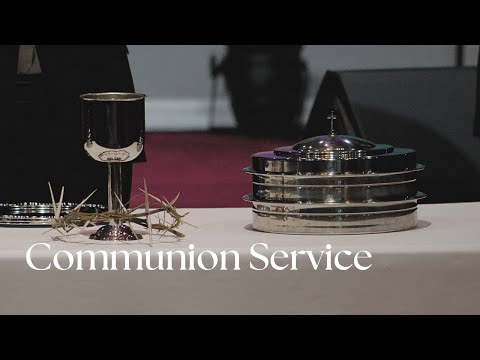
On Good Friday the church gathers to keep the feast described in 1 Corinthians 5:8 - Christ our Passover, the Lamb of God slain for us. Reading Luke 23, the preacher points to three groups at the cross: the soldiers who carried out the execution, the crowd and priests who mocked, and the believers who knew the Lord and watched from a distance in sorrow. We belong to that last group - those who have come to know Him and the power of His blood. The heart of the evening is remembrance. Just as God told Israel to keep the manna, write His commands on their garments, and raise stones from the Jordan as a memorial, Jesus said, "Do this in remembrance of me." We were redeemed not with silver or gold but with His precious blood. The old sacrifices of goats and calves only covered sin, but the blood of Christ cleanses and justifies us once for all. A great price was paid, and that price is what makes us precious in God's eyes. The message ends at the Lord's table. Christ bore not only physical agony but inner anguish in Gethsemane, sweating drops of blood, to win our peace as the Prince of Peace. As we eat the bread and drink the cup we become one with Him, sharing in His death and resurrection, and we remember that whoever is forgiven much, loves much.

Forgiveness at the Cross When Life Is Unjust

Forgiveness at the Cross When Life Is Unjust

A guest preacher from Borispol in Ukraine reminded the congregation that the church, like the pool of Bethesda, is the place where we come to touch God - and that in a world still full of the wounded and the needy, that meeting matters more than ever. Drawing on 2 Corinthians 2:14, he gave thanks that God always leads His people in triumph in Christ and spreads the fragrance of the gospel through them in every place. He urged everyone, especially the young men, to labor for God's kingdom without waiting for an easier day, because every hour given to God is counted and rewarded. Turning to Luke 23:32-34, he pointed to Jesus, led away to die between two criminals though He had done no wrong. He told of believers from his own church seized off the street and taken to the front: a worship leader who stepped on a mine and now praises God seated on a prosthesis, and brothers who never came home. Like them, Jesus was treated unjustly - yet from the cross He did not call for punishment but prayed, Father, forgive them. The heart of the message was a question: what do we do when we are wronged, slandered, or robbed? The answer is to do as Christ did - entrust our lives to the Father, trust His will in which not a single hair falls without Him, and answer injustice with prayer and forgiveness. We live in the days of Matthew 24, when wars are not yet the end and our faith must not fail when it is sifted like wheat.

Going All the Way: The Faith of Ruth

Going All the Way: The Faith of Ruth

The evening opened with a call to prepare our hearts like good soil, so the word God sows can take root and bear fruit. From there the message turned to the Book of Ruth, set in the days of the judges when famine drove a family from Bethlehem to Moab. Naomi loses her husband and both sons and comes home empty, yet her daughter-in-law Ruth refuses to leave her, choosing Naomi's people and Naomi's God without knowing what the future holds. In Bethlehem God begins to rebuild what was broken. Boaz, a godly kinsman-redeemer, honors the foreign widow and chooses to fulfill the law and restore her family, while a nearer kinsman, afraid of losing his own inheritance, refuses and is left nameless in Scripture. The preacher tied this to Paul's words in Philippians 4: to be content in plenty and in want, doing everything through Christ who gives strength. A second word pressed the same theme - go all the way to the end. Drawing on Galatians 6:9, Elisha's double portion, the arrows King Joash stopped shooting too soon, and the persistent Canaanite woman, the message warned against growing weary, living on old memories, or stopping halfway. God has plans for our future and hope (Jeremiah 29), but much depends on whether we keep seeking Him with our whole heart and finish the race.

The Price He Paid: Remembering Christ's Suffering

The Price He Paid: Remembering Christ's Suffering

This Lord's Supper service was devoted to the suffering of Jesus Christ and the price He paid for our salvation. The preacher opened in Luke 2, pointing out three ways people come into God's house: some are drawn by the Spirit like Simeon, some by the faithful habit of prayer and fasting like Anna the prophetess, and some simply by custom like the family of Jesus at Passover. Whatever brings us, he said, it is good to be in the house of the Lord. Tracing the cross through Scripture, he showed how Abraham's offering of Isaac on Mount Moriah pointed forward to the Father giving His only Son on that same mountain. Isaiah foretold centuries in advance a Servant whose face was marred beyond any man, who gave His back to those who struck Him and bore our iniquities, so that by His wounds we are healed. Christ went to Golgotha willingly, never cursing His tormentors, drinking the cup of suffering so that we could receive the cup of blessing. As the congregation broke the bread and shared the cup, the message turned to grace. We are precious not because of ourselves, dust that returns to dust, but because Christ paid so great a price with His blood. Remembering His death proclaims His victory until He comes again, and it gives believers strength to resist sin and to rise after a fall, just as Peter was restored after his denial.

Come Closer to God in Every Season

Come Closer to God in Every Season

In the rush of the holiday season, this Sunday service called the church to step out of the world's busyness and into God's presence. Drawing on Psalm 73, the first message recalled how Asaph found peace only when he entered the sanctuary and understood his true end - the eternal home waiting with God. The closer we live to the Lord, the more He fills our lives; the farther we drift, the smaller He seems, like a distant plane that looks tiny only because of the space between. From Luke 5, a second message followed Jesus calling Simon Peter. After a fruitless night, Peter obeyed the simple word "at Your word I will let down the nets," and the catch was so great the boats began to sink. Yet the real miracle was not the fish but Peter's broken, humbled heart. God calls the obedient rather than the impressive, gives our ordinary work a higher purpose, and asks us to pour everything we have into His kingdom and follow Him completely. Finally, from Gethsemane in Luke 22, the service turned to Jesus in agony, sweating drops like blood, strengthened by an angel. Prayer was His way of life, never a last resort, and in His deepest pain He prayed more earnestly still, clinging to the Father instead of pulling away. The closing appeal was tender and personal: in seasons of suffering and fear, the only real choice is to draw nearer to God and pray harder, like a hurting child who holds tightly to a parent.

Keep Walking in Christ and Looking Up

Keep Walking in Christ and Looking Up

This Sunday service brought together two complementary messages. A visiting minister from California opened the Word from Colossians 2:6 - "As you received Christ Jesus the Lord, so walk in Him." He reminded the church that we first came to Christ by faith, in that unforgettable moment when God opened our eyes and gave us peace with Him. Yet receiving Christ is only the beginning: like Demas, some who once burned for Jesus later drift away, so the call is to stay rooted in Him, in whom the whole fullness of God dwells. Drawing on Romans 8, he compared walking in the Spirit to boarding an airplane: the law of gravity still exists, but a greater power lifts us above it, and so the law of life in Christ raises us over sin and death. Through the picture of a father who gave his only son, and an auction where buying the son's portrait won everything else, he pressed home Romans 8:32 - the God who did not spare His own Son will surely give us all things in Him. A second message, from Psalm 121, spoke to those in painful, unanswered seasons. Sharing his own struggles over a daughter's health and an uncertain future, the preacher confessed he had no neat answers, only one word from God: keep looking up. When we fix our eyes on the troubles around us, despair grows, but our help comes from the Lord who made heaven and earth. The service also honored the church's pastors and servants and closed in prayer for the sick and grieving.

The Value of the Soul and Honest Prayer

The Value of the Soul and Honest Prayer

The midweek service opened with Paul's prayer in Ephesians that believers would be strengthened in the inner being by the Holy Spirit, so that every desire and plan would be brought under God's will. From there two connected truths were unfolded: how much our souls are worth to God, and how openly we are invited to speak with Him. The first message reminded us that the soul cannot be bought back with silver or gold, but only with the precious blood of Christ (1 Peter 1:18-19). No one can climb up to heaven by his own effort. Drawing on the rich man and Lazarus, the half-shekel ransom of Exodus, and David's sinful census, the preacher warned that a person can gain the whole world and still lose his soul (Matthew 16:26). He shared his own testimony of coming to Christ near the age of thirty-three and then patiently praying for unbelieving relatives, urging us not to grow weary. The second message taught that prayer is honest conversation. Looking at Lamentations 2:19 and Psalm 88, it showed that we may pour out grief, anger, and unanswered questions before God without pretending to be more spiritual than we really are. God knows how to listen, and even when no immediate answer comes, His grace fills the emptied heart with peace.

Pour Out Your Heart Before God

Pour Out Your Heart Before God

This midweek service centered on an honest question many believers carry into prayer: what do we do with our negative emotions, our pain and confusion, when we come before the Lord? The preacher first reminded us that Scripture is not a book of magic formulas that works automatically. God has set real conditions for our walk with Him, and our difficulties often appear where we fail to do our part, so we are called to cooperate with God rather than treat His Word mechanically. Drawing on the so-called psalms of cursing, the book of Job, and Psalm 62:8 - pour out your heart before Him - the message used the picture of a full cup. A heart already overflowing with bitterness has no room for God's presence. Job and the psalmist brought their rawest, even shocking words straight to God instead of venting them on other people, and God listened in silence, giving them room to be honest before turning their hearts back to praise and trust. The evening also welcomed three young people preparing for water baptism and prayed for several in need. The closing call was to be real before God: empty your heart of every burden, and let Him fill the space with His peace, just as Jesus, when reviled, did not retaliate but entrusted Himself to the righteous Judge.

When the Heart Aches: Honest Prayer

When the Heart Aches: Honest Prayer

This midweek service carried two messages. The first reminded the church that real faith is never just words but shows itself in works. Like the disciples who spent a single day with Jesus and then went out saying, "We have found the Messiah," our ordinary lives should let people see Christ, so that our light shines and the Father is glorified. The main message continued a series on prayer as a conversation with God and asked what place our emotions, especially the negative ones, have in that conversation. God does not forbid or condemn our feelings; pretending all is well while we are hurting only divides and damages us. The Psalms show honest believers pouring out grief, despair, and even the raw, frightening words of the cursing psalms before the Lord. Two lessons stood out. A strong revulsion at real evil proves our conscience still tells right from wrong and that we are spiritually alive. And the bitterest feelings are meant to be carried to God in prayer rather than dumped on the people around us. Buried emotions never disappear; they are far safer handed to the Lord, who heals what we surrender to Him.

Christ Our Passover, Slain For Us

Christ Our Passover, Slain For Us

On the night before His death Jesus rose from the supper and washed His disciples' feet, leaving an example of humble, voluntary service (John 13). Even with the cross before Him, His concern was not for Himself but for those around Him, and He calls us to lift one another up just as He came to lift us out of our troubles and into fellowship with the Father. Drawing on Exodus 12 and 1 Corinthians 5:7, the message recalls Israel's slavery in Egypt, the ten plagues, and the spotless lamb whose blood on the doorposts caused God's judgment to pass over His people. Jesus is that flawless Lamb (1 Peter 1:18-19); we are redeemed not by silver or gold but by His precious blood. Yet the blood must be applied personally - confessed with the mouth and believed in the heart. The congregation then shares the bread and the cup, remembering His broken body and the new covenant in His blood (1 Corinthians 11). Because we eat from one loaf, we belong to God and to one another as His body. The service ends with a call to answer such love by giving Him our whole life - not half, but all of it - just as He set Himself apart for us (John 17:19).

The Furnace of God's Refining

The Furnace of God's Refining

On Palm Sunday, one week before Easter, the pastor reflects on Jesus entering Jerusalem and weeping, because He came to His own and His own did not receive Him (John 1). The greatest privilege a person can have is to open the door of the heart, welcome Him in, and be called a child of God. The central message, drawn from a childhood memory of a village blacksmith, compares our lives to iron in the forge. The smith heats the metal red-hot, hammers it, and plunges it into cold water to make it strong and useful. In the same way God allows us into the furnace of testing - pressed at home, at work, even in church - to burn away our pride and refine our character for eternity (Proverbs 17:3). Through Joseph, betrayed by his own brothers yet later forgiving them and giving them the best land, through the three young men in the fiery furnace (Daniel 3), and through a struggling former student who feels God has abandoned her, the pastor insists that God is not a feeling but a Person we trust. Hold on to Isaiah 41, where God promises to hold our hand, and you will come out of the fire stronger and receive the crown of life promised to those who endure (James 1:12).

Humble Yourself and Become Christ's Fragrance

Humble Yourself and Become Christ's Fragrance

The service opened with thanksgiving and worship, prayers over the children from Psalm 8, and a reading of Psalm 67. Pastor Nikolay then preached from 1 Peter 5:6-7, "Humble yourselves under the mighty hand of God," weaving in the story of Israel's seventy-year captivity in Babylon. While the false prophet Hananiah promised an easy two years, God had decreed seventy, reminding us that deliverance comes in God's time, not ours. The pastor taught that God controls everything, both the good and the hard, and uses our trials to remove the pride and self we were born with. Sharing how he once discovered he could not truly forgive, he urged the church to stop pitying themselves, lift their eyes to heaven, and praise God in the storm, following Christ who suffered without retaliating and entrusted Himself to the righteous Judge (1 Peter 2:21-23). A closing message and a mother's testimony of her daughter's healing carried the theme further. Like the broken alabaster jar that filled Simon the leper's house with fragrance (Mark 14:3; John 12:3), believers once cast aside like lepers are now the aroma of Christ (2 Corinthians 2:14). Carrying this treasure in earthen vessels (2 Corinthians 4:7), we are called to proclaim His victory everywhere, even through suffering.

Let God Be Glorified in Your Life

Let God Be Glorified in Your Life

The midweek service opened with John 13:31, where Jesus, the very moment Judas left to betray Him, said: Now is the Son of Man glorified. Before the cross, before the empty tomb, He already spoke of glory. The preacher reflected on how often we fail to see what God is doing - when people betray us, when we carry a cross of sorrow, when we pass through the valley of death. Only on the far side do we begin to grasp that God wants to be glorified in our lives. Scripture after Scripture made the same point: the man born blind (John 9), so the works of God might be shown; Israel trapped between the sea, the mountains, and Pharaoh (Exodus 14), so God could display His glory; the doubting officer at Samaria's gate (2 Kings 7), who saw God's provision but never tasted it because of unbelief. God's ways are not our ways, and His timing is not ours. Like the sister who said she would lay down her oars and let God steer her boat, we are called to stop striving and trust. A second message urged believers to put off the old self and put on the new (Colossians 3, 2 Corinthians 5, Romans 12), to be transformed by the renewing of the mind and to present their bodies as a living sacrifice. Using the picture of Joshua the high priest in Zechariah 3, stripped of filthy garments and clothed in clean ones, and the bronze mirrors the women of Israel kept polished, he called the church to daily cleansing through Christ's blood, so His glory would shine from their hearts. Testimonies of answered prayer - a visa granted and a sudden healing - confirmed that God is faithful to His word.

Is the Lord Among Us?

Is the Lord Among Us?

Preached during a week of fasting and prayer for the church, this Wednesday message opens with the reminder that God now dwells among His people in the church, the pillar and ground of the truth. The preacher shares his own first experience of fasting, when he begged God for healing, grew impatient, and finally learned that he had nothing to prove to God; the Lord healed him in His own way and time. Fasting, he explains, exists to deepen our prayer and to pull us out of our comfortable routine so the spiritual person can grow. The heart of the message is Israel at Rephidim (Exodus 17), where thirsty people quarreled with Moses and asked, 'Is the Lord among us or not?' Though they had just seen the sea parted, manna, and quail, hardship turned them into complainers, like a spoiled child stamping his feet. The preacher confesses he met the same temptation in a half-built church with only a handful of workers, and again during the COVID years; yet those who kept trusting and laboring saw God build His house. He then points to the struck rock as a picture of Christ, the source of living water, broken for us so that rivers of living water might flow. Finally, in the battle with Amalek, Israel prevailed only while Moses' hands were lifted in prayer. The lesson: when we stop crying out to God, the stream of His grace dries up, so we must come boldly to the throne of grace, where faith, prayer, and obedience turn the impossible into the possible.

Obey God Rather Than Men

Obey God Rather Than Men

The evening opens at Psalm 51, where David asks the Lord to open his lips so he can offer praise. God does not delight in outward sacrifice but in a broken and contrite heart, the kind of prayer the tax collector brought in Luke 18 when he beat his chest and asked for mercy. We gather not to impress one another but to sharpen one another, like iron sharpening iron, and to come before God humbly. The main message walks through Acts chapter 5. The apostles are jailed for preaching, freed by an angel, and told to go right back and keep proclaiming the word. Against all human logic they return to the same place that got them arrested, declaring before the council that we must obey God rather than men. Gamaliel warns that schemes built on men collapse, but a work of God cannot be stopped. Like Joseph, who honored God through slavery and prison and was lifted to second in the kingdom, those who put God first bear fruit that lasts. The preacher asks whose voice we really follow: God's, or the noise of news, fear, leaders, and friends. A second word turns to love. Jesus told the rich young ruler to love his neighbor as himself, and then gave a new commandment to love one another as He has loved us, so that everyone would know we are His disciples. Salvation is grace, a gift we cannot earn by works, shown in how Christ looked on Peter and restored him after his denial. We are called to love one another without conditions, no matter how others have treated us.

Gain Through Loss: Taking Up Christ's Yoke

Gain Through Loss: Taking Up Christ's Yoke

Opening with Matthew 11:28-30, the preacher observes that people everywhere are exhausted and anxious, chasing an elusive "American dream" that never satisfies. Jesus calls all the weary and burdened to come to Him for rest - not so He does our work for us, but so He lifts the crushing weight of our own worries and gives us His light yoke in exchange. The theme is "gain through loss." Christ Himself lived to do the Father's will rather than His own, and He invites us to do the same: to stop being slaves of our own desires (1 Corinthians 6:19-20; Galatians 2:20) and let Christ live in us. We are not our own, having been bought at the price of His blood, so the hardest battle is the one against our own self-will, and it is won only by the help of the Holy Spirit. Bearing the cross God assigns makes us salt and light in a perishing world (Matthew 5; Matthew 10); living only for ourselves leaves us no different from unbelievers. Faithful cross-bearing leads to a glorious crown (Revelation 3:11), for there is no crown without a cross and no gain without loss. The preacher closes by urging each listener to examine their heart, repent while there is still time, and willingly take up Christ's yoke.

Sincere Prayer and Trust in Hard Times

Sincere Prayer and Trust in Hard Times

This Wednesday service held two messages, yet both beat with one heart - learning to trust God when life turns difficult. The first, drawn from Psalm 27, the psalm of trust, looks at how David prayed while enemies pressed in around him. He opens not with a list of requests but with a confession of God's strength, refusing to be afraid, longing above all to dwell in the house of the Lord and to be led by God's own hand. In these last and unsettled days, the preacher urged, our prayer must become constant and sincere rather than rote, because heartfelt prayer brings peace and steadies our hope. The second message turns to the prophet Elijah at the brook Cherith, fed by ravens - birds the law called unclean. Elijah did not argue with God's strange way of providing; he simply obeyed. When the brook dried up, that very hardship moved him on to the widow and later to Mount Carmel, where the people repented. In the same way God often arranges uncomfortable circumstances to reposition us where He needs us, for all things work together for good to those who love Him. The God who spoke 'let there be light' over formless darkness still creates from nothing by His word. Even when faith and resources feel gone, calling on Jesus carries His light into the darkest corners of our lives - for healing, for salvation, for change. The evening closed with the apostle Paul's testimony: fight the good fight, finish the race, keep the faith, and live longing for the Lord's appearing.

Do This in Remembrance of Me

Do This in Remembrance of Me

This Sunday service was given over to the Lord's Supper. The pastor read from 1 Corinthians 11, where Paul passes on what he received from the Lord: the bread is Christ's body broken for us, the cup is the new covenant in His blood, and we keep this table in remembrance of Him. Before anyone eats the bread or drinks the cup, he must examine his own heart so as not to receive unworthily. To prepare those hearts, the preacher walked through the passion in Mark 14 and 15. He pointed to Mary anointing Jesus in the home of Simon, the leper Christ had healed; to Judas grumbling over the cost and then betraying with a kiss; to the Last Supper; to the hymn sung on the way to the Mount of Olives; to Gethsemane, where Jesus prayed, let this cup pass, yet not My will; and on to the arrest, the trial before Pilate, the crown of thorns, the mocking, Simon of Cyrene, the crucifixion, and the centurion's confession, Truly this man was the Son of God. He urged believers to trust the Word of God rather than their own ideas, to walk the good road every day, and to live ready for the moment life suddenly stops - where would we go then? He shared the joy of an elderly Jewish woman coming to Christ, and invited anyone present to call on the name of Jesus and receive Him. The service closed in prayer as the congregation took the bread and the cup with reverence and thanksgiving.

Trusting the Shepherd Who Gave His Life

Trusting the Shepherd Who Gave His Life

This midweek gathering opened with a reminder that God's Word falls on an open heart the way rain and snow fall on an open field (Isaiah 55). It never returns empty but always does its work, so nothing should be allowed to stand between heaven and our hearts. A second brother, reading from 1 Peter 1, spoke humbly of his own frailty, of twice being close to death, and urged the church to keep believing, hoping, and loving, since the wings of the Holy Spirit are faith and humility. Reflecting on Sunday's communion, one preacher took up the hard question of Gethsemane (Luke 22): was Jesus afraid of the cross when He prayed for the cup to pass? Tracing John 10 and 12, Hebrews 5 and 10, he concluded there was no fear, for perfect love casts out fear. The agony, even sweating blood, was the enemy's last assault, and Christ prayed not to die in the garden before reaching Golgotha. An angel strengthened Him so He could finish the work, and a poem about the thief on the cross showed that all of us, like that dying man, were rescued by sheer grace. A further message rested on Psalm 23 and John 10: the Lord is my shepherd. We entrust God with the greatest thing, our eternity, yet often refuse to give Him the small daily worries, though His thoughts are far higher than ours. The service ended with a call to fast and pray for the church, recalling how King Hezekiah carried his crisis straight into the house of God and was delivered.

Could Not God Do the Same for Me?

Could Not God Do the Same for Me?

The evening opens with Psalm 103:13 - as a father pities his children, so the Lord pities those who fear Him - and turns to a question that quietly haunts many believers: if God blessed, healed, or rescued someone else, could He not do the same for me? Walking through Joseph interpreting the two prisoners' dreams in Genesis 40 and the crowd at Lazarus' tomb in John 11, the preacher shows how naturally we generalize God, assuming that because He acted one way for one person He owes the same to everyone. Hebrews 11 shatters that assumption. The same chapter celebrates those who by faith conquered kingdoms and received their dead raised, and then lists those who were tortured, stoned, sawn in two, and killed by the sword. Same God, same faith, the same will, yet wildly different outcomes. Romans 9 and the image of the Potter and the clay answer the cry for fairness: God shows mercy to whom He wills, and the clay has no right to argue with the Potter. The call is to stop measuring our lives by other people's blessings and to accept God's individual purpose for us. God can, but He is not obligated. Like Peter, who asked about John, we hear, "What is that to you? Follow Me." The safest and happiest place is the center of God's will, even when it is painful or hard to understand, saying, "I agree with You."

Bringing Our Questions to God in Pain

Bringing Our Questions to God in Pain

Preaching from Luke 23:8-9, where Herod questioned Jesus and received no answer, guest preacher Alex Kolyesnikov reflects on the place of questions in the life of faith. Questions are a natural part of being human, and the hardest of them is simply 'why?' - why this pain, why God seems silent. He shows that God is never offended by our questions: God Himself asked Adam where he was, Jesus cried out from the cross 'Why have You forsaken Me?', Paul pressed the Galatians with question after question, and Job brought God more than a hundred. From this he offers three counsels for taking our questions to God. First, acknowledge His greatness even while we are hurting. Second, keep talking to Him and refuse to walk away, even when He stays silent. Third, never stop praising Him, because praise and unanswered questions can live side by side. He shares the painful story of his young daughter's near-fatal head injury and her lasting disabilities, and the hundreds of questions he still carries to God to this day. His conclusion is tender and honest: do not bury your pain, and do not abandon God. If you must weep, weep in His presence, for there relief is found. We may never get our answers here, but one day, face to face with Him, every question will fall away because we will finally see what we so longed to understand.

Counseling That Points to God's Word

Counseling That Points to God's Word

This seminar session continues a study of Christian counseling. After reminding the group what counseling is not - it is neither preaching nor merely handing out advice - the teacher offers a working definition: Christian counseling is the art or skill of giving counsel that reveals God's view of a problem, shows the biblical way out, and helps a person walk it. Because it is an art, it can be developed and it can also be lost, so it demands ongoing study, prayer, and practice. Even God-given gifts call for our faithful effort, as Paul charged Timothy to devote himself to reading and teaching and to fan the gift into flame. The heart of biblical counseling is giving God's perspective, not the counselor's opinions or the world's techniques. That is why a counselor must know Scripture deeply and be a sound theologian, meaning someone who truly knows God through His Word. Proverbs 14:12 warns that a way can seem right and still end in ruin, so every answer must rest on the Bible. Jesus modeled this in Matthew 19: asked about divorce, He sent His questioners back to the beginning rather than offering His own view. The teacher also confronts shallow slogans, such as the claim that depression and Christianity cannot coexist. The Psalms show godly people in deep anguish who still cried out to God and kept their hope in Him - David telling his downcast soul to hope in God, and Jonathan strengthening David's hand in God. He corrects common misreadings of murmuring and of humility, which biblically means submission and accepting the place God assigns, after the example of Christ. The counselor's calling is to keep leading people back to God and His Word.

Do Not Let Your Heart Be Troubled

Do Not Let Your Heart Be Troubled

The church gathered for a midweek service that opened with the shepherd psalm: even in the valley between Sundays the Lord remains our Shepherd, and we still dwell in His house. The main message came from John 14:1, where Jesus, about to leave His disciples, gives them a command: do not let your heart be troubled, believe in God and believe also in Me. The preacher showed that most of what troubles us enters through the eyes and ears, often as nothing more than words or images. Goliath's threats drained Israel's courage, the spies' bad report melted the people's hearts, and sin crouches at the door waiting to be let in. So we must guard the heart, wear the helmet of salvation, and like Job make a covenant with our eyes. When something knocks, ask who is there and where it comes from, and open only to the voice of the Shepherd we know and follow. A second message turned to suffering. Through the story of missionary Roman, whose car burned, whose child was injured, and whose home caught fire, the cry arose: Lord, where are You when it hurts? From 2 Corinthians 1 came three answers - God comforts us so we can comfort others, He teaches us to trust Him rather than ourselves, and everyone He answers has reason to give Him thanks.

The Choices and Words That Build Your Life

The Choices and Words That Build Your Life

The preacher opens with the picture of a single rose. His wife cut off the last small stem from a rose bush and planted it, and from that discarded cutting one beautiful flower grew. So it is with the righteous: wherever life places you, however overlooked you feel, you will still bear God's fruit. From there he urges every believer to make the right choice in life, because our blessing rests on the words we speak. Drawing on the report of the twelve spies (Deuteronomy 1; Numbers 13), he shows how ten men destroyed Israel's faith with fearful words while Joshua and Caleb spoke faith: God is with us. A careless word can tear down in a moment what took years to build, whether at home or in the church. Caleb kept speaking faith, and even at eighty he still asked for his mountain and went up to take it. Through Ruth's loyalty - I will not leave you - which led to the line of David and of Christ, and through Paul's willing choice to suffer for the gospel, the preacher calls listeners to choose faithfulness. Speak words full of life, build others up instead of tearing them down, stay faithful through every trial, and a great reward awaits.

Faithful Servants Who Leave Their Comfort

Faithful Servants Who Leave Their Comfort

On the Sunday after Thanksgiving, the pastor calls the church to move past being merely thankful for America's abundance and for salvation, and to ask what we give back to God. Drawing on the parable of the talents and Christ's words, "Well done, good and faithful servant, enter into the joy of your Lord," he urges every believer to find a place of service instead of comparing ministries or making excuses. He recalls how the ark of the covenant blessed the household of Obed-Edom and how the God-fearing family of Moses was protected, showing that God blesses those who honor and serve His house. A guest pastor from Ukraine, Sergey, opens the first chapter of Nehemiah and asks why Nehemiah left his comfort, why Moses left Egypt, and why Jesus left the glory of heaven. The answer is empathy: God feels our pain as His own. He shares his testimony of pastoring in eastern Ukraine, of being arrested and beaten in 2014, of praying aloud and preaching to his captors, and of being released by a warden who recognized him as a man of God. After years of humanitarian work and opening care homes for abandoned elderly people and the needy, he testifies that the church is the hands of God on the earth. The whole service points to one charge: leave your comfort zone and serve those who suffer, because whatever we do for others we do for Christ Himself.

Give Thanks to God in All Things

Give Thanks to God in All Things

This midweek service centered on thanksgiving as the heart of true worship. One brother opened from Psalm 126 - those who sow in tears shall reap with joy - reminding the church that the road to heaven often begins with weeping, prayer, and intercession, just as Christ Himself wept and now pleads for us before the Father. The main message, brought by a visiting brother, urged believers to give thanks in every circumstance, not only when life goes well. Drawing on 1 Thessalonians 5 and Ephesians 5, he showed that gratitude is itself a form of worship, honoring God for who He is and for what He has done. He pointed to Job, who blessed God's name after losing everything, to the one healed leper out of ten who returned to thank Jesus, and to the springs of blessing that open in the valley of weeping. He warned that the last days will be marked by ingratitude, and that even people who know God can fail to glorify Him. Through his own testimony of a painful injury that God swiftly healed, he called the congregation forward to offer a sacrifice of thanksgiving. The service closed with an invitation to the coming harvest celebration and a reminder that the most precious gift we return to God is our time.

Hard Pressed but Not Crushed

Hard Pressed but Not Crushed

The service centered on the Lord's Supper. The congregation was urged to examine their hearts before partaking, remembering that the bread and cup are the body and blood of Jesus. The pastor recalled believers who once shared communion with plain black bread and water in Soviet prison camps, receiving it with deep trembling. The first message, from 2 Corinthians 4, declared that we are hard pressed on every side but not crushed. Like a ball that countless heavy players pile onto yet cannot burst because the pressure within is greater than the pressure without, the believer endures because the grace of Christ inside us is stronger than every force outside. Amid the thousands of thoughts that assault us daily, we were called to take them captive, confess our sins, and trust that healing flows from the wounds of Christ. The story of the hymn 'What a Friend We Have in Jesus', written by Joseph Scriven amid repeated grief, showed that even loss surrendered to God can bless others. A guest bishop then preached from the Mount of Transfiguration in Matthew 17, teaching that following Jesus to the high place carries a price, and that we must learn our true calling and the timing of God. Some things He reveals are to be kept hidden in the heart until the appointed moment. The service closed with Joseph before Pharaoh in Genesis 41, a reminder that God delights to give good gifts for our benefit.

What Carries Us Through Suffering

What Carries Us Through Suffering

This midweek evening service prepared the congregation for Sunday communion, the remembrance of Christ's death. The leader urged everyone to examine their own heart before the Lord's table, and not to think too highly of themselves but, seeing how greatly God values a person, to seek His will in humility and live for His glory. The first message drew on Psalm 116 and its opening line, "I love the Lord because He has heard my voice." The preacher spoke of times of crushing stress, even standing on the border of life and death, and testified that God truly hears the one who cries out to Him. He challenged each listener to remember why they love God and to tell others of His mercy. The second message asked what made Daniel strong under the heaviest pressure. The answer came in three parts: Daniel loved God above every comfort, Daniel prayed faithfully three times a day even when it could cost his life, and Daniel loved and searched the Word of God. The service closed by looking beyond present trials to the New Jerusalem, where God will wipe away every tear, and to the great reward awaiting all who love Him.

Trusting God Through Life's Hard Times

Trusting God Through Life's Hard Times

This midweek service drew several preachers around one theme: how a believer should face hardship. A young brother opened with his testimony - reluctantly leaving his ministry in Poland, he watched God open every door and learned to cast his whole burden on the Lord (1 Peter 5:7). God does not always grant what we ask, because in His wisdom He knows what truly helps the soul, and trials are often His way of teaching and redirecting us. A second brother pointed to Christ's invitation to take His yoke (Matthew 11:28) - a yoke built for two, so the Lord carries it alongside us. Nothing enters our lives that God has not allowed (Lamentations 3:37), and like Daniel's friends in the furnace we can trust that He finishes what He starts and never stops halfway. The main message turned to the perilous times of 2 Timothy 3. These hard times come not only from wars and disasters but from people - from pride, grumbling, and a quarrelsome spirit that can make even a comfortable home unbearable. The call was plain: do not be the source of that difficulty. Learn humility from Christ, be peaceable and thankful, let trials refine rather than embitter you, and like the overcomer of Revelation 3:21 you will one day sit with Him on His throne.

He Is With Us in Our Sorrow

He Is With Us in Our Sorrow

The midweek service opened with a reminder that grace and peace grow only as we come to know Jesus Christ. A young brother shared how a serious accident at work - a saw blade that cut his hand - became a place where he saw God's glory: the building turned out to be a medical clinic, skilled doctors quickly stitched the wound, and his hand was spared so he could still play and praise. His point echoed Hebrews: the Lord disciplines those He loves, and affliction yields a peaceable fruit of righteousness when received with thanks instead of resentment. The guest preacher, a former pastor who came to Christ out of a criminal past and was healed of a crippling illness, turned the church's eyes to comfort in suffering. With wars flaring, an epidemic behind us, and fear being stirred up even in congregations, he refused the message that everything is over. Scripture promises that God is with us in trouble, that He will never leave or forsake us, and that the fiery trial is sent to purify, not to destroy. We confuse faith with self-confidence, he warned, like a small boy sure he can travel alone until he panics and finds his father's note: do not be afraid, I am in the next car. The safest place on earth is in the shadow of God's wings. Even when we cannot understand why God allows something, we can trust His goodness, cast every care on Him, and encourage one another instead of judging or despairing.

Being Where God Wants You to Be

Being Where God Wants You to Be

The service opened with worship and a pastor's word on raising children. He dedicated a newborn boy, Levi, to the Lord, blessed those with birthdays, and prayed over the whole church family. Godly parenting, he said, rests on three pillars - prayer, discipline, and a consistent personal example - drawing on Hannah's prayer for a child, Proverbs 22:6, the priestly blessing of Numbers 6, and the wish of 3 John that we prosper as our soul prospers. A visiting evangelist from Belarus brought the central message. He told of a preacher who refused to flee Soviet persecution, surrendering his foreign passport, taking citizenship, and finally paying with his life. To fail to do God's will, he warned, is not merely to lose a reward but to risk missing the Kingdom itself. The good shepherd lays down his life for the sheep, while the hireling runs when danger comes. The heart of the sermon was simple: stay in the place where God wants you. As God once called, "Adam, where are you?", He still meets us where we ought to be, not in the bushes where fear drives us to hide. If Jesus is truly Lord, He decides where we live, how we serve, and whom we marry. Suffering is His school of obedience, and carrying the cross to Golgotha means being willing to risk the most precious thing. The message closed with a call to repent and surrender to His will.

Living Water for the Last Days

Living Water for the Last Days

The service opens with the invitation of Jesus: Come to me, all who labor and are heavy laden, and I will give you rest (Matthew 11:28). The preacher explains that Christ frees us from our true enemies - whatever robs us of life, joy, and fellowship with God. But that freedom comes only when we stop excusing the sin we secretly love and bring it to Him, naming it as the enemy it really is. A second message pictures Israel arriving at Elim with its twelve springs and seventy palms, a place of rest along a hard road. As in Psalm 91, safety belongs not to the one who merely visits but to the one who dwells under the shelter of the Most High. Christ Himself is the fountain of living water (John 7; John 4), and Jeremiah warns that the people forsook that fountain for broken cisterns that hold nothing. We are called to keep coming and keep drinking, hungering and thirsting for His word and His presence. The main study walks verse by verse through 1 Peter 4:7-19. Because the end of all things is near, we are to be sober and watchful in prayer, to love one another since love covers a multitude of sins, to show hospitality without grumbling, and to serve by the strength God supplies so that He is glorified in everything. Suffering for Christ is not something strange but a blessing; judgment begins with the household of God, yet believers stand before Christ for reward, not condemnation, having already passed from death to life.

Broken and Remade: Suffering That Refines Us

Broken and Remade: Suffering That Refines Us

The first speaker shares testimonies of how God can cleanse a heart in an instant, as He did for the thief on the cross, but warns that lasting righteousness is usually forged as God works in us over many years. He recalls how, the very moment he felt pure, pride crept in and the righteousness vanished at once. Pride, he says, is the most dangerous sin of all, and sometimes God allows us lesser struggles to guard us from it. Through stories of blasphemous thoughts after his conversion, his fear that he was beyond repentance, a doubt over food broken in the army, and a near accident avoided when his whole family suddenly began to pray in the car, he shows that God is a faithful Shepherd who always provides a way out (1 Corinthians 10:13) and whose Spirit prays for us in our weakness (Romans 8:26). Like Paul's thorn in the flesh, our weaknesses keep us humble, for God's power is made perfect in weakness. The second preacher, opening 1 Peter 4:1-6, teaches that whoever is willing to suffer in the body is finished with sin. We must arm ourselves with the same resolve Jesus had, to suffer for righteousness, and tune our minds to the truth that we are children of God. Those who stand for the truth will be mocked and persecuted, even at home or in church, yet they will reign with Christ, while those who avoid suffering to keep the peace drift toward sin and judgment. Like a vessel mended with gold, a faith proven through trial is worth far more than gold that perishes (1 Peter 1:6-7).

Our Advocate and the Hope That Endures

Our Advocate and the Hope That Endures

The evening opened with a study of 1 John and Ephesians on sin in the life of a believer. The preacher drew a clear line between sin we deliberately plan and choose, and the failures and offenses we never intended to commit. We must never give our hearts room to plan sin; yet when we stumble we are not abandoned, because Jesus Christ the Righteous stands as our Advocate before the Father, and His blood cleanses the faults we did not mean to commit. Peter denied the Lord in weakness and was restored, while Judas chose his betrayal, a reminder that God weighs the heart and not only the deed. A second message from 1 Peter 3 turned to hope in the midst of suffering. Peter, writing from prison, returns again and again to suffering, urging believers to set the Lord apart in their hearts, live as a good example, and always be ready to give an account of the hope within them, with gentleness and reverence. You cannot witness to a hope you have never experienced yourself. Christ suffered once for sins, the righteous for the unrighteous, and salvation comes through Him alone; baptism is the picture, but it is His shed blood that washes us clean. A closing testimony likened the Christian walk to Israel's journey out of Egypt. After coming to Christ the trials began: the bitter waters of Marah turned sweet through repentance and forgiveness, hunger in the wilderness was met by daily manna and trust, and thirst at the rock was answered by the filling of the Holy Spirit. The trials were not God's absence but His training, leading His people toward the promised land. Keep knocking in prayer, trust His word, and let Him cleanse the past.

So It Must Be: He Stood Alone for Us

So It Must Be: He Stood Alone for Us

This is a communion service, and it opens with a call to search our own hearts before we approach the table. We are reminded of the Pharisee and the tax collector: we come not boasting in our own goodness, but humbly, like the man who could not even lift his eyes and simply asked for mercy. The guest preacher, Bishop Vasily, teaches from Matthew 26 and the night in Gethsemane. Jesus is betrayed and arrested, the disciples scatter, and Peter draws a sword. The key phrase is the Lord's own: this must happen so that the Scriptures are fulfilled. Jesus received the cup of suffering from the Father's hand. Peter's confident promise to die with Him was the voice of pride, and his real need was to watch and pray so as not to fall into temptation. In the garden Jesus prayed in agony, strengthened by an angel, sweating drops of blood, yet He did not call the twelve legions of angels - for then our salvation could not have come. He remained alone, even forsaken, carrying the sins of the world, so that we would never be left alone. As the church breaks one bread and shares one cup, the message is clear: only the blood of Jesus cleanses and justifies, and we partake worthily not by our own righteousness but by His righteousness credited to us through repentance.

Faith Refined in the Fire of War

Faith Refined in the Fire of War

An older preacher opens from Psalm 34, calling the church to seek the Lord, then tells of his first trip back to Ukraine in five years, kept away first by the pandemic and then by the war. Like the spies sent into Canaan, he went to see for himself how faith holds up under pressure, convinced that every faith is tested by fire. What he found amazed him. The congregation he once left now fills a building of nearly a thousand seats, much of it with people the world had written off - former addicts, prisoners, broken families - now serving God with their gifts. Bibles lie in the trenches, soldiers pray the Psalms, and across war-torn Ukraine believers carry food and the gospel to others. Even amid bombs and coffins, many are turning to Christ, proof that God still governs human salvation in the last days. From the parable of the wheat and the tares he warns against rushing to uproot others by our own judgment, for only God separates them at the harvest. He closes by guarding the holiness of communion, the cup of the New Covenant in Christ's blood, and calls parents to repentance, longing for children and grandchildren whose faith grows rather than withers.

Trials, Wisdom, and Doers of the Word

Trials, Wisdom, and Doers of the Word

The evening opens by reminding the church that believers walk a narrow road of life in Christ, while the enemy keeps whispering about an easier path running right alongside it. Only Jesus, His will, and His Word keep us on the road that leads to His kingdom. As the congregation prepares for an upcoming remembrance and communion service, a brother reflects on Gethsemane and the cup Christ drank, the cup of the whole world's sin, so that we could receive the cup of blessing instead of the cup of wrath. The main message is a verse-by-verse walk through James chapter 1. James, the Lord's own half-brother, calls himself a servant of Jesus Christ, modeling deep humility. The testing of our faith produces endurance, and endurance makes us mature and complete, like Job, who after his trial could say he now saw God with his own eyes. In trials we are to count it joy, ask God for wisdom as Solomon did, and ask in faith without wavering like a wave tossed by the wind. The preacher carefully distinguishes trials, which God allows to strengthen us, from temptations, which grow out of our own desires and the enemy and must be stopped at their very beginning, as David failed to do. Above all, James calls us to be doers of the Word and not hearers only who glance in a mirror and forget their own face, to bridle the tongue, and to show pure religion by caring for orphans and widows and keeping ourselves unstained by the world.

Faithful Through Every Season, Like Samuel

Faithful Through Every Season, Like Samuel

The Wednesday service opened with the blessing of Moses in Deuteronomy 33:3: God loves His people, holds all His holy ones in His hand, and they sit at His feet to hear His word. Just as Mary chose the better part at Jesus' feet, we are invited to listen as the Spirit of truth speaks to us about Christ. The preacher then walked through the life of Samuel. Born from Hannah's tears and her vow to give the child back to God, Samuel grew up serving the Lord. But Israel passed through dark days - the corrupt sons of Eli, crushing defeats by the Philistines, and the capture of the Ark, when the glory departed. Through both blessing and disaster, Samuel kept serving faithfully and kept speaking God's word. A second brother added his father's testimony: a believer persecuted under the Soviet regime, sentenced to years in Siberian labor camps, healed of tuberculosis, converted and baptized by breaking through the ice, then imprisoned again for printing Bibles. He gave his whole life to God. The call to us is the same - to stay faithful in good times and in trials, and to be a light and a firm foundation for the next generation.

Strength in the Desert Place

Strength in the Desert Place

A visiting preacher opens to Mark 6:31, where Jesus tells His tired, hard-working disciples to come away to a quiet, deserted place and rest. From this he draws a surprising truth: the strength we so often look for in pleasant getaways is actually found in the desert - in silence, in solitary prayer, and in the hidden battles no one else sees. Using Jesus in the wilderness, Isaiah 30:15, and the lives of Abraham, Moses, David, and Joseph, he shows that calling and power are forged in lonely seasons of hardship. He warns against fearing silence and chasing constant noise and distraction, and against wanting blessing or position handed to us with no growth, like the prodigal son demanding his inheritance early. A second guest preacher follows with the message that we are called to be real witnesses of a real, near God. He points to Christ's personal invitation - come to Me - in Matthew 11:28 and John 7:37, and to Pentecost, where God's fire touched the disciples' mouths and transformed them, urging the unsaved to come to Jesus and the thirsty to receive the Holy Spirit.

Christ Our Passover: Remembering the Cross

Christ Our Passover: Remembering the Cross

In this Good Friday communion service, the pastor leads the church through the washing of feet and the Lord's Supper, calling believers to humble their hearts and be reconciled with one another before approaching the table. He recalls how Jesus, at the last supper, gave a final blessing to those who follow His example of lowly service. The heart of the message is the meaning of the cross. The preacher names three reasons Christ died: He took our place on the cross so that sinners could enter heaven; He redeemed us from slavery to sin with His own blood, making us a treasure bought at great price; and He left us an example to follow, even through suffering on the narrow road. As Christ our Passover, the spotless Lamb, His shed blood cleanses us and shields our homes from the enemy. Finally, the church remembers Christ in the bread and the cup, proclaiming His death until He comes. The pastor lifts up the hope of one day eating and drinking anew with Him in the Father's kingdom and urges everyone never to forget the great price paid for our salvation. The service closes with thanksgiving and an offering for Ukraine relief.

Take Up Your Cross and Die to Self

Take Up Your Cross and Die to Self

The preacher opens from Matthew 16:24, where Jesus tells His disciples that anyone who wants to follow Him must deny himself, take up his cross, and come after Him. He explains that the cross of Christ carries many meanings - new birth, peace, hope, and the love God showed us. Because of that cross we are no longer slaves to sin; once orphans, we now have a heavenly Father. But the cross also stands for death, so the message turns, surprisingly, to our own funeral. Drawing on Ecclesiastes - that it is better to sit in the house of mourning than in the house of feasting - he says each of us carries two natures, flesh and spirit, that war against each other. The old, self-centered nature, which wants to be the center of everything, cannot truly love, forgive, or give itself for others, so it must die. Pointing to Philippians 2 and Romans 6, he holds up Christ as the pattern: equal with God, yet He emptied Himself, took the form of a servant, and obeyed even to death on a cross. Golgotha was a place of shame, and following Jesus there is never popular - like Moses brought low to a shepherd's life, or the disciples who loved the mountaintop but scattered at the cross, and Peter who denied his Lord. Still, Christ calls each of us to take up the cross and follow Him.

Seeking the Giver, Not the Gift

Seeking the Giver, Not the Gift

The service opened with a reflection on Paul's confidence in Romans 8, that nothing in all creation can separate us from the love of God in Christ. The pastors reminded the church that God chose us for salvation and hears the prayers of His people, much as the persistent widow received justice even from an unjust judge. The main message asked one searching question: why are we really here, and what are we seeking? Through the parable of the farmer whose fortunes kept reversing, the story of Job, and the three young men in the fiery furnace, the preacher showed that storms are not a matter of if but of when. Those who chase only blessings turn away when the blessings vanish, but those who seek God Himself can still bless His name when everything is taken. The closing call was to feed daily on God's word like manna in the wilderness. Drawing on Elijah's renewal and Jesus' words that His food was to do the Father's will, the church was urged to reject the spiritual junk food of gossip and quarrels and to fix its focus on Christ alone, the Savior who is greater than any rescue He gives.

The Resurrection Power Already Living in Us

The Resurrection Power Already Living in Us

This midweek service opened with a call to begin the new year the way Mary did, keeping and pondering God's word in her heart (Luke 2:19). The preachers reminded the church that thus far the Lord has helped us (1 Samuel 7:12): looking back over the past year, God provided for every need, heard every prayer, and watched over His people. Even though the year ahead is unknown and may bring hardship, believers still have the freedom to gather, to read Scripture, and to store up the precious oil of a living walk with Christ while watching the signs that His return is near. A second message turned to Isaiah 61 and to the story of Jairus's dying daughter and the woman who had bled for twelve years (Luke 8). On a single day Jesus met both a fresh grief and a long, exhausting affliction, and He brought freedom and healing to each. God acts not because we have earned it but for the sake of His own name and glory (Isaiah 48:9-11), and our whole hope rests in Christ, who came not only to be born but to die and rise so that we could be set free. The closing word centered on Paul's prayer in Ephesians 1, that the eyes of our hearts would be opened to see the immeasurable power at work in us, the very power that raised Jesus from the dead (Romans 8). If we truly grasped that this resurrection power lives inside us, we would stop doubting, stop walking in sorrow, and stop living as slaves to sin. Present suffering is temporary, nothing can separate us from God's love, and the Spirit Himself intercedes for us and makes us more than conquerors.

Give Thanks to God in Everything

Give Thanks to God in Everything

As Thanksgiving week approaches, the preacher opens 1 Thessalonians 5:18, "give thanks in everything," and asks a searching question: do we truly thank God for all things, or only when life goes our way? It is easy to praise Him for a blessing we wanted, like the one leper out of ten who turned back to thank Jesus. The harder calling is to give thanks in trouble and in loss. He walks through Scripture for proof: Paul and Silas sang in the prison, Israel praised God after the Red Sea, the early settlers gave thanks even after a brutal first winter that took half their number, and Job blessed God's name in his grief, declaring, "I know my Redeemer lives." Thanksgiving is not only about harvest and success; the rich fool who built bigger barns enjoyed his plenty but forgot to thank the Giver. From the feeding of the five thousand, where Jesus said, "go and see how many loaves you have," he urges us to thank God from the little we hold, not only from abundance. Bring your unanswered prayers and unfinished hopes to Him, trust that He may be preparing something better, and keep serving with a grateful heart.

Rebellion Is As the Sin of Witchcraft

Rebellion Is As the Sin of Witchcraft

The preacher opens with a testimony from his first year in the faith. A forceful man came to the church confidently naming the year of Christ's return, and no one dared contradict him. But God prompted the young believer to ask one question: do you fear God? The man's answer - 'I used to not fear Him, but now I fear a little' - exposed the deception. That same spirit of deception and resistance has shadowed the church in every generation. Drawing on the apostle Paul, on Samuel, Stephen, and the parable of the minas, the message warns about the spirit of opposition - the refusal to submit to God and His word. Scripture calls rebellion as serious as witchcraft and stubbornness a form of idolatry. The same spirit raised Korah against Moses, Alexander the coppersmith against Paul, and the crowd that murdered Stephen. Yet Christ Himself never resisted those who wronged Him. Judgment begins at the house of God, so the Lord first calls His own servants to account before He judges the world. Recalling his grandfather's sixteen years in the labor camps for preaching Christ, the preacher urges courage in a hostile culture and calls believers to clothe themselves in humility, submit to God's will, and guard their homes from the quiet rebellion the enemy loves to sow.

Believe, Remain, and Finish God's Will

Believe, Remain, and Finish God's Will

The first message opens in John 6, where people ask Jesus what they must do to work the works of God, and He answers that the work of God is simply to believe in the One He sent. Drawing on Israel at Sinai, the Galatians who slid back into the law, the medieval church that hid the Bible from ordinary people, the selling of indulgences, and Martin Luther, the preacher shows how we keep trying to earn salvation by doing rather than by trusting. Christianity, he insists, is not a religion of rituals but a personal relationship with God. Yet faith and works belong together. Faith without works is dead (James 2), but works without faith and love are just as empty (1 Corinthians 13). Only by remaining in Christ, the true vine (John 15), can we bear lasting fruit; apart from Him even our busiest service may not be what He actually asked of us. When we truly know God (2 Peter 1), He directs our steps and our deeds flow out of intimacy with Him. The second message continues a study of Christ's last hours on the cross - His word of forgiveness, His promise of paradise, His care for His mother, His cry of abandonment, His thirst, and finally 'It is finished.' Jesus completed every part of the Father's will and committed His spirit into the Father's hands. The challenge to us is to live with purpose so that at the end we too can say we have finished the work God gave us.

All Things Work Together for Good

All Things Work Together for Good

The service opened with a call to praise God with the whole heart from Psalm 9, rejoicing and exulting in Him. From there the message turned to a hard question: why do trouble and suffering come into our lives, even to believers who genuinely love God? Drawing on Romans 8:28, the preacher reminded the church that for those who love God, all things work together for good. Suffering and death entered the world through sin, and Christ never promised His followers a life free of trials. Pointing to Jesus' words in Luke 13 about the Galileans and the tower of Siloam, he warned against judging those who suffer as greater sinners; instead, every heart is called to repent. With tenderness he spoke of the war in Ukraine, of believing families torn apart by explosions, and of the grief carried by so many. Yet suffering is not the final word. Like gold refined in fire, trials can purify us and draw us closer to Christ, making us spiritually stronger even as our bodies grow weak. He told of a woman far from God who, facing death, finally turned her heart toward eternity. The call was to trust the Father's will in every hardship, to stop grumbling, and to remember that we belong to Him, bought by the blood of Christ.

Faith That Stands When the Fire Comes

Faith That Stands When the Fire Comes

This midweek prayer service opens with the reminder that ministry begins with prayer. Reading from Luke 10, where Jesus sends out the seventy and tells them first to pray to the Lord of the harvest, the preacher stresses that before any instruction on how to serve, prayer comes first, and without it nothing succeeds. God still works through ordinary, willing people; when two brothers simply prayed, the Lord healed a man who had suffered for years. A second message asks what we would say if we had only one last sermon. The most precious thing we have is Christ Himself. Money, fashion, and security constantly change and lose their value, but a living, daily walk with God remains. Like Enoch who walked with God, we are called to know Him personally and worship in spirit and truth, not to treat Him as a last-resort emergency helper. Many will say Lord, Lord, yet He warns that what matters is whether He truly knows us. A sister then shares a testimony of faith refined by fire. Over nine months her family passed through fierce trials: children gravely ill, and one who stopped breathing entirely. God had told them He was entering their family to test them, glorify His name, and cleanse their hearts. Through prayer the Lord healed and even brought her son back to life, and she learned to stand on Christ the Rock, finding earthly things worthless and old wounds healed. Through many tribulations we enter the kingdom, and God gives no more than we can bear.

Aware of God's Presence in Every Trial

Aware of God's Presence in Every Trial

This Wednesday service opened with a heartfelt message on staying aware of God's presence. Drawing on David's words in Psalm 23, the preacher reminded us that even in the darkest valley we need fear no evil, because God is with us. From Noah and Abraham to Moses, Joshua, and Gideon, God repeated one promise to His servants - 'I am with you' - even when their circumstances looked hopeless. When Gideon's army was cut down to only three hundred men, God made plain that the victory would be His alone, so no one could boast in their own strength. The preacher confessed how easily we stop acknowledging God once life feels manageable, and warned that the devil's favorite lie is convincing us we do not need Him. Like the farmer who calmly waited for rain while his field burned, we are called not only to pray but to trust and wait, knowing God cares about every detail of our lives, just as the shepherd left ninety-nine sheep to seek the one. A second teaching turned to the doctrine of man. Looking at Psalm 8, Genesis 1, and 1 Corinthians 15, the pastor showed that man is God's highest creation, formed of body, soul, and spirit and made in His image. God so values mankind that He Himself became a man and refused to force faith through overwhelming miracles, instead honoring our free will - the same free will Adam exercised before the tree of life and the tree of the knowledge of good and evil.

The Towel, the Cross, and the Cup

The Towel, the Cross, and the Cup

This Good Friday service begins where Israel's worship began - at the bronze laver of Exodus, where the priests washed before drawing near to God. From that basin the pastor moves to the upper room of John 13, where Jesus, the Lord and Teacher, lays aside His garment, takes a towel, and washes the feet of His disciples. The lesson is humility: we have been washed once and for all by the blood of Christ, yet our daily walk still needs cleansing, and we are called to stoop and serve one another in love. The congregation then washes one another's feet. The whole Passion is read from John 18 and 19 - the arrest in the garden, Peter's denial, the trial before Pilate and the question 'What is truth?', the crown of thorns, the cry 'Behold the man', and the crucifixion at Golgotha that ends with 'It is finished.' The preacher lingers over Gethsemane, where Jesus sweat drops of blood, and over the cross, the most shameful of deaths, where the Son carried the sins of the world and the Father turned His face away. Around the Lord's table the believers take the bread and the cup, examining their own hearts and remembering His body broken and His blood poured out for the forgiveness of sins, with the reminder that by His wounds comes healing for body, soul, and broken heart. A guest from the New Life rehabilitation ministry, Olya, closes with a testimony of deliverance from fourteen years of addiction and of healing received when no doctor could help - living proof that only Christ can set the captive free.

Fanning Our God-Given Gifts into Flame

Fanning Our God-Given Gifts into Flame

This Poetry Night brought together two believers - Natasha Shevchenko and Leonid Pisarchuk - who serve God with the written word. Both told how their gift was born: Natasha wrote as a child, drifted into love songs as a teenager, then at eighteen surrendered her life to Christ, burned her old notebooks, and vowed that from then on her words would only glorify God's name. Leonid, who came to faith at twenty-six and could neither sing nor play nor preach, began writing verse simply to pour out his gratitude to the One who had saved him. Their central encouragement, drawn from Paul's charge to Timothy, was to fan the gift into flame instead of letting it grow cold. Everyone has been given something; the spark can be blown into a fire or quietly quenched. Poetry, they explained, is like a drop of vinegar concentrate - a single Spirit-given revelation can hold an entire sermon, and more than half of Scripture itself is written as poetry inspired by God. The evening did not avoid pain. Against the backdrop of war between brotherly nations, both poets pleaded for love and forgiveness instead of hatred, and Natasha recounted her own war - a nine-month illness that left her bedridden and tempted to curse God, until she whispered that she still chose Him and her healing began. Through poems on the cross, the empty tomb, and the believer's true home in heaven, the night called listeners to hold loosely to earthly things and keep their roots ready to be pulled up for the Lord.

The God Who Raises the Dead

The God Who Raises the Dead

Continuing the study of 1 Corinthians 15, the preacher opens the very heart of the gospel - the resurrection. Death entered the world through one man, Adam, but life and resurrection came through one Man, Christ, the firstfruits of those who have fallen asleep. Each comes in his own order: Christ first, then those who belong to Him at His coming. Leaning on John 5 and the promise 'sit at My right hand until I make Your enemies Your footstool,' he shows that those joined to Christ have already passed from death to life and will not come into judgment. Christ reigns until every enemy is subdued, and the last enemy, death itself, is destroyed; at the end He hands the kingdom to the Father, that God may be all in all. Just as all came to Joseph in Egypt for bread, no one reaches the Father except through the Son. A testimony of a man set free after twenty years of addiction reveals the living power of this gospel, while Paul's 'I die daily' and stories of believers who suffered in labor camps call the church to hold this hope even unto death. A closing meditation on Psalm 23 pictures God as the Shepherd who leads us through the valley of the shadow of death. His rod and His staff - law and rescue - comfort us; trials are not abandonment but the very means by which He draws us near, completes the salvation He began, and brings us home to dwell in His house forever.

Showers of Blessing and a Thankful Heart

Showers of Blessing and a Thankful Heart

This Harvest Thanksgiving service celebrates God's provision. The first message draws on Ezekiel 34:26 and Deuteronomy 11 and 28: God promised to open the storehouses of heaven and send rain in its season, but always with one condition - the little word "if." If His people love Him with all their heart and serve Him, He sends both the physical rains that fill the fields and the spiritual rains of His Spirit. The clouds are God's treasury, and even the valley of weeping (Psalm 84) becomes a place of springs for those who keep trusting Him. The preacher also warns of another kind of rain - the rain of judgment seen in the flood (Genesis 7) and in Ezekiel 13. Disasters do not prove that those who suffer are worse sinners; they call everyone to repentance (Luke 13:5). At the harvest feast Jesus invites the thirsty to come and drink (John 7:37). A poem about September sunflowers turning toward the sun pictures both staying in God's light and the great harvest of souls still waiting for workers. A visiting pastor closes with a word on gratitude built on the ten lepers (Luke 17), only one of whom returned to thank Jesus. Through the story of the first American Thanksgiving, a trip to poor Ukrainian villages, and his own painful year of cancer and loss, he urges the church not to leave God's gifts unopened but to give thanks in every circumstance, remembering above all the gift of God's Son (John 3:16).

The Gospel Is More Than Salvation

The Gospel Is More Than Salvation

This evening service opened with worship and an open time of testimonies. Several young believers shared how recent trials - a truck that broke down on the road, a car that would not run, ordinary frustrations - became moments where God was clearly at work, teaching patience and trust and even opening a door to pray with a stranger. The recurring lesson was that we only see the physical side of life while God sees the whole picture, and that He allows hardship for a purpose, never because He wants us to suffer. In the main message the speaker reframed the gospel itself. Starting from Jesus' first words in Mark 1:15 - the time has come, the kingdom of God is near, repent and believe the good news - he showed that Jesus came to bring the kingdom of heaven into a dying world, demonstrating it through healing, deliverance, and forgiveness. His death and resurrection are our entrance into that kingdom, but the gospel does not stop at simply being saved. As citizens of the kingdom we are sent out as ambassadors to continue Jesus' work in the power of the Holy Spirit. Quoting Luke 10:9, Matthew 16:19, and Colossians 3, he stressed that we cannot live righteously by our own effort; we put on what belongs to God and serve out of relationship with Him. The service closed with a call to ask God to reveal our gifts and to begin, even tomorrow, to be the answer for someone right beside us.

Be Transformed by the Renewing of Your Mind

Be Transformed by the Renewing of Your Mind

Opening with Ecclesiastes 7:29 and Romans 12:2, the preacher warns that a person can believe and repent yet still think and live by the rules of this world if the mind has not been made new. Salvation makes us a new creation, but the old way of thinking has to die so that we can receive the mind of Christ described in 1 Corinthians 2:16 and Ephesians 4:22-24. He contrasts unstable, feelings-based love with the steady love that flows from a renewed will and mind - the kind of love that prays for enemies, as Jesus did on the cross and Stephen did under the stones. With a renewed mind we weigh every situation in the light of eternity, overcome evil with good rather than striking back, and stay content because God works all things together for good. Trials, insults and hardships are not merely to be endured but received with joy, because they expose our true nature and give us the chance to change. Through many tribulations we enter the kingdom of God. Applied to marriage and family, this means meeting conflict with prayer and kindness instead of offense, letting God renew us until our homes and our church reflect Christ.

Trusting Jesus When the Storm Hits

Trusting Jesus When the Storm Hits

The message centers on John 6:16-21, where the disciples row across the Sea of Galilee at night and are caught in a violent storm. Jesus is not in the boat, the wind is against them, and fear grips their hearts. The preacher reminds us that the Lord may delay, coming only toward morning in the fourth watch, but he never arrives late and never abandons his own. Drawing on Peter walking on the water, the sermon warns that the enemy hurls waves of fearful, accusing thoughts that pull our eyes off Christ until we begin to sink. We are called to guard our minds, dwelling on whatever is pure and of good report, and to remember that our almighty God once stopped the sun, raised the dead, and walked unharmed through the fire. Nothing is impossible for him. A testimony of a grieving mother who lost her young daughter shows how easily we can reject the comfort of the Holy Spirit and listen to a deceiving voice instead. The call is to bring every burden to God in prayer like a child running to a father, to seek first the kingdom, and to refuse to grieve as those who have no hope.

Full of the Spirit: Serving, Blessing, Enduring

Full of the Spirit: Serving, Blessing, Enduring

The evening opened with a reading from Acts 5, where an angel frees the imprisoned apostles and tells them to keep speaking the words of this life. The pastor then walked through Acts 6, where the growing Jerusalem church met its first internal conflict: the Greek-speaking widows were being overlooked in the daily distribution. Rather than abandon prayer and the word to wait on tables, the apostles asked the church to choose seven men of good reputation, full of the Holy Spirit and wisdom, and set them apart as deacons. No service is beneath anyone, the pastor reminded the church; even the apostles began with humble tasks, and Stephen, the first deacon, went on to work miracles and become the first martyr. Drawing on 1 Timothy 3 and James 3, he stressed that every ministry - ushers, singers, children's workers, sound operators - needs the wisdom from above that is pure, peaceable and impartial, so small frictions over money or fairness never flare into strife. Whoever is faithful in little is trusted with more and stores up reward in heaven. Even on trial before the Sanhedrin, Stephen's face shone like an angel's because the peace of God guarded his heart; he answered with Scripture and spoke of Christ instead of defending himself. A visiting music teacher urged the congregation to bless the next generation, speaking good over children and grandchildren, since love is the strongest weapon in any witness and our gifts belong to God, never a reason for pride. A guest preacher from Belarus closed with Romans 8 and Romans 5: all things work together for good for those who love God, and we can even glory in trials, because tribulation produces patience, patience experience, and experience a hope that does not disappoint. Like Jacob, who received Leah before Rachel, we may not understand God's plan at first, yet He works everything for our good.

The Three Angels and the Coming Wrath

The Three Angels and the Coming Wrath

Continuing a verse-by-verse study of Revelation, the pastor opens chapters 14 through 16 and explains the message of the three angels. The first carries the eternal gospel to every nation, fulfilling Christ's great commission that the good news must reach all peoples before the end comes. The second announces the fall of Babylon, and the third warns against worshiping the beast or taking its mark, for those who do will drink the wine of God's wrath. The heart of the message is the endurance of the saints. Pointing to the prophets, the apostle Paul, and Christ Himself, the pastor reminds believers that we enter the kingdom through many tribulations, yet "blessed are the dead who die in the Lord." From Luke 21 he assures the persecuted that not a hair of their head will perish, and he testifies that the Holy Spirit, our Comforter, strengthens us in suffering, recalling a time he was consoled in prayer after a painful experience. He then unfolds the two harvests of chapter 14, the harvest of salvation when Christ gathers His people, and the harvest of wrath, the winepress trodden in judgment, echoing Isaiah 63 and Revelation 19. Walking through the sea of glass, the song of the redeemed, and the seven bowls poured on the earth, he urges the church to stay awake, keep the faith, and be ready, for God's patience now is a time of grace before judgment falls.

Clinging to God Through the Refining Fire

Clinging to God Through the Refining Fire

Preached during the early months of the coronavirus pandemic, this evening service opened with Psalm 121 and a call to cling to the Lord and never depart from Him. Brother David taught that, like the king who held fast to God and kept His commandments, the one road back whenever we drift is repentance, which the Holy Spirit Himself gives. No one is worthy of salvation but Christ; our life is now hidden with Him, and our true rest is found in God alone. Drawing on the image of being salted with fire, he explained that trials are not random but God's refining work, teaching us to stop trusting ourselves and lean wholly on Him. Through many tribulations we enter the kingdom, and perfect love casts out the fear the enemy uses to separate us from God. In everything, by prayer and supplication with thanksgiving, we present our requests, and God guards our hearts with a peace beyond understanding. A visiting Baptist preacher, Brother Pavel from St. Petersburg, then asked a simple question: do you want to be truly happy? Real joy is not tied to wealth or comfort but belongs to the poor in spirit who are content in Christ, like Paul who learned to rejoice in every circumstance. The service closed with prayer for the sick, news of those struck by the virus, and a reminder that the present trouble is a call to repentance and readiness for the Lord's soon return.

Consider Him Who Endured the Cross

Consider Him Who Endured the Cross

On this first ever online Good Friday service, held during the pandemic when the church could not gather and communion had to be postponed, Pastor Pletnev opens in Hebrews 12:1-4. He fastens on a single word from verse 3 - consider - and urges believers to keep their inner gaze fixed on Jesus, the author and finisher of faith, even when they cannot meet face to face. What we dwell on, he teaches, shapes our whole life. Setting the mind on things above where Christ is seated at God's right hand brings life and peace, while constant meditation on the Savior's suffering and resurrection strengthens the weary soul. Like Abraham, who looked to God's promise rather than his own frail body, and like persecuted believers who remembered the slain Passover Lamb when they could not break bread for years, we are held up by remembering Christ. Then the pastor walks slowly through the Passion: the agony in Gethsemane and the sweat like drops of blood, the scourging, the crown of thorns, Behold the man, the road to Golgotha, the pierced hands and feet, the cry It is finished, and the soldier's spear. Jesus fought for us to the last drop of his blood and won. That is why the day is called Good - on it our salvation was accomplished. He closes by calling the church to keep meditating on the Lord and prays for the nations and for revival.

Holding Sound Doctrine When Trials Come

Holding Sound Doctrine When Trials Come

Preaching during the quarantine, Pastor Pletnev opens to 2 Timothy 1:13-14 and urges the church to hold fast to the pattern of sound doctrine received from Paul, the apostles, and Christ Himself. In an age of the internet, when a flood of conflicting teachings spreads especially during lockdown, believers must weigh every voice against what Scripture actually says and guard the good deposit by the Holy Spirit, with faith and love. He sets two responses to suffering side by side. Some abandoned Paul once he was imprisoned in Rome, but Onesiphorus searched him out, was not ashamed of his chains, and refreshed him many times - serving in deed and not only in word. This is the model for us: to serve one another in love, since the whole law is fulfilled in loving our neighbor as ourselves. Even when Alexander did him harm and everyone deserted him at his first defense, Paul testified that the Lord stood by him and gave him strength. So believers are called to imitate good and not evil, following Christ through suffering and enduring afflictions. The pastor closes by calling the church to prayer that the Lord would lift the present affliction and that they would return changed, watchful for His nearness.

Where Is Your Faith When the Storm Rises

Where Is Your Faith When the Storm Rises

Before the church's prayer hour, Pastor Pletnev opens with the account from Luke 8, where Jesus sleeps in the boat while a violent storm terrifies the disciples. When they wake him crying that they are perishing, he calms the sea and asks, "Where is your faith?" He was not expecting them to rebuke the wind themselves, but to stay calm and trust the One who was right there in the boat with them. The pastor turns that same question on our present moment of fear and upheaval. Drawing on Isaiah 30:15-18, he reminds the congregation that God's people carry real strength, but it is found in quietness and trust, not in panic or in running to our own swift solutions. Israel refused to rest in the Lord and trusted their fast horses instead, so God waited until they would turn back to him. Gathering the same message from across Scripture - the persistent widow, the call "Come to me, all who labor," and the psalmist's "Why are you cast down, O my soul? Hope in God" - Pletnev urges believers to refuse despair, to pray with faith, and to remember that in God there is always hope.

Tested Faith: Trusting God Through Suffering

Tested Faith: Trusting God Through Suffering

The midweek service opened with testimonies of God's faithfulness and a deep hunger for His Word, followed by a reading from Jeremiah 17. The preacher contrasted the cursed man who leans on human strength with the blessed man who trusts the Lord and stands rooted like a tree beside the water. He reminded the church that the human heart is deceitful and that God alone searches it, urging believers to anchor their hope in God in youth and old age, in health and in sickness - even when doctors say there is no hope, recalling how God healed his wife after specialists had given up. The main message turned to the Book of Job. The guest preacher insisted that Job is not really about suffering; suffering is only the backdrop. Its true subject is faith, and faith is not proven until it has passed through fire. The real drama unfolds in the first two chapters, in heaven, where Satan claims Job fears God only because he is blessed and protected. Job, the most upright man on earth, is chosen not as punishment but as God's witness that genuine faith can hold even when every blessing is stripped away. Job's friends offered many religious-sounding answers, yet God rebuked them, while Job - who wrestled, complained, and felt abandoned - still refused to let go of God and finally bowed before God's greatness rather than demanding an explanation. The preacher warned against an easy, prosperity-centered Christianity, pointing to Jesus rejecting Satan's temptations and to Romans 8:28. Faith is needed most when believing seems impossible, and our own trials may be our share in Job's ancient battle to stay faithful.

Present Your Lives as a Living Sacrifice

Present Your Lives as a Living Sacrifice

The preacher walks through Romans 12, calling it the heart of Paul's letter to the church in the imperial capital. He recalls Martin Luther, who exhausted himself trying to earn forgiveness - even crawling up steps in Rome - until he read that the righteous shall live by faith and discovered that God alone forgives. That truth frees believers to live as people already redeemed and bound for God's kingdom. From that foundation Paul implores Christians to present their bodies as a living sacrifice - a reasonable, wholehearted service born of love for the God who saved them. Rather than borrowing the world's philosophies, believers are transformed by a renewed mind, learning the good, acceptable, and perfect will of God. Each person is one humble member of a single body, entrusted with a different gift to use faithfully. The closing verses describe the practical fruit: sincere love, turning from evil, tender brotherly affection, diligent service, patience in suffering, constant prayer, hospitality, and blessing rather than cursing those who persecute. The preacher tells how his family once refused to retaliate against a hostile neighbor whose dog bit their little daughter; by blessing them instead, enemies became friends. That, he says, is what it means not to be overcome by evil but to overcome evil with good.

Remember the Cross at the Lord's Table

Remember the Cross at the Lord's Table

On the weekend of America's Independence Day, the pastor lifts the church's eyes from earthly liberty to the deeper freedom Christ won at Golgotha. Jesus told us to remember His death, and at the Lord's Table the congregation does exactly that, returning to the cross where our salvation was secured. Walking through Matthew 27, the message lingers on Christ's suffering - the crown of thorns, Simon carrying the cross, the mockery, the darkness, and the cry, "My God, why have You forsaken Me?" The prophets long foresaw this: Isaiah's servant who was pierced for our sins and by whose wounds we are healed, and the God who searched for one who would stand in the gap. Only the sinless Jesus could carry the sin of the whole world. From Galatians the preacher warns against trading grace for self-effort, for we receive the Spirit and righteousness by faith, not by works of the law. So no one should come to communion crushed by "I am unworthy" or proud in "I am fine on my own." Every believer still needs the cross, and we come again with fresh faith to receive the broken body and shed blood of Christ.

Renewed in the Valley: God Still Believes in You

Renewed in the Valley: God Still Believes in You

The service opened in worship with a longing to be made holy, and a reminder from 1 Corinthians 15 that God gives us the right to begin bearing the image of the heavenly even now, on this earth. Children were brought forward and blessed, echoing Jesus' words in Mark 10 - do not hinder the little ones, but bring them to Him, train them, embrace them, and love them. The congregation also gave joyfully, recalling how Israel and King David offered willingly for God's house, because everything we hold is already from His hand. The guest pastor preached from the life of Elijah. After his great victory over the prophets of Baal, one threat from Jezebel plunged him into despair, and he sat alone in the wilderness and asked God to take his life. The closer we draw to God, the harder the enemy fights to steal our joy - yet the joy of the Lord is our strength and proof that we are already victors in Christ. God did not rebuke Elijah; He let him rest, fed him by an angel, and renewed his strength for the long road to His mountain. In God's presence our broken places become a spring, our sorrow turns to hope, and we learn to hear His still, small voice. We are invited to be completely honest with God, to listen, and to receive His word over us: your life is not finished, your ministry is not over - I still believe in you.