Slavic Full Gospel Church logo SFGC

Family

51 sermons on this topic

Walk Worthy of Your Calling

Walk Worthy of Your Calling

At a men's breakfast the speaker opens with his own life - his work in renovations, nearly fifteen years of marriage, and the long, painful road to his children, including the loss of two babies before God gave them a son. From there he calls every man to walk worthy of his calling (Ephesians 4:1), unfolding four spheres God entrusts to us: to serve, to work, to be a husband, and to be a father. On serving, he insists that calling unfolds step by step, so we must be faithful in small things rather than chase position. He gives three signs that God is calling us to a ministry: it fits our personality and gifts and feels natural rather than a burden, it bears fruit that blesses others, and even after burnout God keeps rekindling our motivation, like the fire shut up in Jeremiah's bones. On work, he reminds us that God made us to labor, that profession and calling are not opposites, and that a believer can serve God just as truly as a doctor, nurse, or businessman as from a stage. Turning to the family, he urges husbands to love their wives sacrificially, tracing love from eros to storge to philia to agape - the self-giving love Christ showed at the cross. Fathers, not only mothers, carry the weight of raising children, and a present father shapes them for good. He closes with a sober warning drawn from men who served God powerfully yet lost their families: guard the balance and stay faithful exactly where God has placed you.

The Living Christ and a Life Worth Imitating

The Living Christ and a Life Worth Imitating

The service opened with a reminder that Christ took our guilt upon Himself. Like a just king who would not spare even his own guilty mother from the law, but covered her with his own body and bore the blows in her place, Jesus by His pure sacrifice and blood justified us and opened the way to God. The first message, from a visiting preacher, centered on the resurrection. Drawing on 1 Corinthians 15, he recounted how the risen Christ appeared to Cephas, the twelve, more than five hundred witnesses, and finally to Paul. The empty tomb, the hearts that burned on the road to Emmaus, and disciples who once hid in fear yet later preached boldly even unto death all testify that Jesus is alive today. The resurrection, he stressed, is our justification: Christ died for our sins and rose to rescue us from eternal death and make us children of God. Using 1 John 1:7, he showed that the blood of Jesus cleanses as long as it keeps circulating - just as blood purifies the body while it stays within, so we are kept clean as we walk in the light and remain in fellowship with one another and with Christ. He closed with a personal testimony of God's protection during a hard trip to renew his children's passports. The second message turned to the power of example. Surveying the godly kings of Judah - Jehoshaphat, Jotham, Hezekiah, and Josiah - the preacher showed that parents, and especially mothers and grandmothers, shape the generations that follow. Yet Hezekiah and Josiah walked with God even though their fathers did not, because they humbled themselves before the Scriptures. The call was clear: imitate Paul as he imitated Christ, be holy as God is holy, and leave a Christ-centered example for those who come after us.

A Clean Heart and a Faithful Example

A Clean Heart and a Faithful Example

The service opens with a reminder that only God's word renews and cleanses us. From 2 Samuel 22:31 we hear that God's way is perfect, His word is pure, and He is a shield to all who trust Him, while the story of King Jehoshaphat (2 Chronicles 20) shows worshippers placed ahead of the army because the battle belongs to the Lord. The first message turns to the heart. From Luke 6:45, out of the treasure of the heart the mouth speaks, bringing forth either good or evil. The hateful hearts of Joseph's brothers harmed both their brother and the flock their father had entrusted to them, while David guarded his father's sheep and risked his life for them. God has entrusted each of us with sheep of our own - children, family, those under our care. Like Daniel, who purposed in his heart not to defile himself, and David, who prayed for a clean heart, we are called to keep our hearts pure, for the pure in heart will see God. The second message holds up two fathers, Abraham and Lot. By faith Abraham obeyed and went out not knowing where, looking beyond his circumstances to the city whose builder is God. Lot chose by sight the well-watered plain near Sodom and lost everything, while Abraham left his descendants a lasting blessing. The closing challenge is searching: what example and what values do I pass on to my family? The prayers focus on fathers and on guarding our hearts and our children, especially during the Daniel fast.

Blessed Is the God-Fearing Family

Blessed Is the God-Fearing Family

On the eve of Christmas the church gathers for evening worship, and the pastor opens with Matthew 18:11 - the Son of Man came to seek and to save what was lost. Christ did not come to found a new religion or to sort people into the more holy and the less holy, but like the shepherd who carries home even the dirty, neglected sheep, He came to rescue sinners. The main message turns to Psalm 112: blessed is the one who fears the Lord and delights in His commandments. True blessedness is being happy in God, living a holy life, and serving Him not grudgingly but with gladness. The forgiveness of sins, the preacher says, is the best Christmas gift of all. Looking at the families of Zechariah and Elizabeth and of Mary, he shows that ordinary, faithful homes - marked by prayer, humility, and patience rather than status - are the ones God chooses to use. That leads to a heartfelt word to parents: faith is passed on in the home through the rhythm of daily life, not just through words. Children imitate what they see, so honesty, quick repentance, and unhurried family time matter more than a perfect record. A closing reflection on the Nativity in Luke 2 reminds the church that Jesus was born to lift unclean, lost people out of the mire and make them His holy nation.

The Ladder of Unity

The Ladder of Unity

The pastor opens just after Thanksgiving with gratitude to God, contrasting the peace and abundance enjoyed in America with the hardship in Ukraine, where many cities have no electricity or heat, and he calls the church to stop and pray for Ukraine. He observes how different the congregation is in education, upbringing, language and even appearance, yet one thing binds them together: Jesus Christ saved them and is leading them to His eternal kingdom. Drawing on the fall of Jericho in Joshua 6, the early church praying in one accord in Acts 4, and Paul's plea in 1 Corinthians 1:10, he preaches a message titled 'The Ladder of Unity.' Jericho's massive walls fell not to human strength but to a people who moved together as one, and the early believers saw the place shaken and everyone filled with the Holy Spirit because they prayed in unity. Disunity, he warns, is the enemy's favorite weapon and the common root behind divided churches and rising divorce, even among believers. His picture is simple: two very different people climbing a ladder grow closer the higher they rise. As a family or a church draws nearer to Jesus at the top, they draw nearer to one another. He names what makes such unity possible: the presence of God's grace that softens hearts and even changes our tone, genuine respect for one another, and humility before God. Without that grace, he says, fine music, buildings and polished sermons mean nothing.

Be Steadfast and Immovable in the Lord

Be Steadfast and Immovable in the Lord

The service opened with the dedication of three children, and the first message was addressed to parents. Drawing on the Hebrew midwives who feared God (Exodus 1), David bringing the ark into a home that God then blessed (2 Samuel 6), and Eli who failed to watch over his sons (1 Samuel 2), the preacher urged parents to live without compromise, to serve God freely with their time and resources, and to be truly present in their children's lives, since love joined with time becomes lasting influence. The closing message took 1 Corinthians 15:58 as its theme - be steadfast and immovable. When David returned to Ziklag to find it burned and his family taken, and even his own men turned against him, he strengthened himself in the Lord his God (1 Samuel 30), inquired of God, and recovered everything. The preacher pressed the congregation to find their strength in God rather than in their circumstances. Through Deuteronomy, Isaiah, James, and Paul's words to Timothy, he called believers to lift up weak hands, to sing psalms in times of despair, and to hope in the Lord who renews strength like the eagle's wings (Isaiah 40:31). Christ is the tested cornerstone, and those who trust in Him will never be put to shame. The gathering ended with prayer for the sick, the grieving, a wounded soldier, and a struggling family.

Discerning God's Will at the Crossroads

Discerning God's Will at the Crossroads

A visiting preacher, in the United States for over twenty years and now in town while his wife receives treatment for cancer, opens in Ephesians 5 and asks the church to pray for his family. He centers his message on Ephesians 5:15-17 - walk wisely, redeem the time, and understand what the will of the Lord is. Life, he says, is a series of crossroads where we must choose which way to turn, and the command to understand means we must not rush but discern whether a path truly comes from God. God guides through two sources: His Word, a lamp to our feet, and the Holy Spirit, who leads us into all truth. The preacher illustrates from his own life - a rushed car purchase he regretted, his wife's illness when three strangers independently pointed him to the same clinic, and an agonizing decision about moving his family. Instead of deciding alone, he laid two slips of paper before God and the congregation in prayer, and went out released and blessed. From Genesis 13 he warns against Lot, who chose the well-watered plain by the sight of his eyes and ended up raising his children among wicked men. Many people chase money and good jobs and lose their children. So bring every decision to God, weigh the consequences for your whole family, and ask the church to pray; when heaven approves, you will never weep over the choice.

Present Fathers and a Hunger for God

Present Fathers and a Hunger for God

On Father's Day the church gathers to honor earthly fathers and to lift up the heavenly Father who, as Deuteronomy teaches, disciplines and corrects his children in love, and who in Christ has fixed the greatest mistake of our lives - our sin. The main message draws four lessons from the life of Eli the priest in 1 Samuel. Eli served God faithfully, yet his own sons did not know the Lord. A father's faith must reach his whole household, like the resolve to say 'as for me and my house, we will serve the Lord'; priorities must keep God first; real love sets boundaries instead of ignoring sin; and lasting influence grows from presence and relationship, not love alone. The enemy aims at fathers because the home's spiritual covering rests on them. A closing word turns to the Holy Spirit. To truly encounter God you must hunger and thirst for him, like the young man of the Welsh revival who sought God for hours, or the 120 who stayed for Pentecost while others drifted away ten minutes before the fire fell. Baptism in the Spirit is being immersed in fire, and the simplest, most powerful prayer of all is just 'help,' because the Spirit is our Helper.

Trusting God's Word, Living in His Kingdom

Trusting God's Word, Living in His Kingdom

God's word is living and never changes. Drawing from Zechariah's Spirit-filled prophecy at the birth of John the Baptist (Luke 1:68), the first message showed that God speaks of redemption as already accomplished, because He stands outside of time and calls the things that do not exist as though they already are. By Christ's wounds we are already healed, and like Abraham, who against all human hope believed God's promise and grew strong in faith, we are called to take God at His word and to keep going to the very end. The second message turned to the Kingdom of God. Jesus began His ministry calling, Repent, for the kingdom of heaven is near. A kingdom has laws and order, and Scripture says the kingdom of God is not food and drink but righteousness, peace, and joy in the Holy Spirit. We must be born again to enter it, and we live by its laws right here on earth - first in our homes, honoring parents, seeking peace instead of insisting on our own way, and letting the Spirit bring joy where there was conflict. A young man publicly gave his life to Christ and joined the church, and the congregation prayed for families under strain and for those who are sick. The reminder ran through it all: the blessing of the church carries real power, and the kingdom of God can begin in our hearts today.

Reaching the Heart of Your Child

Reaching the Heart of Your Child

This service falls during the church's weeks of prayer and fasting, and the message, preached by brother Oleg, turns to the family and the raising of children. He insists that good parenting begins with the parents themselves: we must keep learning, because every child is different and each one is, in a sense, raised for the first time. Parenting cannot be left to chance. He points to how little time we actually spend with our children compared with school, screens, and the surrounding culture, warning that if we do not enter their world, someone else will shape it. Drawing on Titus 2 and Romans 8, he urges parents to lean on God's grace and to keep their children rooted in the Word, in prayer, and in the church. The goal is children who can one day live without us, yet live rightly and godly. Sharing how time spent fixing dirt bikes and an old car turned his son into a friend, he calls parents to put down the phone, find time, and reach the heart of each child, bringing them up in the instruction of the Lord rather than provoking them.

A Threefold Cord for Our Families

A Threefold Cord for Our Families

This midweek service falls during the church's season of fasting and prayer for families. The first preacher opens in John 10, where Jesus says His sheep hear His voice and no one can snatch them from His hand, and testifies that if he had to sum up his whole life in a single word, it would be the mercy of God. From Paul's letter to Titus, a second message reminds every believer that the character God requires of church leaders belongs just as much in our homes, where each of us serves as a priest to our own family. Children copy what they see, so parents who walk with God leave the deepest mark. Looking at Abraham and at Joseph and Mary, we see God entrusting His promises to faithful families, and Jesus' pledge not to leave us as orphans but to send the Holy Spirit, who still works in us and changes us today. A closing message draws on Ecclesiastes 4:12 - a cord of three strands is not quickly broken - and on Job, who rose early to sanctify and pray over each of his children one by one. Giving, prayer, and fasting are the three strands that overcome greed, pride, and the flesh; our true offering is our own life laid down, and our only hope is the blood of Christ that makes us clean.

Without God We Can Do Nothing

Without God We Can Do Nothing

This Sunday gathering opened in worship and in remembrance of brother Leonid, who had just passed into eternity. The church was comforted by the word from Revelation that those who die in the Lord rest from their labors, and their deeds follow after them. The main message pressed one conviction: we cannot accomplish anything that lasts without the Holy Spirit. Like Daniel and his friends who sought God before the king, like David whose harp quieted Saul not by skill but by God's anointing, and like Paul who refused human wisdom and chose to know nothing but Christ crucified, the preacher urged the church to lean on the Spirit's power in ministry, in the home, and in raising children. A second word, from Psalm 127, taught that unless the Lord builds the house we labor in vain. A God-honoring home rests on humility instead of pride, on a real altar of prayer, and on forgiveness, respect, and love among family members. The church then began a week of fasting and prayer for families, closing with intercession for the grieving, the sick, and the lost, and the assurance from Romans 8 that nothing can separate us from God's love.

Raising Children Who Truly Love God

Raising Children Who Truly Love God

This Christmas-season service centers on a sobering question every believing parent must face: will our children love and serve God for themselves, from the heart? Drawing on the story of Eli the high priest and his sons in 1 Samuel, the preacher warns that a person can be deeply involved in ministry and still raise children who do not know the Lord. He draws out three lessons. First, teaching our children to love God is our own responsibility, not the church's or Sunday school's, just as Abraham was chosen to instruct his household and as Proverbs calls grandchildren the crown of the aged. Second, nothing corrodes a child's faith like double standards: Eli quietly took more than his portion and his sons went even further into sin, while Job and Joshua kept their homes blameless ('as for me and my house, we will serve the Lord'). Third, we must be genuinely present in our children's lives; Eli learned of his sons' evil from outsiders, while Job rose early each morning to pray for each child by name. The service closes with a Christmas message. The birth of Christ tore open the wall between God and humanity. Born not in a palace but in the lower room of a humble home and laid in a manger, the King of kings made Himself accessible to everyone, rich or poor, shepherd or wise man, so that anyone could come, worship Him, and receive new life.

Building a Family God Can Bless

Building a Family God Can Bless

In this family seminar, a visiting pastor and his wife, married twenty-four years, share the practical wisdom that has kept their marriage joyful. They begin with a foundation: God is the author of marriage. He created the family and blessed it from the start, so every home carries the potential to be happy. The trouble is that what God created only works when God remains present in it - and so many marriages, even Christian ones, fall apart when He is quietly pushed out of the center. From there they walk through one honest counsel after another. Reconcile the same day and never let an argument smolder overnight. Drop the word divorce from your vocabulary and treat marriage as a lifelong covenant. Leave father and mother and truly cleave to your spouse. Learn the love language your husband or wife actually speaks. Guard quality time, refuse to argue in front of the children, and never throw past failures back in each other's face. They speak frankly about the two areas that wound families most - money and intimacy. Live within your means, fear debt, and keep the marriage bed healthy and free of manipulation. Above all, keep God first and serve His church together as a family, because the couple who builds their whole life around the Lord is far healthier in every other way.

Blessed Are Those Who Die in the Lord

Blessed Are Those Who Die in the Lord

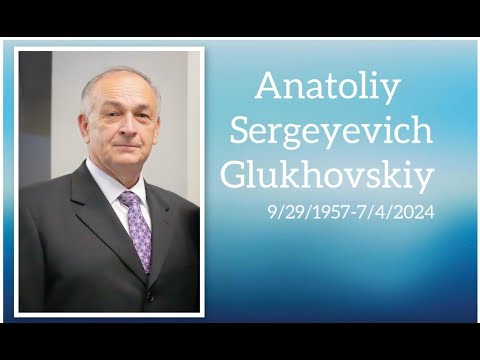
This memorial service honored brother Anatoliy Glukhovskiy, a deacon, preacher and worship leader who helped found the church and went home to the Lord suddenly on July 4, 2024, at the age of sixty-six. His family and fellow ministers remembered him as a sincere man of God, a devoted husband and father of six, who loved Scripture so deeply that he could explain it plainly enough for a child to understand, and who led the congregation in song with his guitar. Speaker after speaker anchored their comfort in 1 Thessalonians 4: believers do not grieve like those who have no hope, because the dead in Christ will rise and we will be caught up to meet the Lord and be with him forever. Drawing on Psalm 84, they reminded the grieving that true strength comes from God, who turns even the valley of weeping into a place of springs. The closing message used the parable of the growing seed in Mark 4: when the grain is ripe, the Lord sends the sickle. Anatoliy's life had borne fruit, and God gathered him at the appointed time, not by accident. The service ended with a tender appeal to receive the seed of life today, to cherish loved ones while they are near, and to be ready at every moment for the meeting that awaits us all.

The Father's Role in the Family

The Father's Role in the Family

On Father's Day the church gathers to thank God and to honor fathers. The message centers on the father's role in the home and opens with Deuteronomy 6, where God commands His people to keep His word in their hearts and to teach it diligently to their children - at home and on the road, when lying down and rising up. The preacher stresses that a father cannot be replaced. He points to how children who grow up without an engaged father suffer, and warns that the enemy deliberately attacks what holds a family together. Every man is called to be a priest in his own home, responsible not only for daily bread but for the spiritual life of his children. Drawing on Malachi, Mark, Ephesians and Proverbs, the sermon calls children to honor their father and mother - the first commandment with a promise of a good and long life - and calls fathers to be both physical and spiritual fathers who raise wise children walking in truth. There is no greater joy for a father than to see his children living for God.

True Riches: Trusting God, Not Money

True Riches: Trusting God, Not Money

This Sunday service marked a special day for the church - the Sunday school graduation of its teenagers. It opened with worship and a prayer over the children, rooted in 1 Peter 1:22 and the call to set a young person on the right path early, with a reminder that faith and obedience pass to the next generation chiefly through the example of parents. The main message explored the difference between simply having money and being truly prosperous in God's eyes. Drawing on the rich ruler in Luke 18, the warning of Deuteronomy 8, and Paul's counsel in 1 Timothy 6, the preacher cautioned that the love of money quietly pulls people away from faith, while everything we own - our home, our work, our income - comes from God's hand. By the measure of Scripture, anyone with food, clothing, and shelter is already rich. He shared a childhood story of being tested with a few coins to learn generosity, then closed with a striking thought: money can buy a house but not a home, a bed but not rest, medicine but not health. Real security and lasting joy come from trusting God as the true Provider and giving freely to others.

What Kind of Mother Are You?

What Kind of Mother Are You?

On Mother's Day the pastor honors mothers as carriers of one of the greatest callings on earth. Reading Matthew 10 and 1 Corinthians 7, he shows that a mother 'loses her life' for her children and her husband: bearing children in pain, giving up beauty, health and strength, and often releasing her husband into ministry. Yet whoever loses their life for Christ gains it back, and with a double reward. The main message, 'What kind of mother are you?', retells the birth of Moses (Exodus 2, Hebrews 11). His mother Jochebed, whose name means 'Yahweh is my glory,' hid her son, sealed a basket with pitch, and set him on the river with tears and prayer. In the years she nursed him she planted such godly values that Moses later refused Pharaoh's palace in order to suffer with the people of God. He adds the example of Ronald Reagan's praying mother Nelle and of his own mother, who led her whole family to Christ. The conclusion is simple: a mother's true glory is prayer, and through prayer and example she lays the foundation of her children's faith and shapes where they will spend eternity.

Forgive at Home, Shine to the World

Forgive at Home, Shine to the World

This Sunday missionary service began with a reminder that each of us first heard the gospel because someone - a parent, a friend, a missionary - carried it to us. The leaders urged the church to worship God not only for two hours on Sunday but with their whole lives through the week, because a holy life is itself the truest way the gospel is preached (Colossians 3:16-17). How we live, speak, and act lets the light within us shine and makes us the salt and light of the world. The main sermon turned to how we react when people hurt us. Drawing on David's lament over a close friend's betrayal (Psalm 55) and Paul's command not to let the sun go down on our anger (Ephesians 4), the preacher insisted that we are not responsible for those who offend us, only for how we respond. Forgiveness is a decision, not a feeling, and carrying unforgiveness wounds both spirit and body. He contrasted David, who poured every hurt out to God in the house of the Lord, with his wife Michal, who bottled up her pain until one bitter quarrel fractured their home - a warning to guard our marriages and families. The service closed with missionary testimonies and a sending. The Samaritan woman at the well and the man freed from demons became the first to tell others what Jesus had done; an evangelist recalled bold open-air preaching in Odessa in 1988 and a terrifying plane landing that silenced the mockers and opened hearts. A Bible school team preparing for Guatemala shared their songs and stories. The final word reframed missions for everyone: a missionary is simply someone who faithfully carries out the task God has given, whether preaching abroad, running the sound and cameras, or raising a child in the fear of the Lord (Colossians 3:23-24).

The Prodigal Son: Coming Home to the Father

The Prodigal Son: Coming Home to the Father

Drawing on Jesus' parable in Luke 15, the preacher shows that the prodigal son's real downfall began with his attitude toward his father's word. He grew tired of what the father said, demanded his inheritance early - treating his father as if he were already dead - and walked away from home rich, well dressed, and blessed. Far from the father, those blessings slowly drained away, because there was no source left to renew them. The son sank lower than the pigs he was feeding, until hunger finally brought him to his senses. Then he did more than decide to return: he got up and walked the whole way home, step by step. While he was still a long way off, the father, who had been watching the road every day, ran to meet him, embraced him, and restored him as a son. The heart of the message is that receiving the Father's blessing requires more than turning back - we must come close enough to be touched by Him. We can sit in church in body yet drift far away in heart. God calls every wandering heart home, whether it has strayed a single step or gone a long way off.

Raising Children for the Kingdom of Heaven

Raising Children for the Kingdom of Heaven

The service opened with thanksgiving and worship. Reading from Mark 1, the preacher recalled the leper who came to Jesus saying, "If You are willing, You can heal me," and the Lord answered, "I am willing." The healed man could not keep silent and told everyone what Jesus had done. The call was clear: if Christ has cleansed you from the leprosy of sin, do not be quiet - glorify His name. The main message celebrated the birth of a baby in one of the families and turned to parenting. From 1 Timothy 5:8 the pastor reminded parents that providing for a household is far more than earning money; raising the children God entrusts to us is one of our greatest responsibilities, and one for which we will give account. He shared three counsels: truly listen to your children, warned by the collapse of David's household; give them your time before the years slip away, as Ben Carson's mother did; and teach them to fear God rather than to fear you. With gentle humor he described three stages of parenting - the hand, the belt, and finally the knees in prayer - and said his deepest joy is not ministry or mission trips but seeing all his children and grandchildren in God's Kingdom. A guest preacher from Kyiv, who serves a Christian radio ministry in Ukraine, then lifted the church's eyes from earth to heaven. He insisted that Jesus came preaching one thing - that the Kingdom of Heaven has come near - and that He came not to repair this cursed world but to take us out of it into eternal life. The Kingdom is like treasure hidden in a field: whoever truly finds it gladly lets go of everything else. So do not be afraid for food, clothing, or home, for the Father is pleased to give you the Kingdom; and whatever trouble, sickness, or injustice comes, answer as Jesus did before Pilate: "My kingdom is not of this world."

Christmas Love: Receive Christ, Love One Another

Christmas Love: Receive Christ, Love One Another

On Christmas Day several preachers greet the church with the joy of Jesus' birth and press a simple but searching point: it is not enough to merely know that Christ was born. Real and lasting joy comes from receiving Him personally as Savior, and then going further by letting Him become the Lord of our lives, which often means denying ourselves and surrendering what we hold most dear. The heart of the message is the love of God. Drawing on the Apostle John, who leaned on Jesus' chest and knew himself deeply loved, the preachers teach that the greatest thing in life is not to be loved but to love. This love is what marks Christ's church and what a hungry world is missing, while the word of God shines as a light that exposes sin and gives power to repent. Between the sermons the children sing and recite Christmas songs and Scripture, and the service closes with thanksgiving testimonies, announcements, and an altar call to receive Christ. As the prophet Isaiah foretold, and as the Dead Sea scroll of Isaiah 53 confirms, Jesus came to bear our sins and give mercy. The closing call is to keep ourselves in God's love and carry that love into the world.

Always Ready When the Father Calls

Always Ready When the Father Calls

In the Advent season the church gathers to celebrate the birth and life of Jesus Christ, sharing in one another's tears and joy because everything tied to Him is understood and received together. Before his song, brother Sergey opens up about a theme he thinks of more and more as he grows older: what awaits us when life ends, and whether we will be known and called by name on the other side. He recalls a funeral where a brother asked him, "Are you ready?" His answer was simple: "I'm always ready." He compares it to the day his family emigrated to America, the youngest only three months old and the oldest fourteen. The children played outside until the moment came to call them in, and they came at once. In the same way, when our heavenly Father calls us, we will be ready, for He alone knows the right time, and there they will know us and call us by name. The service closes with a blessing over the children heading to Sunday school. God blesses us, but He also gives us authority to bless others, so the church lifts up its children and loved ones in prayer. Though the world is frightening and the evil one wants to steal, they all belong to the Lord.

The Church, Our Spiritual Home

The Church, Our Spiritual Home

As the Christmas season begins, the service opened with Luke 1, where the unborn John leaped for joy in Elizabeth's womb the moment Mary greeted her. That Spirit-filled child recognized his Lord before he was even born, and so it is with us who are born again: we sense the touch of God and the voice of the Shepherd, and our spirit rejoices even before the mind fully understands. The brothers then preached on character and love. Reading 1 Corinthians 13, they reminded the church that gifts, knowledge, and even mountain-moving faith are nothing without love, and that our sinful traits such as impatience, pride, and anger fade as we draw near to God, who is love (1 John 4:16). Christ Himself, gentle and humble, serving and forgiving, is the pattern we measure ourselves against, looking to Him rather than at the faults of others. The central message turned to the house. We thank God for the physical home that shelters us, but He has also given us a home for the soul: the church (1 Peter 2:5; Matthew 16:18). To have a church nearby yet refuse to belong to it leaves the soul homeless, forever a guest who never settles down. The local church is our family, our refuge, and the place where we are perfected, so we must defend it, fill it with love, serve one another, and give thanks. Sunday's communion will call us to remember the price Christ paid for each of us.

Reverence for God, Harmony in the Home

Reverence for God, Harmony in the Home

The midweek service opens by reminding us that when we gather in Jesus' name we do not merely meet in a building - we draw near to the heavenly Jerusalem, to countless angels and the church of the firstborn, joining the worship around God's throne (Hebrews 12, Revelation 5). Like Mary, we have chosen the good part that no one can take from us. The first message looks at the life of Abraham, who died blessed and full of years, and asks why he was so blessed. The answer is the fear of the Lord - not terror, but reverent awe that chooses God's will. Scripture calls it the beginning of wisdom, and God gives us a spirit of power, love and self-control rather than a spirit of fear. The main message, from 1 Peter 3, teaches harmony in the home. Wives win their husbands by a gentle and quiet spirit and an inner beauty that never fades; husbands honor their wives as fellow heirs of grace. Submission flows from trusting God's design, not from anyone being lesser, and a guarded tongue and reconciled relationships keep our prayers from being hindered.

The Calling of a Faithful Father

The Calling of a Faithful Father

On Father's Day the pastor unfolds three marks of a godly father, all drawn from the example of our Heavenly Father. First, a father must truly love his children and let them know it, just as Jesus rested in the Father's love and told his disciples to abide in it. Second, a father hands down an inheritance. Every parent passes something to the next generation, either an empty, aimless life or a living faith. Through Abraham, Isaac, and Jacob, and through Joel's charge to tell each generation what God has done, we see the blessing flow from father to child whenever the child receives it by faith. Third, a father builds friendship with his children, the highest bond of trust and love, the way Christ called his disciples friends. A visiting preacher closed with his own story of planting a church, sheltering war refugees, and an older relative who laid down his life for his friends, showing that a parent's daily sacrifice leaves children a lasting legacy of faith.

Faithful Through Every Season, Like Samuel

Faithful Through Every Season, Like Samuel

The Wednesday service opened with the blessing of Moses in Deuteronomy 33:3: God loves His people, holds all His holy ones in His hand, and they sit at His feet to hear His word. Just as Mary chose the better part at Jesus' feet, we are invited to listen as the Spirit of truth speaks to us about Christ. The preacher then walked through the life of Samuel. Born from Hannah's tears and her vow to give the child back to God, Samuel grew up serving the Lord. But Israel passed through dark days - the corrupt sons of Eli, crushing defeats by the Philistines, and the capture of the Ark, when the glory departed. Through both blessing and disaster, Samuel kept serving faithfully and kept speaking God's word. A second brother added his father's testimony: a believer persecuted under the Soviet regime, sentenced to years in Siberian labor camps, healed of tuberculosis, converted and baptized by breaking through the ice, then imprisoned again for printing Bibles. He gave his whole life to God. The call to us is the same - to stay faithful in good times and in trials, and to be a light and a firm foundation for the next generation.

Created in Christ to Bear Fruit

Created in Christ to Bear Fruit

On Mother's Day the church gathered to honor mothers and thank God for the gift of motherhood, rejoicing over a newborn daughter in the congregation and praying over the mothers present. The first message came from the book of Ruth: three widowed women faced loss, and while Orpah returned to her own people, Ruth chose to cling to her mother-in-law Naomi, vowing where you go I will go, your people will be my people, your God my God. Because Ruth honored and cared for Naomi, God noticed her and wove her into the very genealogy of Jesus Christ, showing that honoring our parents carries God's promise of blessing. The main message turned to Ephesians 2:10, that we are God's workmanship, created in Christ for good works. Just as the sun is made to shine and the vine to bear fruit, every believer has a God-given purpose. To live it out we must know God's will, let our minds be renewed, be filled with the Holy Spirit, and give thanks in everything, refusing to let bitterness blind us to how near God is. Using John 15, the preacher pictured Christ as the vine and us as the branches: a branch bears fruit only by abiding, for apart from Him we can do nothing. The Spirit's fruit of goodness, love, and patience is tender and precious, so God prunes and watches our hearts that pride and sin not creep in, as they did in the fallen cherub. Warning against the dead church of Sardis, he called everyone to wake up, repent, and become a healthy, juicy cluster rather than a withered one, loving one another so the whole church bears fruit for God's glory.

The Peace of God Builds His Kingdom

The Peace of God Builds His Kingdom

The preacher opens from Luke 10, where Jesus sends out His disciples and tells them to first speak peace over every house. If a person of peace lives there, that peace rests on him; if not, it returns to the messengers, and they are not to linger or waste their time. The point is striking: the Kingdom of God is built only where there is peace, and without peace even good preaching finds no soil in which to grow. Turning to Genesis 26, he shows Isaac re-digging the wells his father Abraham had left, giving them the same names instead of claiming them as his own, and refusing to quarrel over disputed water. Only when he finds a well no one fights over does he say, now the Lord has given us room, and we shall be fruitful in the land. Peace, not strife, is what lets people, families, and the work of God grow and multiply, just as Solomon's kingdom prospered once David had secured peace. The road to peace begins with being reconciled to God, receiving His forgiveness, and accepting yourself the way God accepts you. Only then can you truly accept and love others, loving your neighbor as yourself. Pursue peace and holiness, keep yourself in God's love, and let that peace spread to your home, your church, and everyone you meet.

Praying Over Every Generation

Praying Over Every Generation

This midweek prayer gathering was held just before the Good Friday remembrance of Christ's suffering. It opened with 1 John 1: to have full joy and a pure life we need real, personal fellowship with Jesus, who is light. We are not to excuse ourselves as sinless - when we confess our sins, His blood cleanses us and keeps us walking in the light. The congregation then prayed in turn over each part of the church family. They thanked God for His mercies, new every morning, and asked Him to carry the elderly and the widows to the end of their days (Isaiah 46), so their living faith would pass to children and grandchildren. Parents were urged not to hinder or provoke their children, but to raise them with loving discipline and a genuine example, because hypocrisy, harshness, and neglect are what drive children away from God. For the youth they prayed that, knowing Christ and abiding in His word, they would stand strong and overcome the enemy who binds the strong man to plunder his house (Mark 3:27). For families, fathers were called to walk the path of faith under Christ's headship, refusing compromise so the next generation grows up in a holy atmosphere. The whole church closed by asking God, as in Psalm 51, for a contrite spirit and for His protective walls to be built around every home as they prepare for the Lord's Table.

Passing On a Faith That Lasts

Passing On a Faith That Lasts

The service opens with worship and the reading of Psalm 67, then turns to a word on family. God commands us to honor father and mother at every age - even when they grow old or lose their reason, even when we are sure we are right, we are called to yield and stay silent rather than wound them with sharp words. Children learn far more from what they see than from what they are told, as the simple finger experiment showed. The main message, drawn from 2 Timothy 1:5, follows the faith that lived first in Timothy's grandmother and mother and then in Timothy himself. A faith that can truly be handed down must be three things. It must be visible, for faith without works is dead and we bear fruit only by abiding in Christ (John 15). It must be genuine and not play-acted, since the home is like an X-ray that exposes hypocrisy and God wants the heart, not just the lips. And it must be tested and enduring, like the persistent faith of the Canaanite woman and like a dying grandfather who opened his eyes and said, 'I see Jesus.' The young are urged to honor the imperfect generation before them and to imitate their faith.

Gratitude That Seeks God's Face

Gratitude That Seeks God's Face

This midweek service moved through several exhortations before settling on its central theme of true thanksgiving. An early word reminded the church that obedience pleases God more than sacrifice, and that rebellion and self-will are as serious before God as idolatry. The company we keep matters too - whose counsel we follow and where we set our hearts quietly shapes the direction of our lives. A second word called parents to bless their children and grandchildren, and children to honor their parents every day of the year, not only on birthdays. Drawing on Noah and on Jacob blessing Joseph's sons, the message warned against exposing a parent's failings even when the report is true, and urged families to speak the blessing the Lord Himself gave through Aaron. The main sermon turned to the ten lepers in Luke 17. All ten were healed, yet only one, a foreigner, came back to give thanks. The preacher pressed home that gratitude is not merely a reaction to what we receive but a settled posture of the heart toward God, growing out of deep faith. With Joseph, Daniel, the three Hebrews in the furnace, and the psalms of David, he urged believers to seek God's face and not only His hand, trusting Him even in the valley of the shadow and saying, 'I know in whom I have believed.'

Finishing Well: Faithful to the End

Finishing Well: Faithful to the End

This midweek family service opens with a reading from Acts 21, where the apostle Paul, on his final journey to Jerusalem, stops for seven days in Tyre. When the time comes to leave, the whole church - men, wives and children together - walks him out to the shore, kneels in the sand and prays. The pastor lifts up that picture of entire families praying as one and makes it the heart of the evening. The main message turns on a single question: will we be faithful to the end? Reading Hebrews 13:7 and 1 Corinthians 9:24-27, the preacher recalls older believers whose funerals he has attended, people who ran the race all the way to the finish. He reminds us that an athlete disciplines himself to win the prize, and that even a preacher can be disqualified if he does not keep the course. The real danger, he warns, is rarely a dramatic sin but a small compromise - a wish to relax, a quiet pride, an interest we keep putting first. Like Daniel, who kept praying three times a day even under threat, we must stay steady in the small, daily things. He calls us to pray with David, 'Search me, O God,' to keep our eyes on Jesus, and to declare with Joshua, 'As for me and my house, we will serve the Lord,' interceding for our children and grandchildren.

Redeemed From a Double Life, Called to Love

Redeemed From a Double Life, Called to Love

The service opens with Paul's prayer for the Ephesians (Ephesians 3), asking that believers be strengthened by the Spirit in the inner person, rooted in love, and able to grasp the love of Christ that surpasses understanding. The first message, from 1 Peter 1:18-19, reminds the congregation that we were ransomed not with silver or gold but with the precious blood of Christ, and Galatians 3:13 adds that He redeemed us from the curse of the law. Christ bought us out of a vain, inherited way of living. Using the story of Joseph and his brothers (Genesis 37), the preacher exposes the danger of a divided life. At home the brothers worshiped God with Jacob, yet far away in the fields their hatred grew, they plotted murder, sold their brother, and deceived their father. They were one person at home and another in secret. God sees both the outside and the inside, and He calls us to be the same in the house of prayer, on the street, and in the family. Jacob's later words over his sons (Genesis 49) revealed each true heart. The second message centers on love (1 Corinthians 13). Reflecting at the age of sixty, the preacher measures himself against the marks of love and admits how much is still lacking. Drawing on Isaiah 42:3, the woman caught in adultery, and the thief on the cross, he warns that careless words can quench a fading life, while love restores it. Real love is shown in deeds, grows only through prayer, and is the very thing by which the world recognizes Christ's disciples (John 13:35).

Rekindling the Fire of the Family Hearth

Rekindling the Fire of the Family Hearth

The service opened with a reminder not to be consumed by anxiety. With war in Ukraine, inflation, and people losing their jobs, there is much that could trouble us, but Jesus taught that no one can serve two masters. We are called to entrust every worry to the heavenly Father and to cast all our cares on Him, because He truly cares for us. The main message turned to God's oldest and most precious institution: the family. Long before Adam and Eve, God already planned what a family would be. Nothing - career, income, or personal interest - should ever be placed above it. Today's culture either dismisses family as outdated or redefines it against God's Word, yet Scripture still upholds the union God designed, and Jesus reminded us that from the beginning it was not so. A second preacher pictured the family as a hearth that needs both relationship and fellowship. Like the home of the prodigal son, a family can keep its ties yet lose its warmth until the fire goes out. To rekindle it we must shake off the old dust by forgiving and letting go, lay fresh firewood by coming to one another in a new way, and pray sincerely and with faith for God's fire to fall, just as Elijah prayed. With God, even a cold home can blaze with love again.

Drawing Near to Grace, Building a Godly Home

Drawing Near to Grace, Building a Godly Home

The Wednesday evening service opened with Psalm 23: goodness and mercy follow us all our days, and the high point of life is to dwell in the house of the Lord, in His presence. The preacher then turned to Hebrews 4:14-16: because Jesus is our great high priest who sympathizes with our weaknesses, we may come boldly to the throne of grace to receive mercy. Unlike an earthly king or queen, whom no one dared approach uninvited (Esther risked her life to do so), Christ's sacrifice has opened free access to God as our Father. He also recalled Jesus' invitation, 'Come to Me, all who are weary' (Matthew 11:28), and the ten healed lepers, of whom only one returned to give thanks (Luke 17). The second message, given on a family prayer night during the church's fast, was a word for parents resting on three points. First, like Joshua, each person must personally choose to serve the Lord before leading a household (Joshua 24:15). Second, from Deuteronomy 6, parents must keep God's word in their own hearts and teach it to their children continually, by being present and spending time with them while they are still young (the preacher recalled his own father urging him to let his son climb onto his lap while the boy still wanted to). Third, like Job, who rose early to offer sacrifices for his children continually (Job 1:5), parents are to intercede for their children persistently, as a lifelong habit. The service closed with prayer over fathers and husbands to be priests and a protecting wall for the home, for marriages to mirror Christ's love for the church, and for broken relationships to be restored. The congregation prayed for the youth (1 Timothy 4:12, let no one despise your youth, but be an example) and for the youngest children (Psalm 127; Mark 10, where Jesus blesses the little ones). Announcements included continuing the fast, a Friday prayer gathering, and Sunday communion.

A Spirit-Filled Marriage: Lessons from Zechariah and Elizabeth

A Spirit-Filled Marriage: Lessons from Zechariah and Elizabeth

This couples seminar, led by Leo Frank, builds its teaching around Zechariah and Elizabeth in Luke 1 - the one married pair in Scripture described as both filled with the Holy Spirit, and the parents of John the Baptist. Their marriage models a righteousness lived out before God even when no one is watching, and a faith that joins honored tradition with a living relationship with the Spirit. Childlessness, which in their culture was even grounds for divorce, never broke them; their long trial drew them closer and revealed their true character. As one couple they stood united in godly living, in suffering, and above all in seeking God's specific plan for their son. Rather than forcing John into the family priesthood, they released him to the wilderness calling God had given him. The speaker warns parents against raising trophy children or living out their own unmet dreams through their kids, urging them instead to discover each child's God-given gifts (Proverbs 22:6). The seminar closes with practical counsel on marriage: honest communication that reaches the level of real emotions, the true meaning of a meek and quiet spirit (1 Peter 3) as self-control rather than silence, the husband's call to praise his wife as Proverbs 31 intended, and Paul's word in Ephesians 5 to let the Spirit fill you - proven not by how loudly we worship but by how the Spirit transforms our homes, marriages, and daily life.

Salvation for Your Whole Household

Salvation for Your Whole Household

The Wednesday evening service opened in worship and thanksgiving for the gift of peace, with heartfelt prayer for Ukraine in the midst of war. The preacher set out a single theme: God longs to save not just one person, but an entire family. Anchoring on Joshua's declaration, 'as for me and my house, we will serve the Lord,' and on God's own word in Isaiah that He is 'mighty to save,' he reminded the church that God desires all people to come to the knowledge of the truth. To show that this is God's pattern, he walked through seven examples. Rahab and all her relatives were rescued out of Jericho; Lydia and her household were baptized; the Philippian jailer heard 'believe, and you and your house will be saved'; Cornelius was promised words by which his whole household would be saved; the royal official believed and so did his entire family; and salvation came to the house of Zacchaeus. The seventh example, he said, could be you or me, for the same unchanging God still wants to bring whole families home. He also warned that receiving a promise is one thing and keeping it is another, recalling how the land promised to Abraham was only fully possessed generations later under David and Solomon, then lost again. Salvation begins with a single believer but is meant to spread through the whole house, and it must be guarded by living faith and faithfulness. The service closed with a call to come forward and pray for unsaved and wandering loved ones, that no one would be left outside the door.

A Spiritual Famine for God's Word

A Spiritual Famine for God's Word

On Father's Day the service opens by honoring fathers through Psalm 127, where children are a heritage from the Lord and a father stands for his family like a warrior with arrows in his hand. The preacher warns that the enemy deliberately targets fathers to weaken them, and reminds the church that unless the Lord builds the house, those who build it labor in vain. The central message comes from Amos 8, where God warns of a famine that is not of bread or water but of hearing His word. Tracing Israel's slide from Solomon's disobedience to a prosperous nation too busy chasing money to honor the Sabbath, the preacher distinguishes a healthy hunger that longs for God (Matthew 5:6) from a tragic spiritual famine in which people no longer want His word and can no longer find it. Like Israel wandering from sea to sea yet never turning toward the temple, many search everywhere except where God truly is. Christ is the bread of life, so we must feed on Scripture and not on substitutes. The service closes with testimonies from ministry among Ukrainian refugees: a mother reunited with a son she had not heard from in two years, answered prayers for healing, and a reminder that faith without doubt can move mountains and that, as in the feeding of the five thousand, the miracle comes when we begin to give. The God who rebuilt the walls of Jerusalem still rebuilds a broken life.

From the Donkey to the White Horse

From the Donkey to the White Horse

On Palm Sunday the church gathered to bless its youngest members, presenting little children before God. Drawing on Psalm 127, on Jesus welcoming the children, on the priestly blessing of Numbers 6, and on Paul's word to fathers in Ephesians 6, the pastor reminded parents that children are a heritage and reward from the Lord, never a burden. Before God's commandments can take root in a child's heart, they must first live in the parent's own heart, and like Timothy's faith carried by Lois and Eunice, sincere faith is handed down through a believing home. The main message walked through Matthew 21, the triumphal entry. Jesus came humbly, riding a donkey as Zechariah had foretold, while crowds and even infants in the temple cried 'Hosanna to the Son of David.' He came not as a conquering general but as the Lamb, knowing the cross awaited Him that same week. He cleansed the temple as a house of prayer and quietly bore the hatred of His enemies on the road to Calvary. The preacher then set that gentle arrival against the second coming of Revelation 19: the same Jesus will return on a white horse as Faithful and True, King of kings, to judge the world. Yet today is still the time of grace, and the Spirit keeps calling everyone to trust the only name by which we are saved. The service closed in praise as the church entered Holy Week, with prayers for Ukraine and for ministers serving refugees.

Family: Our Difficult Happiness

Family: Our Difficult Happiness

The evening opens with the host pastor preparing the congregation to truly receive God's word. Drawing on the healed man of the Decapolis (Mark 5 and 7) and Paul's preaching in Antioch (Acts 13), he reminds them that miracles and sermons are not meant to leave us merely amazed. God sends His word to bear fruit and to be obeyed, so we must watch how we listen, because the same word can be despised or can work salvation in us. The guest couple, Pavel and Vera, then teach on the family, which they call our difficult happiness. Vera shows that family is God's own invention from Eden (Genesis 2), and that love - not fleeting emotion but the steady, maturing affection between husband and wife - is its foundation. She testifies of parents who stayed married more than sixty years and carried that love to the very end. Pavel exposes two false expectations that wreck marriages: idealism, the dream of a perfect spouse, and the demand that the other person make us happy. The Bible records no perfect family, yet its people became heroes by overcoming their conflicts. He locates every marriage conflict in three areas - communication, finances, and intimacy - and closes from 1 Peter 3 with the picture of strength and grace balanced in mutual honor. The service also includes earnest prayer for families and for an end to the war in Ukraine.

Raising the Next Generation in Faith and Obedience

Raising the Next Generation in Faith and Obedience

Two preachers, moved by one God-given theme, spoke about the family as the place where God shapes both children and parents. Building on Ephesians 6:1-4, the first message urged young people to honor and obey their parents, recalling a friend whose life was richly blessed because he listened to his father and served him faithfully. Obedience, he reminded the church, is better than sacrifice, and God stands behind those who obey even when it is hard. The church is a family too. Like a body with many members (1 Corinthians 12), believers are co-workers with God, set together to grow up out of spiritual infancy into the full knowledge of Christ, no longer fed on milk alone (1 Corinthians 3). The natural man cannot grasp the things of the Spirit (1 Corinthians 2:14), so we either humbly receive God's Word and repent, or reject His authority as the world does. The second message, from Acts 16, lifted up Timothy, raised by a believing mother who taught him Scripture from childhood yet at home in Greek culture. In the same way our children grow up in Slavic faith and American life, and can carry the gospel where we cannot - if we guard them. Parents were urged to take their children's upbringing and even their schooling seriously, to teach the biblical account of creation rather than leave them to a world that says they came from monkeys, and to raise future Timothys whose faith stands firm.

Keeping the Peace of God in Your Home

Keeping the Peace of God in Your Home

The service opens with worship and the reminder that on this resurrection Sunday we do not boast in chariots or horses but in the name of the Lord. Jesus promised His own peace - a deep shalom that the world cannot give (John 14:27). Yet that peace is often broken, especially between husband and wife, and where there is no peace the Holy Spirit cannot fill a home. The preacher names five reasons peace is lost and how to guard it. First, a wrong attitude toward money: we cannot serve God and mammon, so we honor the Lord with our finances instead of letting money rule the marriage (Luke 16:10-13). Second, a husband who dishonors his wife hinders his own prayers (1 Peter 3:7). Third, both spouses must humbly yield to one another in love (Ephesians 4:1-3). Fourth, we must actually pray for peace within our own walls (Psalm 122:6-7). Fifth, we are called to become peaceable people, for the God of love and peace dwells with peacemakers (2 Corinthians 13:11). He closes with a dream in which God sent him to teach families how to live at peace so that He could fill them with the Spirit. Real revival, he says, begins at home: become a peacemaker, and the fire of God will burn in your family and your church.

Life in Christ: Returning to Eden

Life in Christ: Returning to Eden

This missionary Sunday service opened with a reminder that our deepest identity and worth are found in being followers of Christ, and that believers are called to be the salt and light of the world. A guest missionary then brought the main message, titled "Life in Christ is the restoration of the relationships of Eden." Reading Genesis 2 and 3, he showed that God designed marriage as a blessing, giving each man a wife suited to him, so a believing couple should never call their marriage a mistake. The fall fractured that harmony: the wife's longing for her husband's love and protection, the husband's refusal to listen, and the rule of domination all flow from losing the glory of God (Romans 3:23). Drawing on 1 Peter 3:7 and Psalm 8, he urged husbands to cherish their wives tenderly, the way Adam first beheld Eve. The good news is that Christ is our return to Eden. Where the first Adam accused, the second Adam justifies, forgives, and restores dignity, just as Jesus did for the Samaritan woman and others. When a Christian home reflects God's glory it becomes the gospel itself, and mission begins at home. The service closed with prayer for families and an engagement announcement.

Keep the Fire of Marriage Burning

Keep the Fire of Marriage Burning

Guest speakers Vasily and Olya Yorsh open the church's couples seminar with one governing picture: married love is a fire. Love is a gift from God, and just as Paul told Timothy, we are called to fan that gift into flame rather than assume it will tend itself. A fire left alone only dies down, and a neglected marriage slowly goes cold. Both speakers insist that "the love is gone" is never the whole story, because we are responsible for the flame in our own home. They offer four logs to keep adding to the fire. First, openness, the oxygen love needs: being honest about our weaknesses, naming our expectations out loud instead of nursing silent resentment, and not being ashamed to ask for help. Second, real time together: getaways, unhurried conversation, and washing one another with words of faith rather than worry, the way Christ cleanses His bride through His word. Third, healthy boundaries: guarding the marriage like a contained campfire, honoring privacy, refusing comparison, and building your own unique home instead of copying anyone else's. The fourth log is joy. Vasily challenges the lie that godly people barely smile, reminding the room that the kingdom of God is righteousness, peace, and joy in the Holy Spirit, and that Jesus came to give life in abundance. Couples are urged to bring joy on purpose, to create lasting memories, and to keep choosing each other. The evening closes with repentance, mutual forgiveness, and prayer for the Holy Spirit to cleanse old hurts so the fire can burn bright.

Carrying the Gospel Fire Through Lockdown

Carrying the Gospel Fire Through Lockdown

This missionary round-table from Slavic Full Gospel Church gathers pastors and missionaries during the 2020 lockdown around one question: how do we keep preaching the gospel when borders, parks, and beaches are closed? The speakers testify that the Word of God knows no distance - we can still speak of Christ, hand people over to Him, and trust that seed already sown will grow. A missionary serving in Germany calls these very days the harvest, walking the streets to share the good news. Reflecting on Acts 1:8, they observe that the early disciples were slow to witness until God scattered them; now, with the ends of the earth closed, God has handed believers back their own homes and families as a mission field. They tie the moment to the early and latter rain and to Pentecost - the wind of the Spirit that empowers the church for the final harvest before Christ returns. The quarantine, they say, is a season to be refilled with the Holy Spirit, not merely to lean on diplomas. The brothers urge husbands and wives to pray and decide together, to disciple their children, and to set their own house in order (Galatians 6:1) by gently restoring those wounded by sin rather than condemning them. Closing on Proverbs 31:25 and the call to rejoice always, pray without ceasing, and give thanks (1 Thessalonians 5:16-18), they encourage believers to face an uncertain future with joy, thankful that their names are written in heaven.

Rescued to Influence a Dying World

Rescued to Influence a Dying World

A guest speaker from a rescue ministry that has pulled people back from the brink of death for over two decades opens with John 14:12 and John 10:10. He contrasts the thief who comes to steal, kill and destroy with Jesus who gives life in abundance, warning that the enemy rarely looks like a monster but instead twists the truth and aims especially at the young. He then shares his own testimony. Born into a loving family but left to himself, he slid into a twelve-year addiction that nearly ended with him dying among hundreds of others in cold basements. While he sat in prison, Christians reached his wife Ira, who was saved and wrote him a letter beginning with the words "Hallelujah, God loves you." He surrendered to Christ, was healed of terminal diagnoses, built a family, and watched God do, as Ephesians 3:20 says, immeasurably more than he had asked. Turning to the church, he calls believers to be people of influence rather than passive religion. From Psalm 127 he describes children as arrows to be sharpened while young, and from Numbers 16 he recalls Aaron standing between the living and the dead with God's fire to stop the plague. He urges parents to be a personal example and to guard the next generation, because the world already has a plan for our children.

Obedience: The True Test of Love for God

Obedience: The True Test of Love for God

This Gospel Night opened with young people sharing what God had done in their lives. One testified that his education, friendships, and even a college surf club became opportunities to stand firm for Christ, plant seeds of the gospel on a missions trip, and lay down his pride so God would get the glory. Another described God's protection when her father survived a highway accident in the desert and a Christian stranger drove him all the way home. A third confessed that he could never defeat sin by his own strength until he stopped striving and simply began to seek God, who fills us more as we draw near. The main message from Brother Paul drove home a single word: obedience. Many believers, he said, are enduring their faith instead of enjoying it, because they live in quiet disobedience while telling themselves they can manage life on their own. From John 3:36 and John 14:15 he showed that real love for God proves itself by keeping his commandments, and that obedience is the fruit of love, not a burden of obligation - just as love in a marriage shows itself in glad, willing service. He applied this to the home: children are to honor their parents (Ephesians 6), and parents shape their children far more by a living example of faith than by words. The path back, he urged, is the basics - time in the Word and real prayer, not mere church attendance - and a quick yes to whatever the Holy Spirit is asking today. He closed by inviting everyone to give themselves fully to Christ and walk in joyful obedience.

Our Perfect Father in Heaven

Our Perfect Father in Heaven

Recorded for the church's nursing-home outreach during the COVID-19 pandemic, this Father's Day message is shared by ministry workers who long to be present in person but greet their listeners through video and song. They honor every earthly father for years of sacrifice, hard work, and love, while reminding everyone that we are able to be fathers at all only because of God. The heart of the message turns to 2 Corinthians 6:18 - "I will be a father to you, and you will be my sons and daughters." Even the best earthly fathers are imperfect, and some people never knew a father's love at all, leaving behind broken families and wounded hearts. But God Almighty, who created the universe and sent His Son Jesus down from heaven, offers Himself as a perfect Father who never forsakes those who turn to Him - just like the father who ran to welcome the prodigal son home. The speaker invites every listener to say yes to this Father, to receive forgiveness, and to trust the place Jesus has prepared, where there will be no more tears, sickness, viruses, or death. The service closes with a prayer of repentance and an encouragement to spend the day in real conversation with our heavenly Father.

Christ at the Center of Marriage

Christ at the Center of Marriage

This message was preached at the wedding of Norris and Katya. The pastor opened by recalling the wedding at Cana, where the joy ran short until Jesus revealed Himself. He urged the couple and everyone gathered to keep Christ invited into their new home, because apart from Him there is no lasting joy or peace. Drawing on Scripture, he reminded everyone that God Himself is the author of marriage, joining Adam and Eve in love, and that every Christian marriage is a living picture of Christ and His bride, the church. He compared a healthy marriage to a symphony: real harmony is born when husband and wife let the Word of God and the Holy Spirit guide every part of life together, doing all things in love. He gave plain counsel for the home. The husband is to love sacrificially as Christ loved the church, the wife is to honor and support her husband, and both are to draw nearer to God so they grow nearer to each other. Above all, echoing Joshua, the couple were called to one shared decision: as for me and my house, we will serve the Lord.

Mothers of Faith Whom God Uses

Mothers of Faith Whom God Uses

This Mother's Day service opens with a call from Psalm 2 to serve the Lord with reverent joy and to "kiss the Son" - to draw near to Jesus and keep a living, personal touch with Him. The pastor honors the mothers present, including the church's oldest mother, and frames the whole gathering as worship offered to Christ. A guest evangelist preaches on Deborah from the book of Judges. She was neither a soldier nor a strategist, but she knew God and kept a pure heart, so she carried His authority and could speak in His name. When she sent Barak against Sisera's nine hundred iron chariots with only foot soldiers, the plan looked like madness, yet God Himself sent the rain that bogged and drowned the chariots. The point: God raises up ordinary, available people who walk in His word, and He still works miracles that do not fit our reasoning, as one healing testimony illustrated. The closing message turns to mothers in Scripture - Eve the mother of all living, Moses' mother who entrusted her child to God, and the mother of the sons of Zebedee who brought her sons to Jesus and asked a blessing over their future. Mothers are called to see their children's God-given destiny, to bring them to Christ while they are young, to receive a word from God for them, and to keep covering them in prayer. The service ends by blessing every mother and every future mother in the church.